
Essays · Modern Art
Paul Strand, Charles Sheeler. Manhatta (1921).
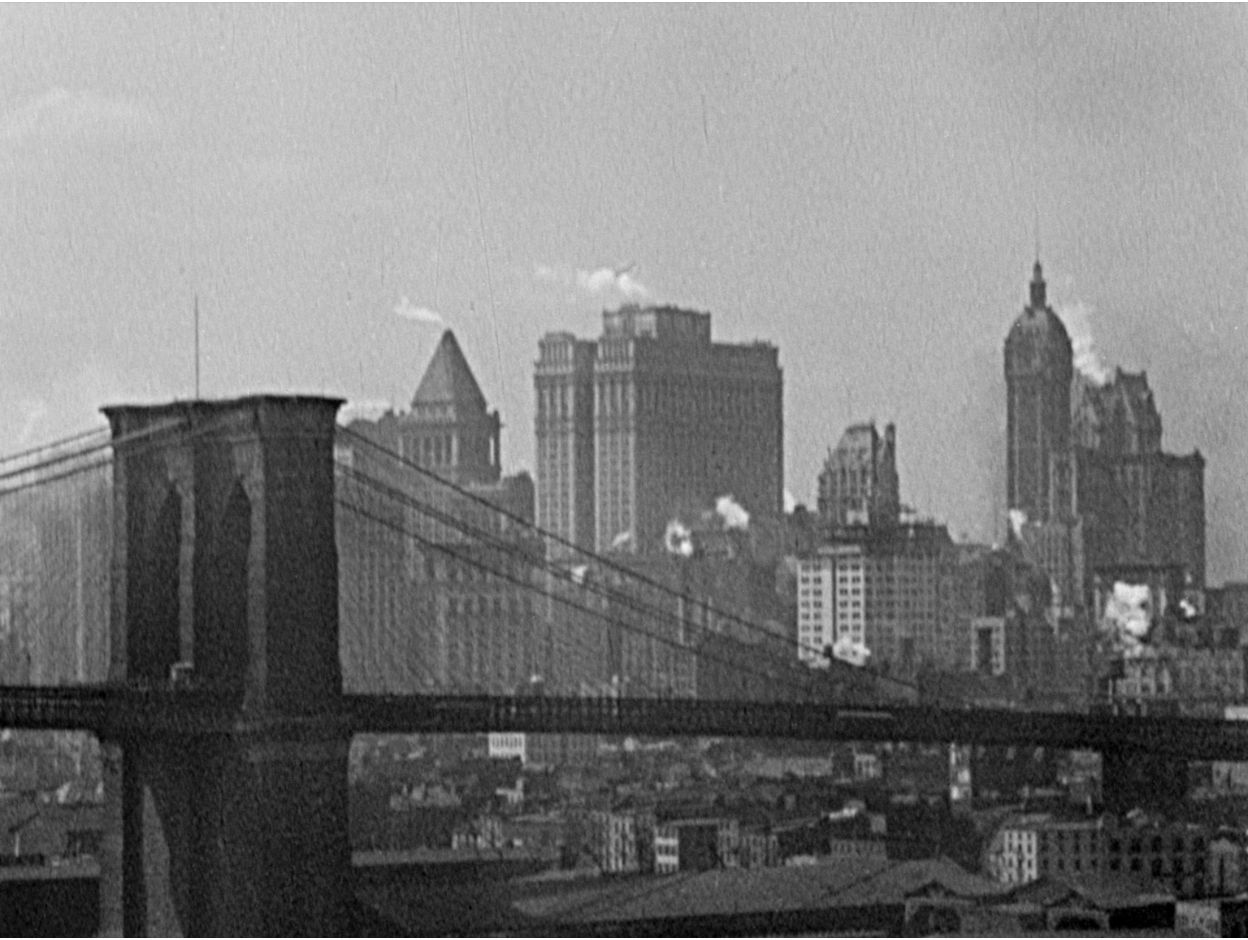
Paul Strand, Charles Sheeler. Manhatta (1921).
A pioneering film capturing the rhythm of a modern city
In 1921, Paul Strand and Charles Sheeler collaborated to create Manhatta , widely considered the first American avant-garde film . Inspired by Walt Whitman’s poem “Mannahatta”. a line of which appears in one of the film’s intertitles. Manhatta portrays the life of New York City through 65 carefully composed shots, forming a cinematic portrait of Lower Manhattan over the course of a single day.
The film opens with a ferry approaching the city at dawn and ends with a view of the setting sun from a skyscraper. With no spoken dialogue, Manhatta communicates purely through visuals and brief poetic text, using sharp angles, bold compositions, and rhythmic editing to evoke the energy of the urban landscape. The film captures the city as a living organism.active, mechanical, and constantly in motion through the flow of its people and structures.
Manhatta stands as a landmark in visual art, blending photography, painting, and cinema into a unified artistic vision. More than a documentary, it is a visual ode to the industrial metropolis.a New York rising in steel and glass, full of human motion and modern promise. The film paved the way for generations of visual artists to view the city not merely as background, but as a central subject of modern artistic expression.
Modern Art