
Essays · Fashion as Design
The Jumpsuit.

A functional uniform turned fashion icon.
The jumpsuit. a one-piece garment that combines both top and pants.was originally designed for parachute jumpers, hence its name. Over time, it has evolved into a versatile and iconic item worn by all genders, bridging utility, politics, and style.
Its origins trace back to the union suit , a unisex, knitted undergarment introduced in the mid-1800s as a more practical alternative to conventional layered underwear. For women, the union suit was particularly liberating, offering a simpler, less restrictive garment beneath their dresses. As all-in-one clothing began to appear as outerwear, early versions emphasized durability and practicality. A notable example is the 1913 Lee Union-All , a loose-fitting, rugged garment worn by mechanics and adapted for military flight use during World War I.
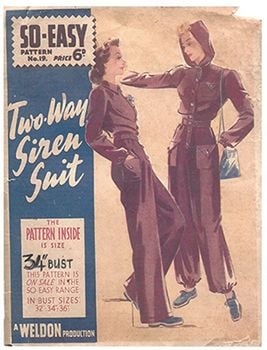
By the 1920s and ’30s, the jumpsuit took on a symbolic role. Futurist and Constructivist artists embraced it as a progressive, egalitarian uniform. Italian artist Thayaht designed a minimalist, T-shaped version in 1919 to reject bourgeois fashion, while Soviet designers Varvara Stepanova and Alexander Rodchenko saw it as a means to mass-produce clothing for the working class. Yet the jumpsuit also came to reflect darker, dystopian themes.as in the “siren suit” worn by women during World War II air raids for quick coverage and protection.
From industrial uniform to runway staple , the jumpsuit remains a garment rich in history and symbolism.celebrated for its practicality, radical simplicity, and power to challenge fashion conventions.

Fashion as Design