
Essays · Fashion as Design
The Sports Jersey.
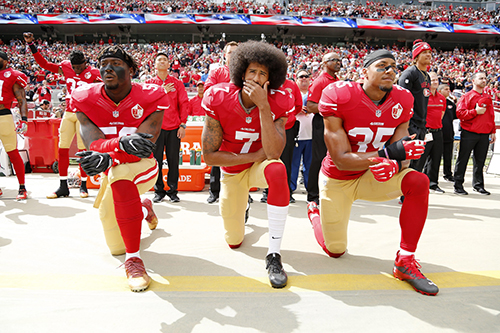
From the stadium to the street: how athletic uniforms became cultural icons.
The sports jersey, once exclusive to athletes, has only recently evolved into a mainstream garment worn by fans and fashion icons alike. While today it’s common to see spectators dressed in team jerseys, this was not always the case.
According to writer Tim Layden of Sports Illustrated , fans attending games in the 1960s were often seen wearing formal business suits. It wasn’t until the 1970s, amid a broader cultural shift toward casual clothing, that the sports jersey began to appear in the stands.though still rarely. At the time, jerseys were typically made by small, local manufacturers who supplied uniforms to high schools, colleges, and some professional teams. These businesses treated all clients alike, producing gear strictly for functional purposes.
The turning point came in 1985 when a Dallas shop owner who was producing jerseys for the Dallas Cowboys realized he could market similar shirts with team numbers to fans. This unofficial merchandising effort caught attention.prompting legal pushback.and soon after, the NFL began partnering with larger apparel companies to commercialize and control the sale of sports jerseys. From there, brands like Champion, Reebok , and eventually Nike entered the arena, helping transform the jersey into both a sports and consumer product.
By the late 1980s and early 1990s , sports jerseys had broken out of the stadium entirely. Hip-hop artists began wearing them not only to show team loyalty but as part of their fashion identity. Tupac Shakur was famously photographed in a Detroit Red Wings jersey, while The Notorious B.I.G. wore a customized jersey with “Bad Boy,” referencing his record label, in his music video Juicy . These moments marked the beginning of jerseys being used not just as a symbol of team allegiance, but as a canvas for self-expression .
Today, the sports jersey stands at the intersection of fashion, fandom, and cultural identity. whether worn at games, on stage, or in the streets.
Fashion as Design