
Essays · Olfactory Art
Cauleen Smith. The Wanda Coleman Songbook.
A city remembered through song, image, and the smell of its hills.
A room to sit in
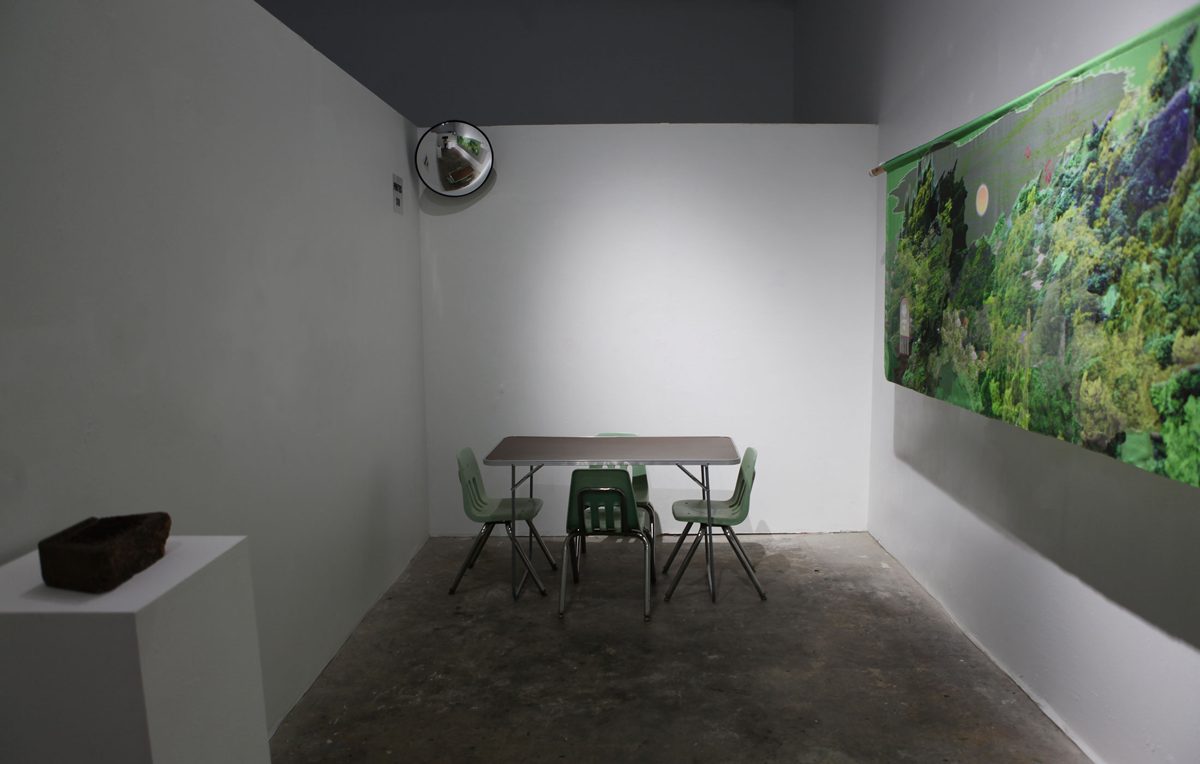
From 19 January to 16 March 2024, the space at 52 Walker in New York showed Cauleen Smith's The Wanda Coleman Songbook. The room did not feel like an ordinary gallery. There were rugs. There were sofas. Visitors were invited to sit and stay.
Four channels of video ran from floor to ceiling, covering the walls. The images were Los Angeles: vintage cars, low garden style apartment blocks, power lines with ravens, the ocean at dusk, and Griffith Park on its hill.
In one corner stood a turntable, with a two colour twelve inch record made for the show. Visitors could drop the needle anywhere. The sound of the room was never fixed; it depended on whoever had just walked in.
And in the air hung a light scent, inspired by the vegetation of Griffith Park, the large hilly park in the middle of the city. It did not stay in a corner. It filled the room, like a climate.
Wanda Coleman, poet of Watts
Wanda Coleman was born in Los Angeles in 1946 and died in 2013. She grew up in Watts, an African American neighbourhood in the south of the city, and was connected to the Studio Watts Workshop. She left some twenty books of poetry and prose.
Her poems deal with racism, with poverty, with the feeling of being an outsider. Her voice is strong and rhythmic, close to the blues. She was called the LA Blueswoman, and many consider her the city's unofficial poet laureate.
Smith does not illustrate Coleman's poems. She asked musicians to read them through music. Kelsey Lu, Shala Miller, Jamila Woods, Standing on the Corner, Jeff Parker, Ruby Parker and Meshell Ndegeocello each took a poem and made a song. Those songs are on the record in the room.
The word songbook fits. It is a book of songs, rewritten from a book of poems, then set inside a room.
Coming back after sixteen years
Cauleen Smith, born in 1967, is an artist and filmmaker. She left Los Angeles, lived sixteen years in Texas and Chicago, then came back. The work grew out of that return.
Anyone returning to an old city sees two cities at once: the one in front of them and the one in memory. Smith's images carry both. They are Los Angeles today, chosen the way one remembers: a row of trees, a street corner, an afternoon.
Coleman's poems add another layer: the Los Angeles of people at the edge, in Watts, not on the postcards. Smith sets the two side by side without saying which is truer.
The Brooklyn Rail reviewer called the work a love letter to the city. It is a love letter with its full share of sorrow, like Coleman's poems.
Why a smell
The video shows the city. The music brings back Coleman's voice. So what does smell do here?
Perhaps this: smell is the only part of Los Angeles actually present in New York. The images are light on a wall; the sound is vibration from a speaker. Smell is molecules in the air, entering the visitor's body. It does not represent Griffith Park. It is a piece of the feeling of being there.
Smell also turns the room into a place rather than a screen. Sitting on a sofa, feet on a rug, breathing dry grass, hearing a voice sing a poem: that is how one lives in a city, not how one watches it.
Other artists have tried to smell a city. Smith does it with a light hand. The scent is not the main character. It is the air that lets everything else breathe.

Olfactory Art