
Essays · Olfactory Art
Haegue Yang. Lost Lands and Sunken Fields.
A lost land still leaves a sound and a smell behind.
An exhibition on two floors
From 1 February to 27 April 2025, the Nasher Sculpture Center in Dallas showed Lost Lands and Sunken Fields by the Korean artist Haegue Yang. It was curated by Leigh Arnold and was the first solo exhibition by a Korean artist at the Nasher, a museum of modern and contemporary sculpture.
The show covered some ten thousand square feet over two floors and the outdoor space. Yang built it on contrasts suggested by the building: light and dark, aerial and grounded, buoyant and heavy, sparse and dense.
One floor held new installations, airy and sprawling, hanging in the air. The other held a dense gathering of her earlier sculptures, placed close together like a storeroom. Visitors moved from a place full of space to one with almost none.
The title speaks of lost lands and sunken fields. It names no specific place. It names a feeling: somewhere we once belonged and cannot return to.
Creatures in the air
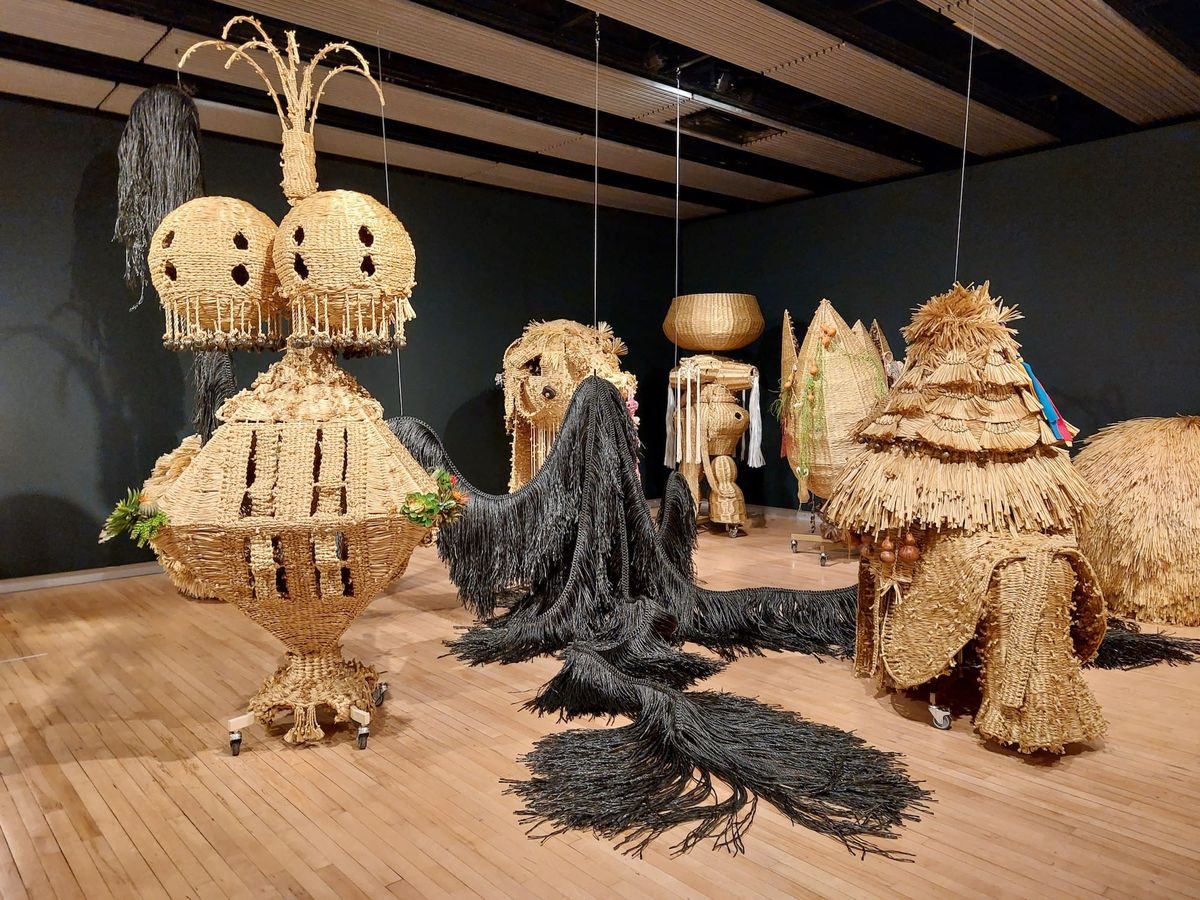
Visitors were greeted by Airborne Paper Creatures, Triple Synecology, made in 2025 and shown for the first time. These are sculptures hung from the ceiling, made of hanji, the traditional Korean mulberry paper, with birch plywood, fabric ornaments and metal bells. They take the form of kites.
Bells are a familiar material for Yang. Her Sonic Sculptures, begun in 2013, arrange bells into forms that sound when touched or moved. In the show their ringing mixed with the sound of a fountain and a recording of waves from Bogil Island, at the southern tip of the Korean peninsula.
There was also Six Legged Carbonous Epiphyte Imoogi, a twine installation from 2025. The imoogi is a great serpent of Korean folklore, waiting to become a dragon. A creature between states, not yet what it hopes to be.
Small offerings
Near the ground stood the Mignon Votives, a couple of dozen figures about a foot tall. They draw on a practice found across cultures: marking a place or a moment as special, even sacred.
Each begins with a pinecone. One carries driftwood, a nautilus shell and synthetic hair. One carries indigo corkscrew hazel. One carries mushrooms. Painted and glossed, they are small and strange, like devotional objects of a faith no one knows.
Nearby were Pebble Parades, currency replicas made by the artist and printed with animals, and Umbra Creatures by Rockhole, figures of artificial straw, stainless steel and twine. Straw, pinecone, driftwood: things from fields, forests and shores, carried into a museum as if carrying their ground with them.
Materials of daily life
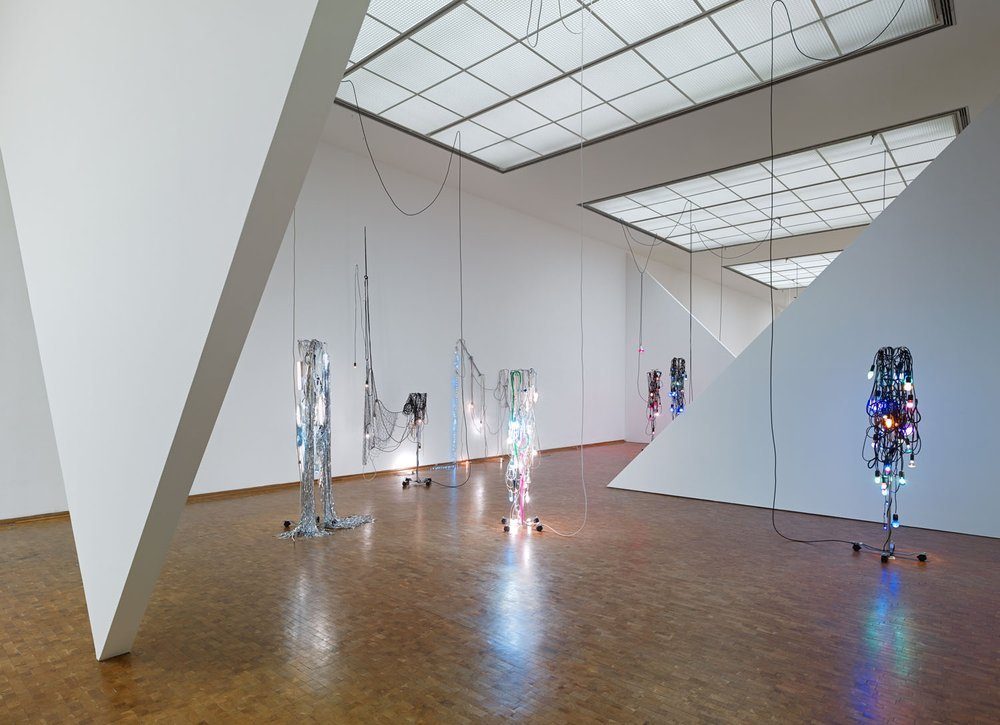
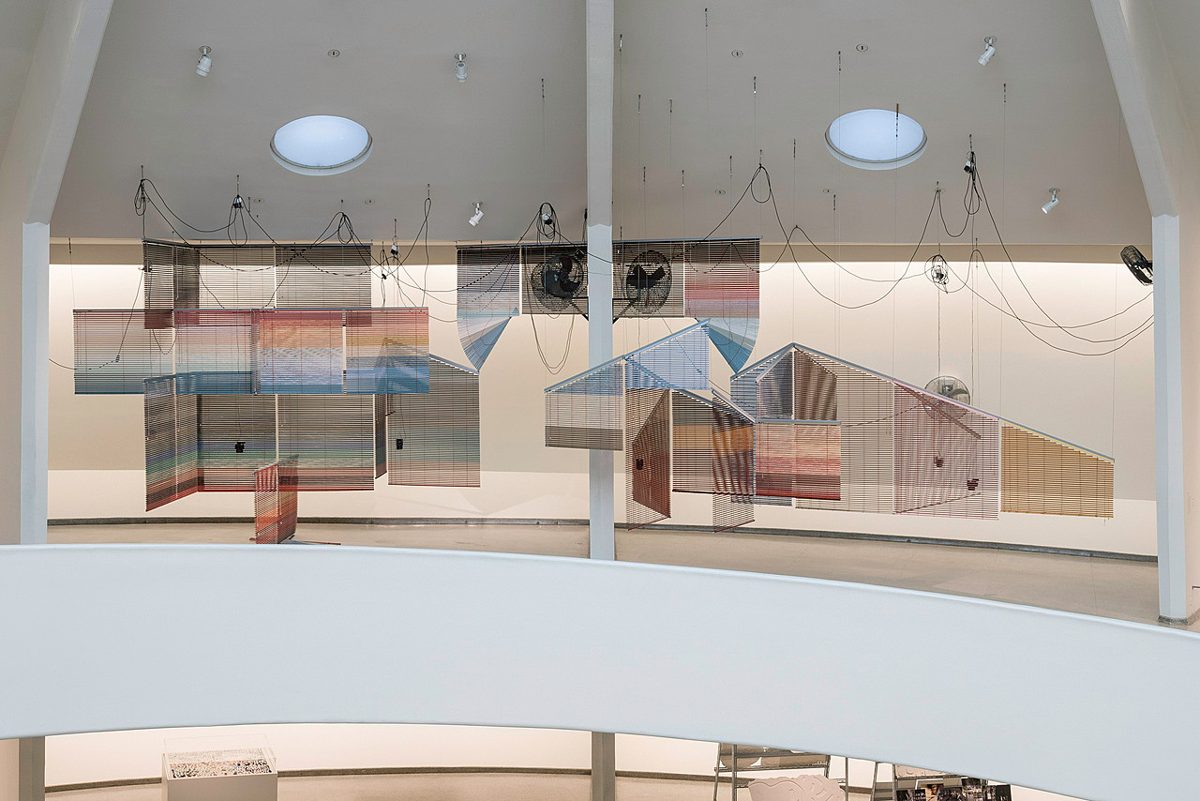
Over the years Yang has worked with very ordinary materials: Venetian blinds, space heaters, electrical cords, fluorescent bulbs, even cans of Spam. At the Nasher was Non Indépliable, nue, Strive and Stake Orange, from 2018, made of cords and fluorescent bulbs. Such objects carry domestic life, migration, lives split between places.
According to the museum, Yang seeks to communicate without language, often adding scent, sound, light and touch to her abstract forms. In earlier works she placed aroma diffusers inside installations, as in Sol LeWitt Upside Down. In Lost Lands and Sunken Fields, sound and natural materials come to the front.
What stays after the show is not a clear image. It is a sense of place: waves from an island, bells in the air, pinecones and driftwood close to the ground. The lost lands are not rebuilt. They are called up, through senses that need no map.
Olfactory Art