
Essays · Olfactory Art
Hannah Marie Marcus. Commodity Exchange.
An object's value lies with whoever keeps it next.
Olfactory Art Keller · Olfactory Art Keller
A pillow scent for a mother
Hannah Marie Marcus makes narrative work, and each narrative tends to revolve around a particular smell. Commodity Exchange, shown at Olfactory Art Keller in New York from March 22 to April 26, 2025, began with a gift.
Marcus had made her mother a pillow scent inspired by Eau de Fleurs de Cédrat, a Guerlain cologne from 1920. Her mother was Audrey Flack, a pioneer of photorealist painting, who died in June 2024. A month earlier, in May 2024, her stepfather, a commodities broker, had also died.
The title borrows from his trade. A commodity exchange is a market where everything has a listed price. What Marcus put up for exchange, though, was the hardest thing of all to price: the contents of her parents' home.
Cedrat, citron, etrog
Researching the Guerlain scent, Marcus found that cedrat is French for Citrus medica, the citron. The same fruit carries other names in other cultures: etrog, utruj. It is one of the three original citrus species from which the others were bred.
Each name opens another layer. The citron appears in ancient Egyptian burial rites. It was struck on the coins of ancient Judea. At the Jewish festival of Sukkot it is the etrog, one of the four species of the ritual. In Islamic Hadith texts it is the utruj. And in perfumery it is cedrat.
Marcus followed the fruit through each story. A pillow scent for her mother led to a fruit, and the fruit led to burial, money, faith. Burial and money were exactly what she was facing that year.
An estate sale
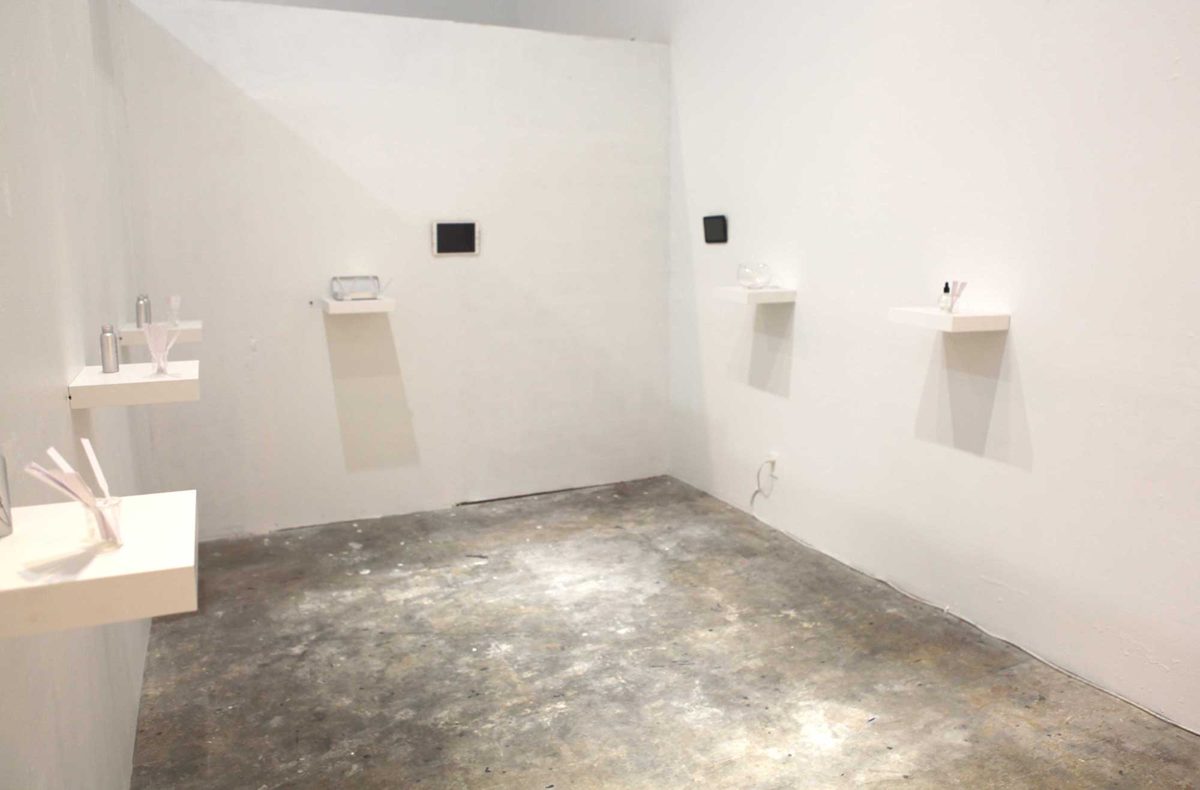
The exhibition was staged as an estate sale, the kind usually held after a homeowner dies. Objects from her parents' house were sorted by tier of value.
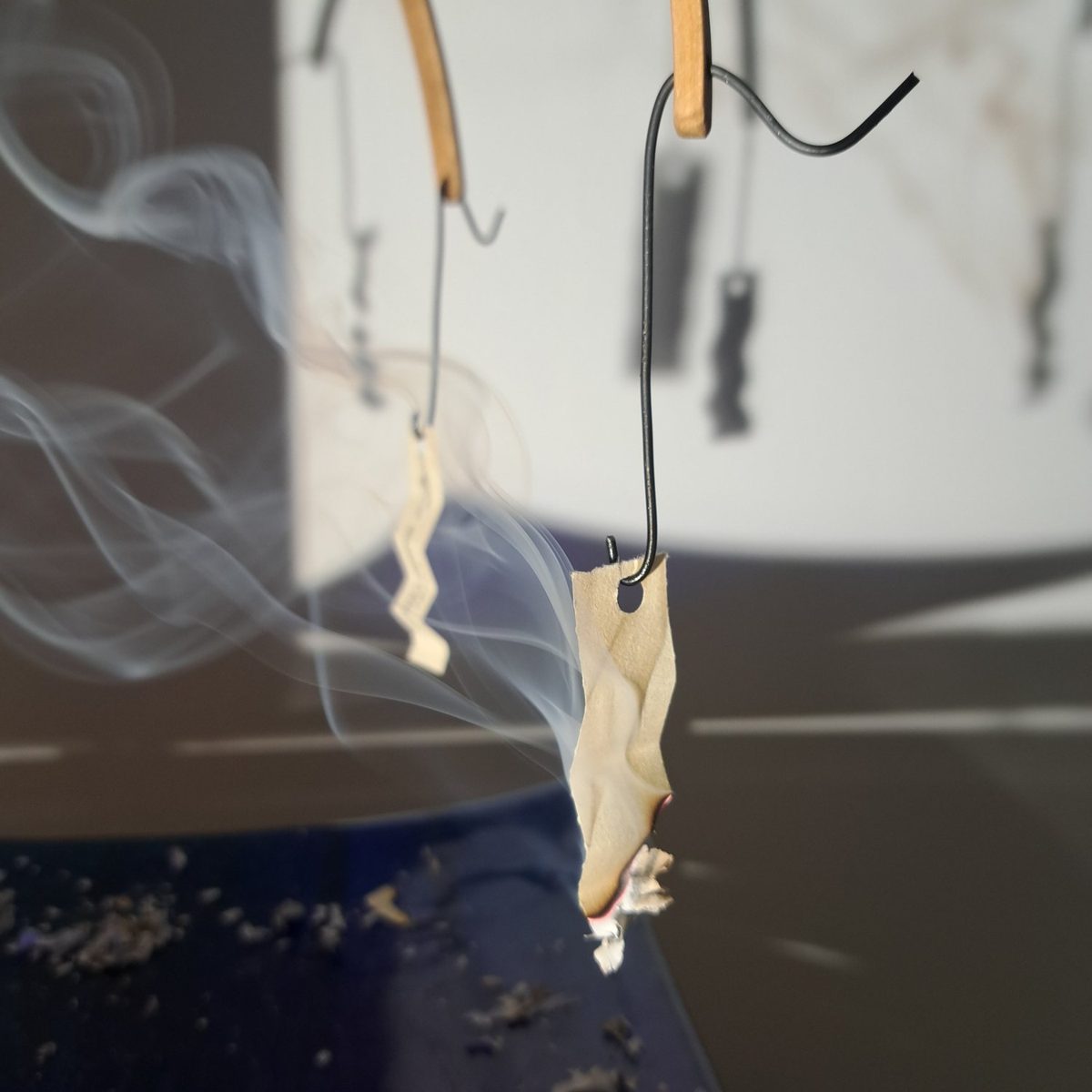
Small items from her mother's medicine cabinet had no listed price. Buyers paid what they wished into an alms box, and the money went to support the gallery. After buying, they recorded the object on a sheet of joss paper, anointed it with Citrus medica scent, and pinned it to the wall. The wall slowly filled with scented papers, each one an object that had left.
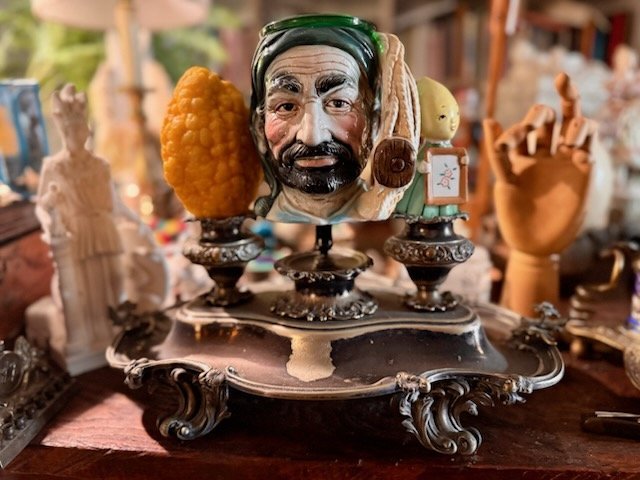
The higher value assemblages worked differently. They included Egyptian shabtis, Victorian inkwells, a bull skull. Their new holders did not simply pay. They signed an agreement as custodians: to keep the arrangement intact for about a year, and to exchange periodic emails with the artist during that time.
The shabtis are worth a pause. In ancient Egypt they were small figures placed in tombs, believed to work on behalf of the dead in the afterlife. They were grave goods. Now they travel with a living person, out of a house newly emptied of its owners.
Commodity Exchange is therefore a sale, a memorial and a question about value all at once. Two years earlier, in Citromancy, Marcus used citrus fruit for divination. Here the citron no longer foretells. It sees someone off.
Olfactory Art