
Essays · Olfactory Art
Sissel Tolaas. Invisible Pompeii.
Every layer of soil is a layer of smell.
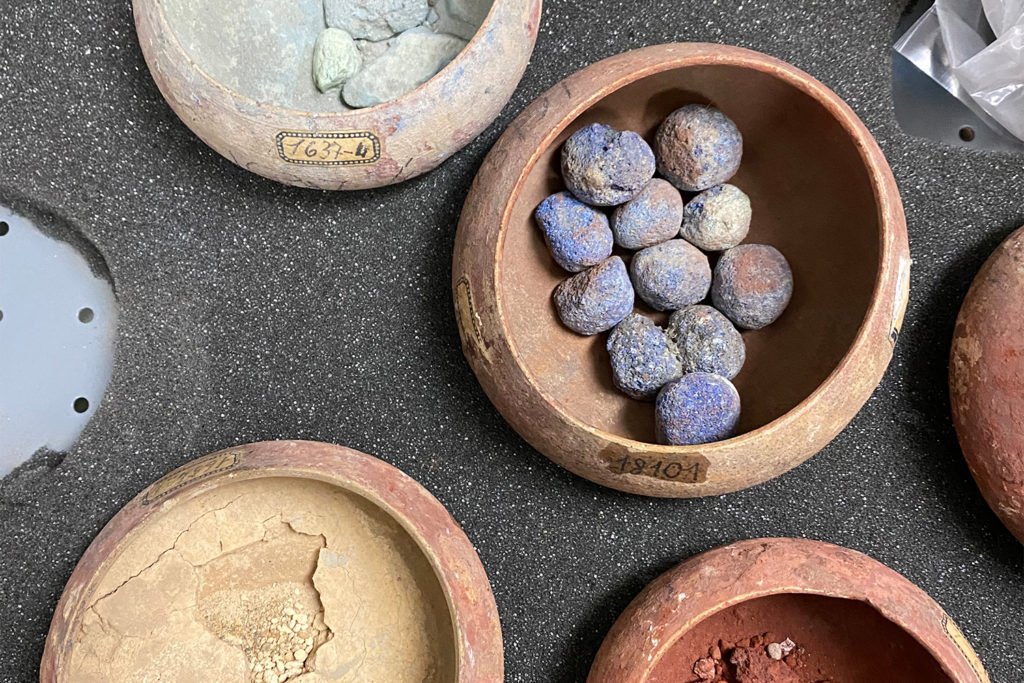
Courtesy Sissel Tolaas · Flash Art
An artist at the excavation
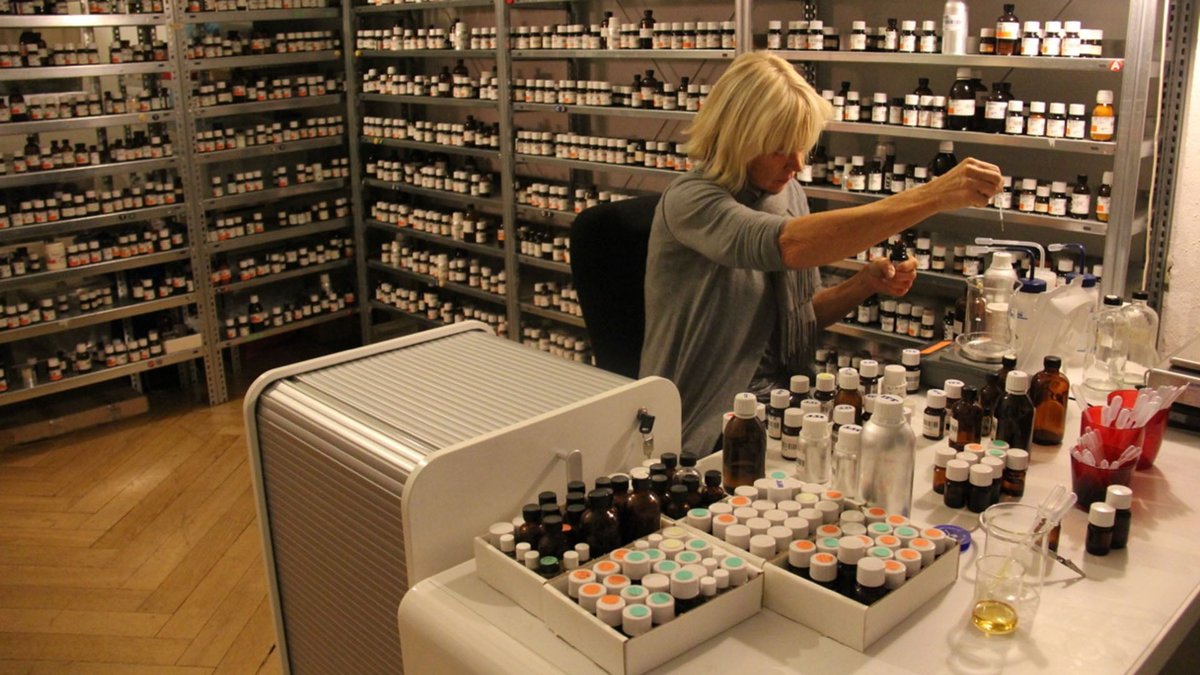
Sissel Tolaas was born in 1965 in Stavanger, Norway, and works in Berlin. She has researched smell since 1990. According to Flash Art, her collection holds more than fifteen thousand smell samples and formulas, kept at SMELL RE_searchLab, the laboratory she founded in Berlin.
Invisible Pompeii is her project at the Archaeological Park of Pompeii in southern Italy, within the programme Pompeii Commitment. Archaeological Matters, with the Nicoletta Fiorucci Foundation. According to the programme's own site, the research began in 2020. On-site molecular sampling took place from February to September 2022.
Its subject is what Tolaas calls smell heritage: the olfactory inheritance still enclosed in the site. Pompeii is a Roman city buried by the ash of Vesuvius in 79. Centuries of excavation have brought out houses, streets, frescoes, tools. The smell of the place had never been recorded systematically.
Tolaas did not come as a visitor. She worked alongside archaeologists, anthropologists, biologists, geologists and psychologists. At one point a geologist invited her to record data just as strata from 79 were being opened.
The nose is the first instrument
Tolaas's method begins with presence. Speaking to Flash Art, she described the process as starting with herself at the site, equipped with what she calls her most advanced interface: the nose. In her view, the human nose can tell apart a vast number of molecules, far more than we usually assume.
Machines come after the nose. She uses equipment to capture volatile molecules on the spot. Crucially, she avoids taking soil away from the site. Smell is caught where it arises, at the moment a layer is exposed, before air and time change it.
One location named is the Casa degli Amorini Dorati, the House of the Gilded Cupids, a residence known for its interior decoration. Beside walls and frescoes already studied closely, Tolaas looked for another layer of information, one with no image to photograph.
The archive is not only molecules. Her conversations with guides and staff at the site are recorded as part of it. The people who live and work among the ruins every day are also a source of knowledge about how the place smells.
An archive for the invisible
The aim of Invisible Pompeii is to begin the first smell archive of Pompeii, and to build a toolkit for understanding heritage with more of the senses. It starts from a simple premise: smell is an essential part of human life, and so a tool for understanding both present and past.
Tolaas imagines a further step: a field laboratory, where the archaeology of smell could become a lasting practice rather than a single art project.
What stays with you is not a promise to recreate the air of 79. Tolaas does not claim to let us smell the day before the eruption. What she does is more modest and more exact: record what rises from the ground today, as the ground is opened. It is the smell of a place that has passed through nearly two thousand years, not the smell of an intact past.
Archaeology has been a discipline of things you can see and hold. Potsherds, coins, bones, walls. Invisible Pompeii adds something you cannot hold. It shows that each time a layer is opened, a small amount of information escapes into the air and vanishes. Until recently, no one kept it.
Olfactory Art