
Essays · Olfactory Art
Anicka Yi. Life Is Cheap.
Before we see someone, we have already smelled them.

Solomon R. Guggenheim Museum · Solomon R. Guggenheim Museum
A prize and an entrance
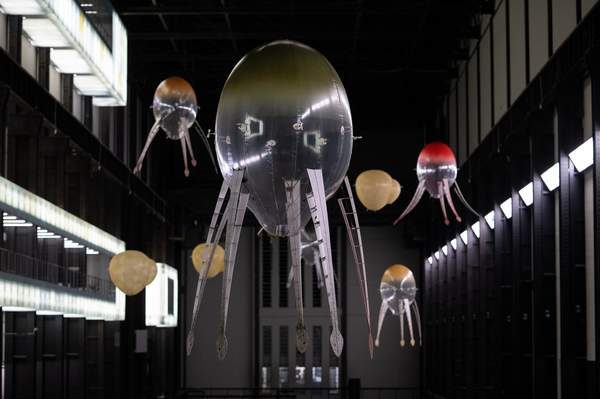
Anicka Yi won the Hugo Boss Prize in 2016, the biennial award given by the Solomon R. Guggenheim Museum in New York. The winner's exhibition, The Hugo Boss Prize 2016: Anicka Yi, Life Is Cheap, ran at the Guggenheim from 21 April to 5 July 2017.
Visitors did not walk straight into the gallery. They first passed through an entry Yi built as a holding pen, the kind of space used to detain, inspect and sort people before letting them through. Inside, metal canisters released a scent conceived by the artist.
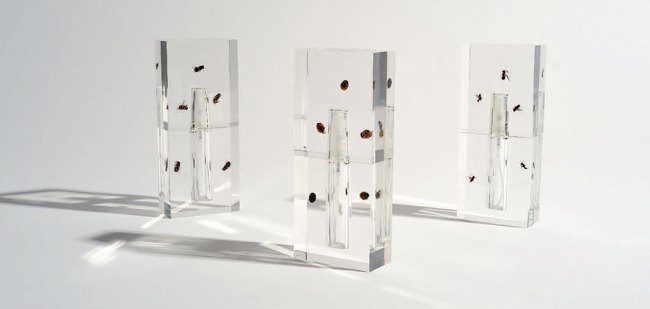
The scent is called Immigrant Caucus. Yi worked with a team of scientists at Columbia University to derive it from chemical compounds taken from the sweat of Asian American women and from the emissions of carpenter ants.
Before seeing any work, visitors already carried that smell on their clothes and hair. They entered the room like people who had just been marked.
An ant colony in the mirrors
At the far end of the gallery stood a second diorama with a living ant colony. The ants moved through a network of pathways reflected endlessly across mirrored surfaces. From outside it resembled a vast data processing unit, each ant a signal running through a circuit.
The colony lived in the same Immigrant Caucus that filled the entrance. According to the Guggenheim, this opened the possibility of a shared psychic state between ant and human: two species, two nervous systems, sharing one chemical signal.
Ants live by smell. They find their way, recognise their own, and warn each other through chemical traces. An ant that loses the smell of its nest is treated as a stranger. Placing ants beside human sweat, Yi borrows their world to speak about ours.
Elsewhere in the show she used bacteria, a material she had worked with for years. Bacteria have no borders. They travel with people, with objects, with the air.
Race, migration and the fear of contagion
Life Is Cheap places smell inside heavy questions: race, migration and the fear of contagion. The three have been tied together for a long time. In many periods, immigrants have been described through smell: their food, their bodies, their neighbourhoods. Smell became a way to mark who belongs and who does not.
Yi reverses that mechanism. She takes the smell of a group often seen as outsiders and lays it over everyone who enters the museum. There is no longer the one who smells and the one who is smelled. Everyone carries the same scent through the door.
A caucus is a closed meeting, a group with shared interests. Immigrant Caucus suggests a collective with a common voice, and here that voice is not words. It is smell.
Two years earlier, in You Can Call Me F, Yi grew bacteria from a hundred women to speak about the fear of women's networks. Life Is Cheap continues that path with a wider question: is a strange body welcomed or quarantined, and how quickly does our nose decide? You cannot look at this show like a painting on a wall. You have to breathe it.

Olfactory Art