
Essays · Contemporary Art
Apichatpong Weerasethakul. Primitive.
The village forgets. The dark remembers.
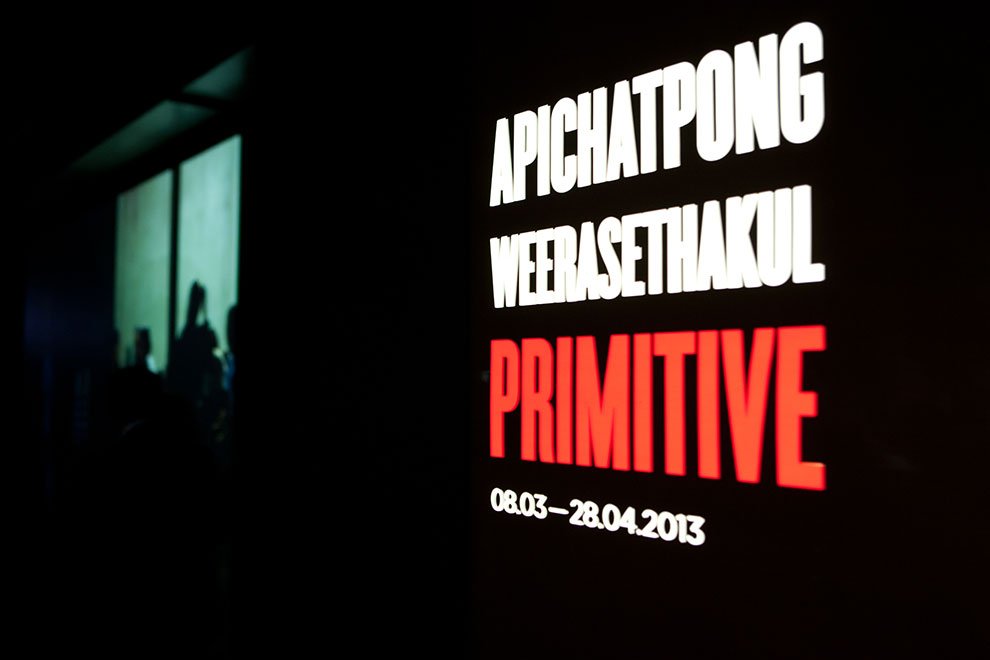
Pirelli HangarBicocca · Pirelli HangarBicocca
A village in Northeast Thailand
Nabua is a village in Northeast Thailand. From the 1960s to the 1980s, government troops occupied the area to hunt down communist insurgents. The village became a site of repression. Its people lived through violence, and afterwards through silence.
In the summer of 2008, Apichatpong Weerasethakul came to Nabua and stayed for several months. He did not look for elders to interview. He worked with the village's young people, descendants of those once branded dissidents. They were a generation without direct memory, yet living among what had happened.
Together they filmed, played, and built a spaceship. A strange object in the middle of the countryside, as if there were a way out of this place, or a way to travel between worlds.
From those months came Primitive in 2009, commissioned by Haus der Kunst in Munich with FACT in Liverpool and Animate Projects in London.
A work in several parts
Primitive is not a single film. When it was shown at FACT, Liverpool, in late 2009, the project comprised four works: Primitive, Primitive (Nabua Song), Primitive (I'm Still Breathing), and A Letter to Uncle Boonmee. Each is a different angle on the same village.
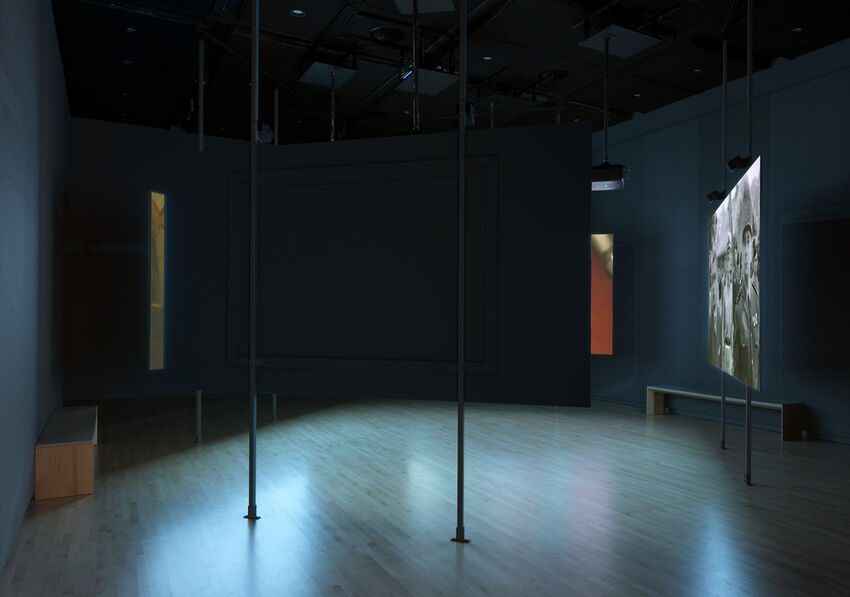
Some passages are close to documentary. Others are staged. There is music, and there is silence. Viewers move from one screen to the next and join them together themselves. No one leads the way.
In 2013 the whole project was presented at Pirelli HangarBicocca in Milan, curated by Andrea Lissoni, in the Shed space designed specially for it. The room was almost completely dark. Images appeared in the darkness, then went out.
That darkness is not a background. It is part of the work. In a village where much goes unsaid, the dark is where those things remain.
Ghosts and time
Apichatpong often makes films about ghosts, past lives, layers of time lying over one another. For him, the past goes nowhere. It stays in the landscape, in the body, in the light as evening falls.
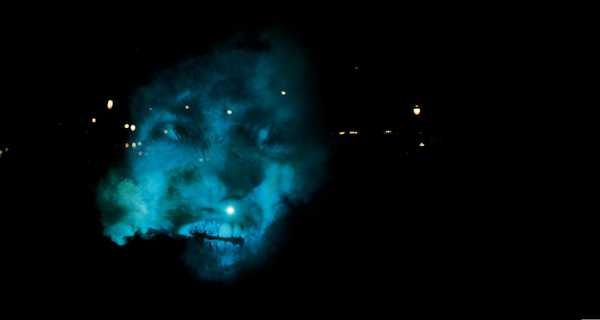
Primitive places today's teenagers among those layers. They do not play victims. They are simply present, doing what the young do: playing, sleeping, talking, waiting. And that ordinary presence is what brings the past forward, like a ghost standing beside them that no one names.
A Letter to Uncle Boonmee, one part of the project, connects to the feature Uncle Boonmee Who Can Recall His Past Lives, which Apichatpong completed in 2010. That film won the Palme d'Or at Cannes. But its ground was already laid in Nabua, in the months spent with the young people there.
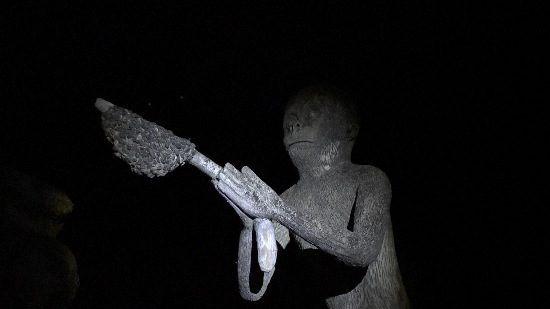
Nor was Nabua an end point. Northeast Thailand, Apichatpong's own home region, returns again and again in his later work, as in Fireworks (Archives), where statues are lit in the night one flash at a time. Each return looks at the same land by a different light. He does not seek a final answer to the place. He simply keeps coming back, and keeps looking.
What Primitive leaves is not a history lesson. It is a sense that a place can remember longer than people do. That what is erased from the telling remains in the soil, in the night, in light falling on a young face.
Contemporary Art