
Essays · Olfactory Art
Brian Goeltzenleuchter. Scents of Exile.
Home can rest on a pair of hands.
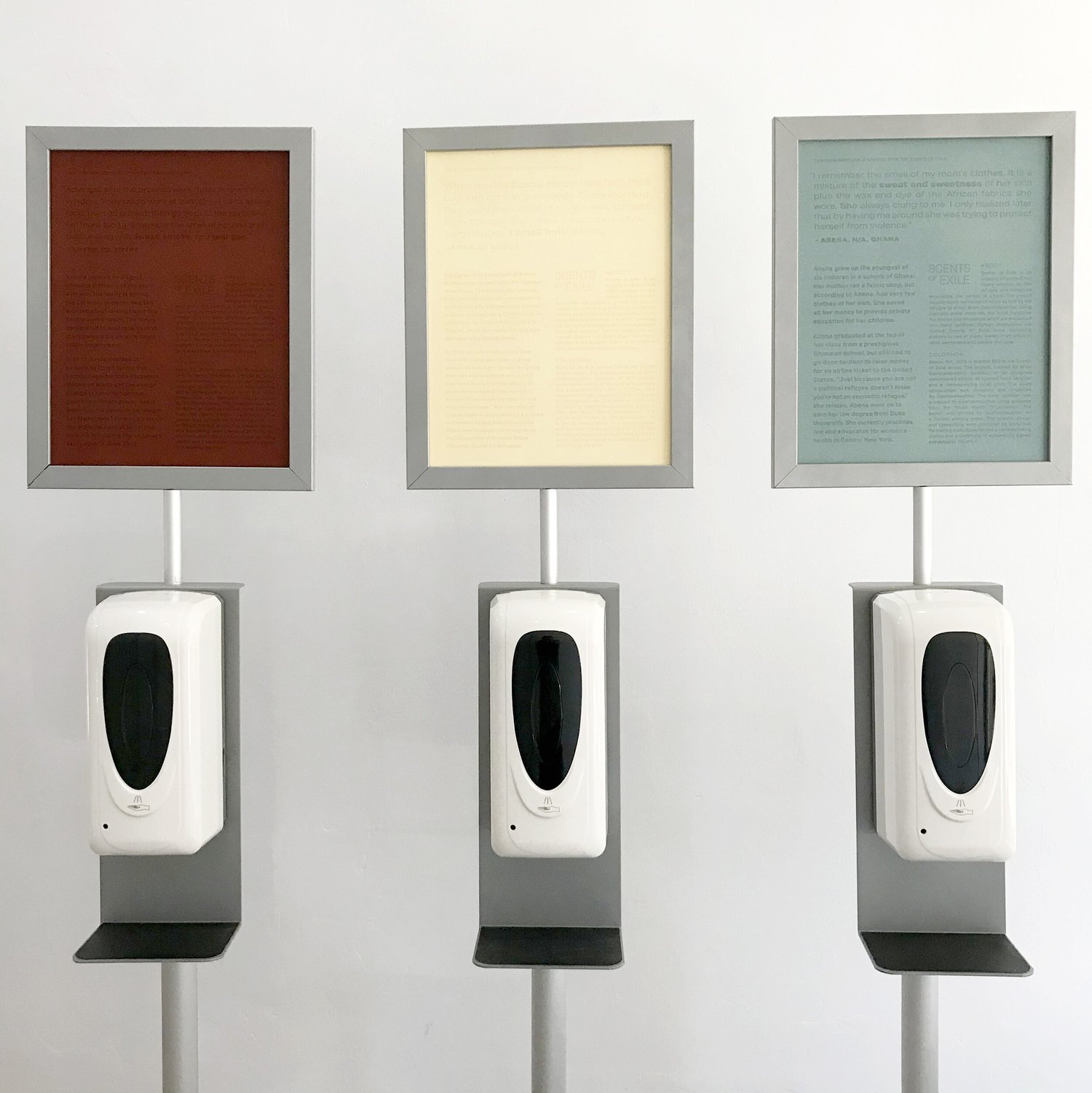
Keyro, 22, 2019, Azira, 52, 2019, and Abena N/A 2020 from the series Scents of Exile · Olfactory Art Keller
A question about the smell of home
Since 2019, Brian Goeltzenleuchter has been asking refugees and other immigrants a simple question: what does home smell like?
The answers are never simple. Some remember a dish. Some remember a street. Some remember things they would rather not. Goeltzenleuchter listens, takes notes, and then does a perfumer's work: he rebuilds those smells with cosmetic grade materials. Each smell is a translation, from speech into matter, from one person's memory to another person's nose.
Then he mixes the smells into hand sanitiser. Each story becomes a station: a wall mounted dispenser and a printed panel summarising the interviewee's account. Each station is named with the person's first name and age. The project is not finished. It keeps adding people, and smells.
Eight stations in New York
From 3 June to 17 July 2021, Olfactory Art Keller in Manhattan showed eight stations from Scents of Exile. At the same time, other stations stood in museums in Bremen, Germany, as part of a large survey of olfactory art called Smell it!
Each station carries a name. Keyro, 22, from 2019, evokes the sweat, smoke and tear gas of protests in Egypt. Azira, 52, also from 2019, evokes boiled milk. Abena, from 2020, gives no age.
The first two smells sit at opposite ends. One is a chaotic street that stings the eyes. The other is a small pot on a stove. Both are home. Goeltzenleuchter does not keep the pleasant smells and drop the hard ones. He keeps what the teller remembers.
Hand washing as a gesture
In 2021, sanitiser dispensers were everywhere. In shops, in offices, at museum entrances. People used them without thinking, many times a day. Goeltzenleuchter chose the most familiar object of that moment.
When visitors pump the liquid into a palm and rub, the smell settles on the skin. They carry it out of the room, onto the subway, home. For a few hours, the hands of someone in New York carry the boiled milk of a person they have never met. The exhibition text calls this a performative act: the visitor becomes part of the work.
The project draws on what is often called the Proust effect, when a smell suddenly calls up a vivid memory tied to a place. But here the effect runs backwards. The smeller has no memory of Egypt or of that kitchen. The smell comes first; the memory belongs to someone else. The visitor borrows it for an afternoon.
Bearing witness by smell
Stories of migration are usually told in numbers and images. How many people, across which border, living in which camp. Goeltzenleuchter does not do that. He tells one person at a time, through the most private sense.
A smell proves nothing the way a document does. But it can do what a document cannot: it enters the body of the listener. A story, once read, can be forgotten. A smell on the hands stays, at least until the next wash.
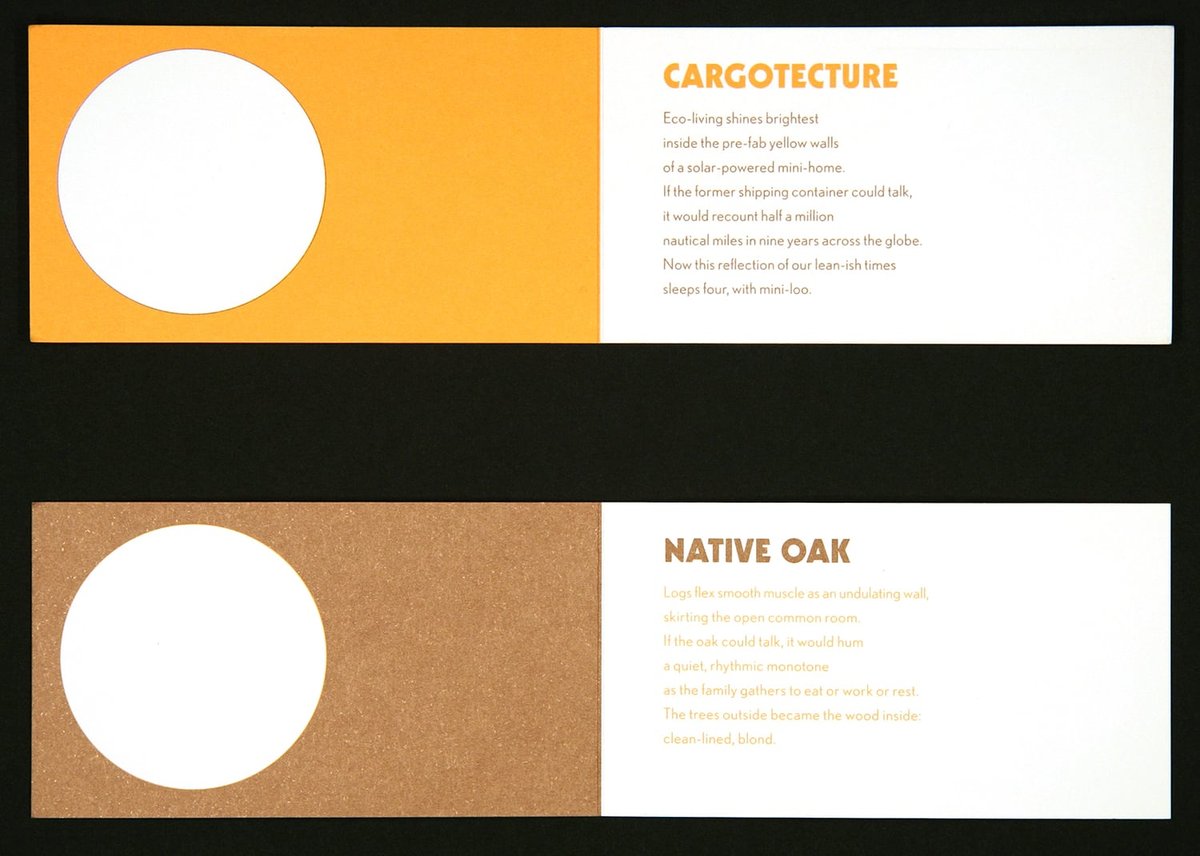
Goeltzenleuchter has worked with smell and place in other projects, such as Smelling the City, where the smells of wood and steel speak of two kinds of house. Scents of Exile goes one step further. It does not ask about the home we have. It asks about the home that was lost, and who will keep its smell.
Olfactory Art