
Essays · Olfactory Art
Candice Lin. Swamp Fat.
The smell does not stay in the gallery. It leaves on the skin.
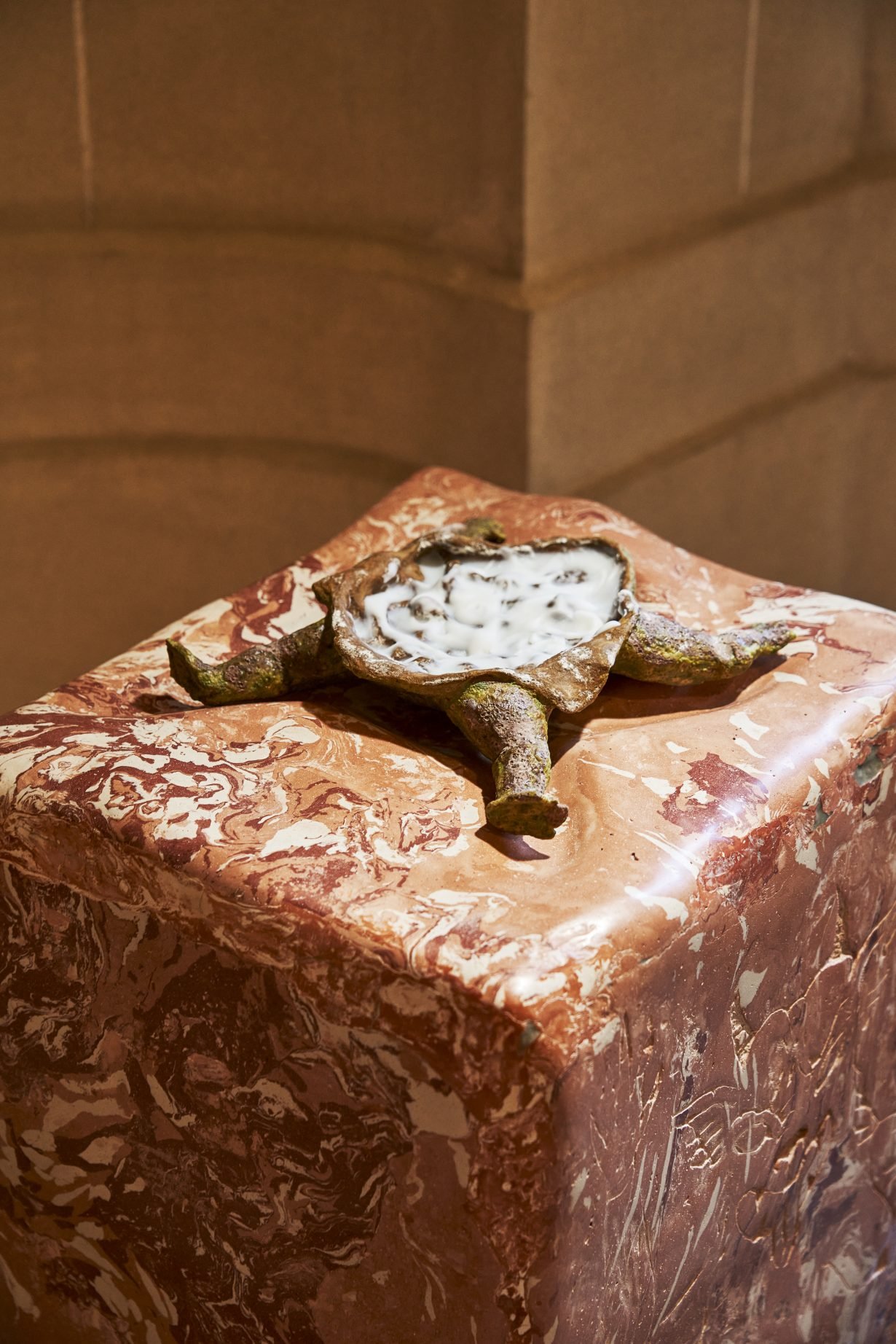
Photo: Jonathan Vanderweit. Courtesy the artist and François Ghebaly Gallery, Los Angeles · ArtReview
A block of fat on a plinth
From a distance, Swamp Fat looks like a small altar or a corner of a workshop. There is ceramic, clay, earth, mortar. There are surfaces of scagliola, a technique that imitates marble with plaster and pigment, once used in European palaces. Its dimensions change with each venue.
At the centre is lard. Candice Lin scented it using an old method from French perfumery: cold fat slowly absorbs the smell of materials laid on it over many days, until the fat itself becomes a vessel of scent. It was once used to hold jasmine and tuberose. Lin used it for the opposite.
The smells in the fat are of the body and of decay: shrimp, rotting flesh. ArtReview called them demonic. No flower covers them up.
Visitors are invited to take a little fat and rub it on their skin. Then they leave the gallery carrying the smell on their hands, their necks, their clothes.
What stands out is that the work does not end in the room. It ends somewhere outside: on a bus, in someone's kitchen, on a pillow that night. Each visitor becomes a moving plinth, and the smell travels further than any museum wall.
Saint Malo, a village on the swamp
The work was made for Prospect.5, New Orleans' recurring exhibition, in its 2021 to 2022 edition. Lin looked toward a place not far from the city: Saint Malo, in the Louisiana marshes.
Saint Malo is considered the first Asian settlement in the United States. It was a mixed community of Filipino, Indigenous and Maroon people, the last being those who escaped slavery and built villages in places hard to reach. They lived from water, from the marsh, from shrimp and fish.
Today the marsh itself is receding. Land sinks, water rises, and the material traces of the community go with it. Little is left to look at. So Lin did not build a model of the village. She made a smell.
Shrimp is not a random choice. It is the smell of the trade that fed the village. Rotting flesh is not random either. A swamp is where everything decays and returns to earth.
Remedy or poison
Rubbing fat on the skin recalls a medieval European practice. People once believed that smearing scented fats on the body would keep plague away. It was pseudoscience, but it shows that smell was once treated as a barrier between the body and the world.
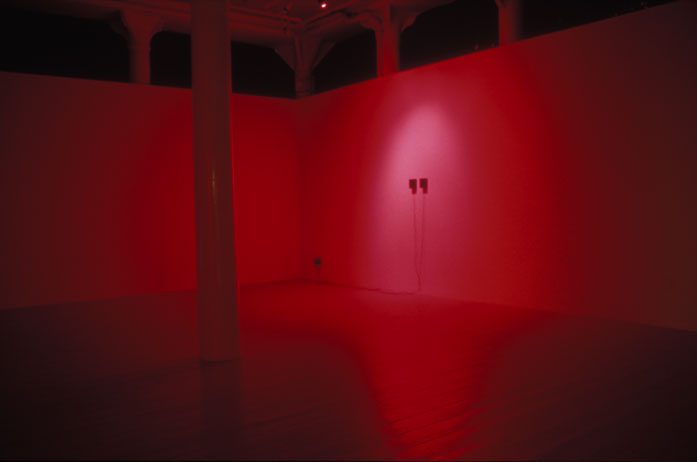
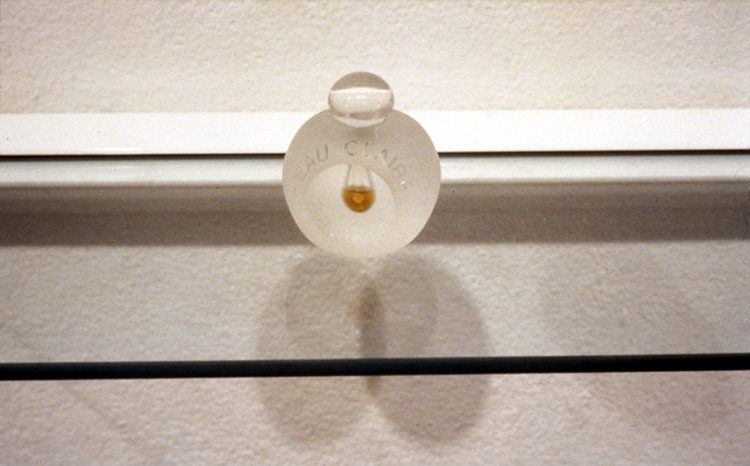
Lin turns that practice over. What goes on the skin is not a pleasant smell to ward off harm but the very smell people wanted to ward off. The line between remedy and poison, clean and dirty, blurs. This runs through much of Lin's work, her research into colonial histories and encounters between materials. Another example is Vomit Clock, where the body is also at the centre.
In 2023, Swamp Fat was shown again in Thick as Mud at the Henry Art Gallery, University of Washington, Seattle. A Louisiana marsh travelled thousands of kilometres inside a block of fat.
There is a discomfort built into how the work operates. Each visitor must decide whether to touch it. Touching means accepting an unlovely smell and letting it follow you for hours. Not touching means staying outside. Lin does not say which is right. She leaves the fat there and lets each nose answer.
Olfactory Art