
Essays · Olfactory Art
Clara Ursitti. The Smell of Fear.
Behind the perfume, there is always a body.
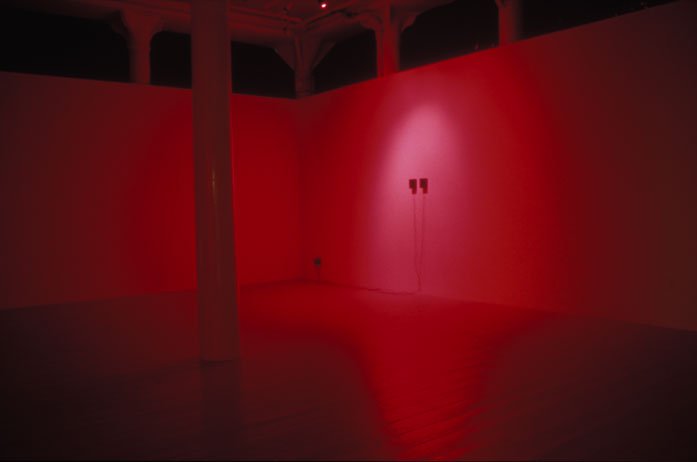
© Clara Ursitti · Clara Ursitti (official artist site)
Four speakers that make no sound
In 1996 Clara Ursitti had a solo exhibition at Transmission Gallery, an artist run space in Glasgow, Scotland. The main work was called The Smell of Fear.
In the upper gallery stood four scent dispensers made to look like speakers, the kind placed on either side of a stage. Each had a motion sensor. When a visitor walked past, the machine released a burst of scent.
The room was lit with pink spotlights. Faint singing rose from below. Visitors stood among speakers that gave off not sound but smell.
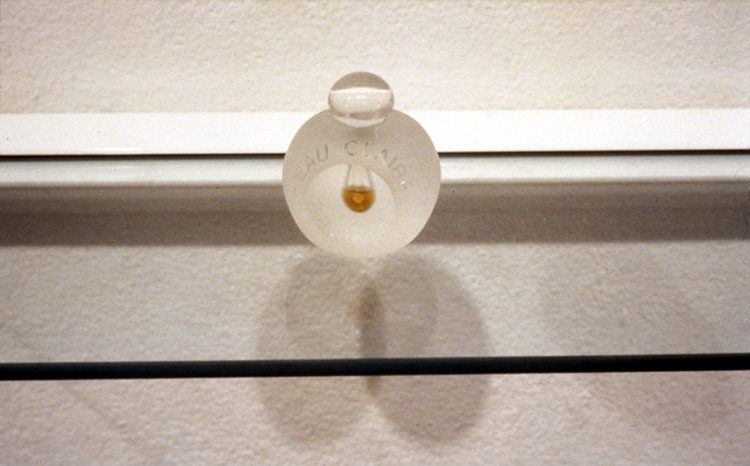
The smell was a construction. Ursitti worked with a biochemist, Dr. Dodd, to recreate what they anticipated Judy Garland's body odour to have been. It was paired with one of the perfumes Garland favoured.
The star and the sweat
Judy Garland was one of Hollywood's greatest stars, famous from childhood. Behind the image was a hard life. By most accounts she depended on diet pills and sleeping pills for years.
One physical result was heavy sweating. During shows she had to change costume again and again, and she used a great deal of perfume to cover her body odour.
Ursitti took exactly that detail as her starting point. Not the songs, not the films, not the glamorous photographs. The smell. Something the audience in their seats never smelled, but those standing near her in the wings did.
The title points to something many people know: fear has a smell. Nervous sweat is different from the sweat of a hot day. A star facing thousands of people every night carries both.
The basement and the last song
In Transmission's basement Ursitti projected a video of Garland performing at the London Palladium, shortly before her death. She wears a tramp costume, a role with a masculine cast, and sings the song that made her famous as a child.
At the finale she weeps, then leaves the stage. No one can be sure whether the tears were real or part of the act.
That ambiguity runs through the whole work. Upstairs, perfume and body mix, and the visitor cannot tell the person from the cover. Downstairs, tears and performance mix, and the visitor cannot tell feeling from stage.
Garland was always in a role. Ursitti does not try to peel it away. She only shows that beneath the role there is still a body, sweating.
A portrait of someone else
Many of Ursitti's early works turned on her own smell. With The Smell of Fear she turned to someone else: famous, dead, surviving only in film, photographs and recordings. And she asked what is missing from our memory of that person.
The answer is smell. Stars are preserved through eye and ear. No one preserves how they smelled. Ursitti rebuilds the missing part, if only by conjecture, knowing it can never be confirmed.
That conjecture is what makes the work honest. Ursitti does not claim this is Garland's smell. She calls it anticipated. The visitor smells a hypothesis, not a relic.
The smell of fear has drawn other artists too, such as Sissel Tolaas in FEAR, where men's sweat was collected and rebuilt as scent. But Ursitti sets the question on one particular person, under pink light, among silent speakers.
Olfactory Art