
Essays · Olfactory Art
Clara Ursitti. Invader.
A work with no place, only a time of arrival.
© Clara Ursitti · Clara Ursitti (official artist site)
Twelve artists, one atmosphere
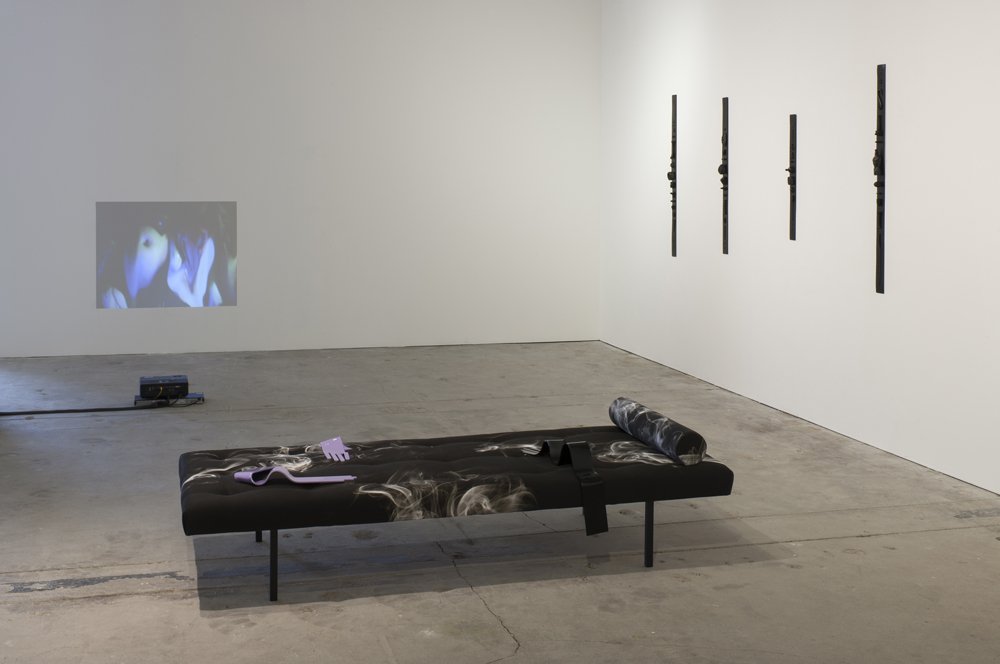
In 2014 Scotland staged GENERATION: 25 Years of Contemporary Art in Scotland, a programme of exhibitions across the country looking back on a quarter century of its contemporary art. Within it, Glasgow Sculpture Studios opened the group show Mood is Made, Temperature is Taken, from 4 July to 6 September.
The curator was the writer and editor Quinn Latimer. She brought together twelve artists who held studios at Glasgow Sculpture Studios, with very different sculptural practices: video, print, object and scent. Her intention, as the title suggests, was to raise the temperature and make a mood.
Clara Ursitti was one of the twelve. Her newly commissioned work was called Invader. It had no shape. It was a set of scents programmed to appear in the gallery at fixed intervals.
Ursitti has worked with smell since the early 1990s. She is one of the artists in Scotland who have used scent as a main material the longest, with installations and interventions that look at the social and psychological life of smell.
A work that performs on schedule
Most works in an exhibition have a place. A painting on a wall. An object on a plinth. The visitor walks to the work, pauses, moves on.
Invader has no place. It has a timetable. At set times the scent is released, spreads through the room, then fades. The artist's own page describes it as timed scents performing in the gallery. The word performing matters: the smell behaves like a performer, stepping on stage, then leaving.
So not every visitor meets Invader in the same way. Someone who arrives just as the scent is released stands in a dense cloud. Someone who comes later catches only what remains. Someone who comes between two releases may notice nothing, and leave without knowing they missed a work.
Writing for ArtReview, the critic Susannah Thompson described Invader seeping into the gallery at timed intervals, slow burning, disorienting and unsettling.
Trespassing on other works
The title says plainly what the work does. In a group show each artist usually has a share of the space. The boundaries are not drawn, but everyone respects them. One work should not smother its neighbour.
Smell knows nothing of those boundaries. When Invader is released it passes over the video, the prints, the objects of the eleven other artists. A visitor stands in front of someone else's work but smells Ursitti's. Two works overlap in the same moment, though nobody arranged them so.
It raises a question about who owns a space. Who gets to decide the air of a room? In daily life the question comes up constantly: cigarette smoke from next door, the perfume of the person beside you on the bus, a neighbour's cooking. We do not choose them, yet they arrive.
Mood, made
Latimer's title suits Invader well. Mood is made, temperature is taken. Both belong to the air, invisible, yet they decide how a room feels.
Invader makes that idea clearest. It adds no object to the room; it changes the mood of the room itself. A wall, a plinth, a video screen, seen inside an unfamiliar smell, call up a different feeling.
The work also continues a long thread in Ursitti's practice: using smell to unsettle. In The Smell of Fear, almost twenty years earlier, the scent dispensers were disguised as speakers. In Invader the smell needs no disguise. It only has to arrive on time, and everything in the room must make way.
Olfactory Art