
Essays · Olfactory Art
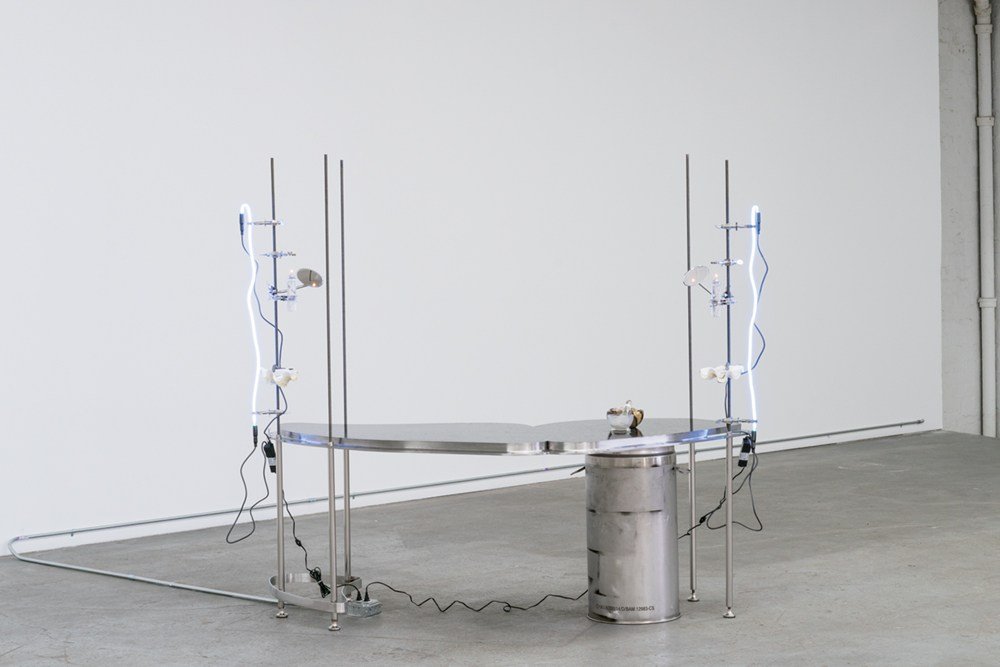
Elaine Cameron-Weir. Sentry Tactical Like Prey with Evolutionary Eyes of a Predator on the Wing 2.
An object stands guard, and the smell is its breath.
Art in America · Art in America
A title as long as a warning
Sentry Tactical Like Prey with Evolutionary Eyes of a Predator on the Wing. The title reads like a line of poetry, or a military description misread aloud.
Elaine Cameron-Weir, a Canadian artist based in New York, made two works with this title in 2016, numbered 1 and 2. Each is a large sculpture, about 80 by 40 by 72 and a half inches, larger than a person standing beside it.
They were shown in her solo exhibition snake with sexual interest in own tail, which opened in March 2016 at Venus Over Los Angeles. She spent about nine months preparing it.
An inventory of materials
The materials list reads like an inventory of several worlds. Stainless steel. Terrazzo. Laboratory hardware. Clamshells. Sterling silver. Motorcycle rear view mirrors. Neon and transformers. Liquid candles. Mica. Frankincense. A septarian concretion.
Some belong to industry and engineering. Some come from nature and are very old: shells, mica, the septarian stone formed over geological time and cracked inside into veins. And frankincense, a tree resin people have burned in ritual for thousands of years.
Cameron-Weir does not hide these differences. She sets the things side by side, so each carries its own history and myth into one sculpture.
Flame, mica, and a mirror looking back
On the sculpture are clamshell halves holding ground frankincense, and glass oil candles. Over some flames sit thin wafers of mica, and frankincense is heated on them. The resin does not flare. It warms, softens, and releases its smell.
Beside them, motorcycle mirrors reflect the flames. A rear view mirror is for looking behind, for knowing what is following you. The eyes of prey always need to know that.
So the whole sculpture takes the shape of a guard post. It looks around through mirrors, keeps a flame, and signals by smell. Walking around it, the viewer is unsure who is watching whom.
A room with many clocks
In the same show, a curved adobe wall about six feet high divided the gallery. On it were neon, sconces, a motorcycle mirror, a small flame under a piece of frankincense, a found shell. The Snake works hung from beams, made of hand cut copper scales, each enamelled, mapped from the belly of a real snake.
Frankincense appeared again and again, a thread running through the works. Visitors might not recognise every material. The smell reached them in every corner.
This is what sets Sentry Tactical apart from an ordinary sculpture. Steel and stone measure time in years, in centuries. The candle measures it in hours. Frankincense on mica measures it in minutes, in the breath of whoever stands in front of it.
A year later Cameron-Weir used another resin, labdanum, in a show in Los Angeles. See the essay on her labdanum work.


Olfactory Art