
Essays · Olfactory Art
Mike Bouchet. Tender.
Money carries the smell of every hand that held it.
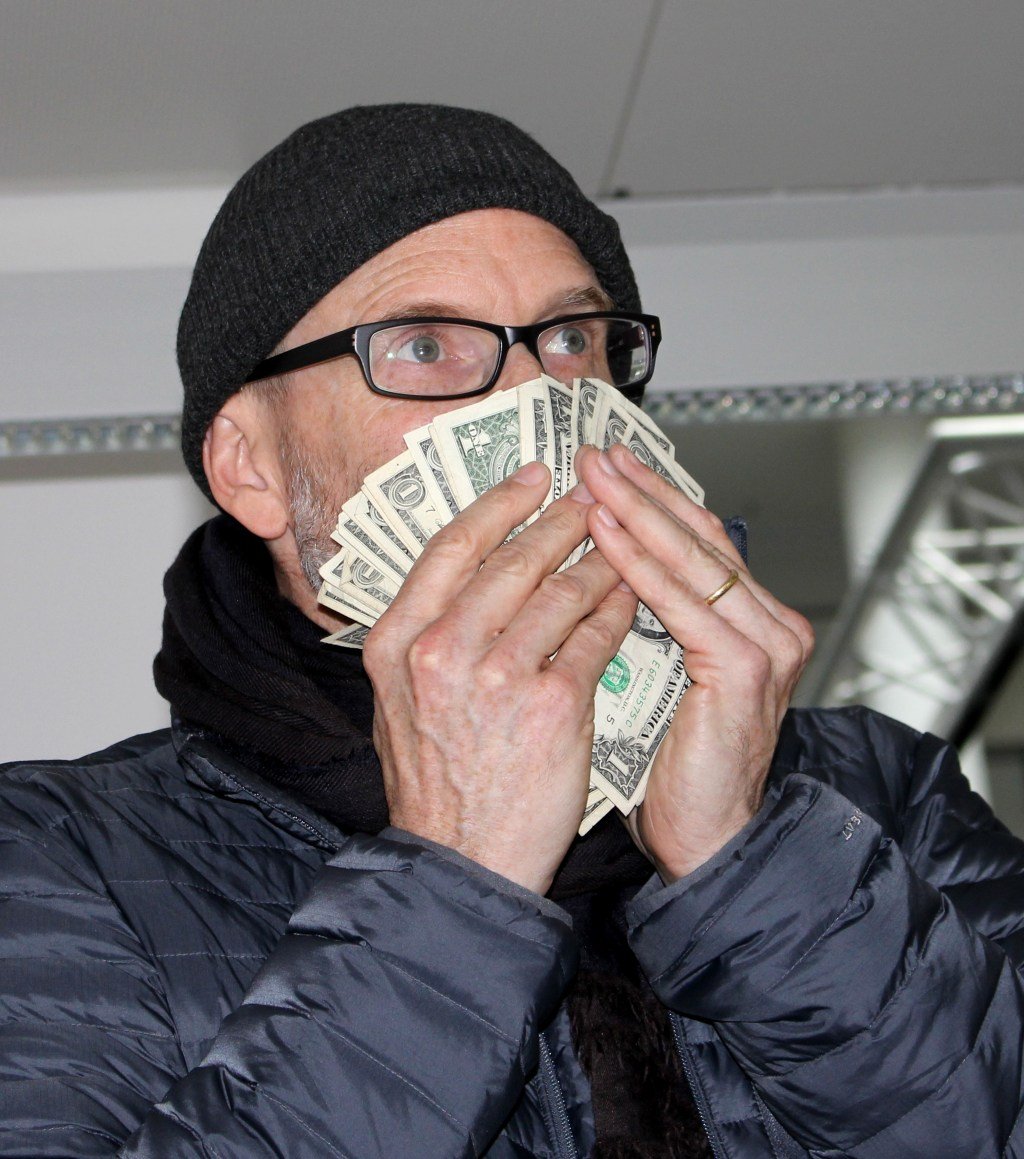
Courtesy Christina Witter and Symrise · ARTnews
An empty gallery
On 19 January 2017, Marlborough Gallery opened Mike Bouchet's Tender at its Chelsea space, 545 West 25th Street, New York. Visitors walked in to white walls and an empty floor. Nothing hung. Nothing stood.
The work was in the air. The whole gallery was filled with a synthetic smell: the smell of US dollar bills. The gallery called it a sculpture. A sculpture with no shape and no weight, yet occupying the full volume of the room.
The show ran until 25 February 2017. Beside the scented room there were preparatory drawings and documentation. The scent work was produced in an edition of three, like a print.
The opening fell in the week of the January 2017 presidential inauguration. The gallery presented Tender as a comment on power, constructed reality and human desire.
More than a year for the smell of money
Bouchet worked with Marc vom Ende, a senior perfumer at Symrise, the large German flavour and scent house. Research took more than a year.
Reports at the time said the smell of new money alone took about six months. Used money took roughly eight more. New bills are mostly paper and ink. Old bills carry everything life leaves on them: sweaty palms, wallet leather, cash drawer dust, trouser pockets.
The final formula had over 100 components. The gallery described notes from several inks, leathers and papers, with traces of human odour and other matter to give the handled quality of a circulated bill. Its base was cotton, ink and soap. The real smell of money, in other words, is the smell of an object people use constantly.
From sewage to cash
A year before Tender, Bouchet made a smell work pointing the other way. At Manifesta 11 in Zurich in 2016, he worked with the city's wastewater plant on The Zurich Load: 80 tonnes of sewage sludge, about what Zurich's residents produce in a single day.
The sludge was mixed with cement, lime and pigment, pressed into 252 blocks and laid out over more than 30 metres in the Migros Museum. Specialists treated it to be safe to show and to reduce the smell, though not to erase it.
Side by side, the two works make a pair. One is what people expel and want to forget. The other is what people accumulate and want to keep. Both are the collective product of a city. Both entered the gallery as smell.
The title has two faces too. Legal tender is money. Tender is also soft, gentle, easily hurt. A room full of the smell of cash, and a word that suggests fragility.
Invisible sculpture
Tender asks what sculpture is. If sculpture shapes matter in space, then smell is matter as well: volatile molecules with mass and concentration. They take up room, even when the eye sees nothing.
Visitors do not walk around Tender as they would a statue. They walk inside it. Every breath is a touch.
In the same line of thought, Sean Raspet condensed the air of a gallery into a scratch and sniff coating; see the essay on Residuals. Both use smell to reveal something always present and never looked at.
In Tender, that something is money. What we count, keep, give and receive. It turns out to smell of all of us.
Olfactory Art