
Essays · Olfactory Art
Germaine Cellier. A smell that doesn't ask permission.
Leather is leather, leaf is leaf.
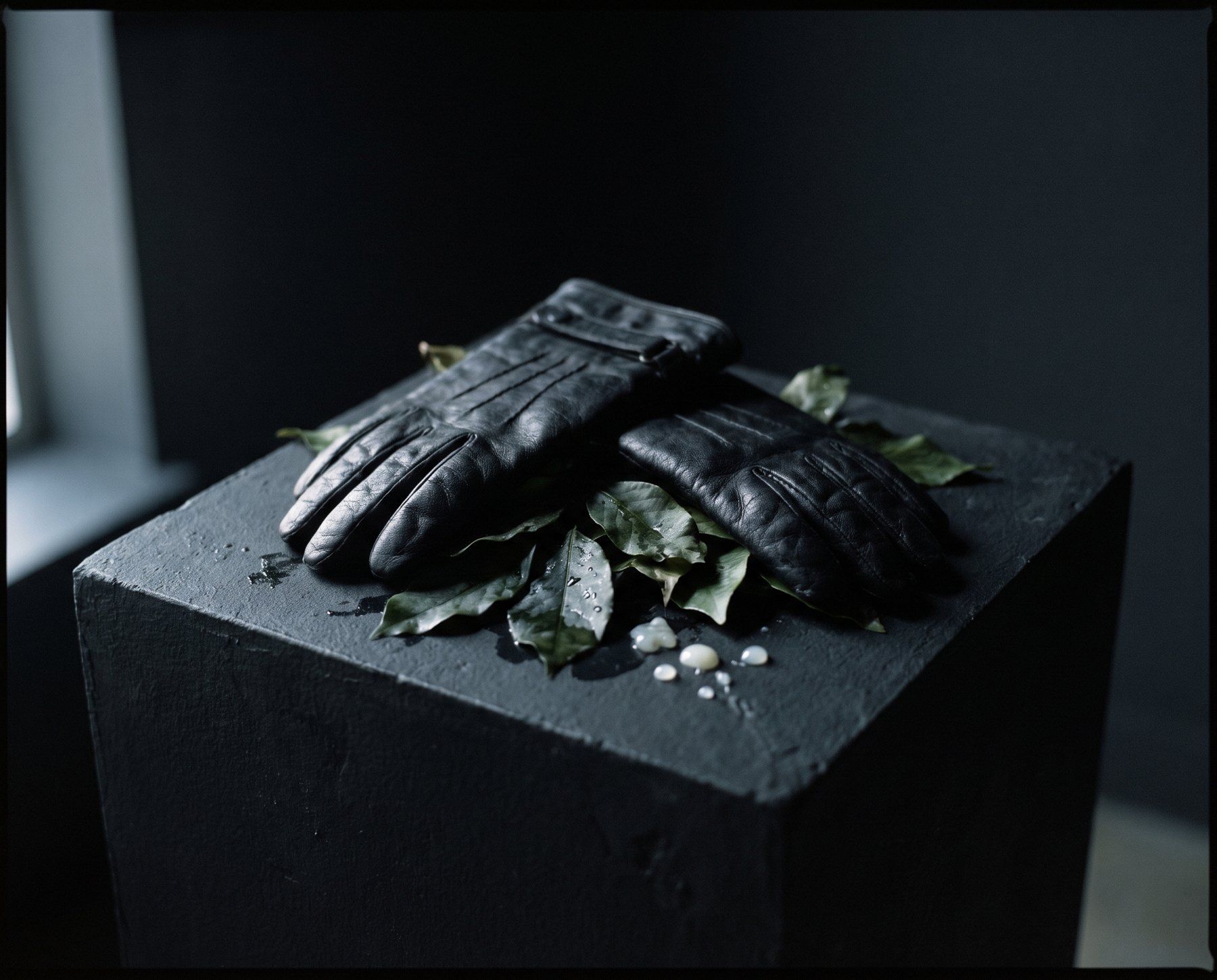
A perfumer in 1940s Paris
Germaine Cellier studied chemistry. Why she chose it, and whether she first meant to become a perfumer, remains unclear. Nez magazine, talking with the two authors of a graphic novel about her life, noted that such blurred areas are part of her story.
What is certain is the smells she left. In the 1940s, when perfumery was almost entirely a man's trade, she made a series of scents for Paris couture houses some of which are still sold today. Nez calls her one of the first women perfumers to be talked about by name.
She had a strong character, full of contradictions. She smoked, drank, spoke bluntly. At the same time, those who write about her say she was tender with her family. No need to exaggerate. Her smells say enough about who she was.
Bandit: leather without softening
In 1944 the house of Robert Piguet launched Bandit, made by Cellier. It is a leather scent. The house's official site still describes it as a fearless leather and says it shocked the perfume world.
Leather in perfume of that time was usually built from very strong materials. One of them is isobutyl quinoline, a classic leather material, dry, green, earthy and rooty, so powerful it is normally diluted before use. A material like that forces a choice: use a trace for form's sake, or use enough for it to become the main character.
Penta reads Bandit as the second path. It is not the leather of a new, glossy bag smelling of the shop. It is closer to worn leather, handled, with sweat and smoke. The person smelling is not gently invited in. They are placed straight in front of the thing.
Vent Vert and Fracas: green and white, one dose
For the house of Pierre Balmain, Cellier made Vent Vert, a green chypre. The name means green wind. Penta reads it as the smell of leaves bruised by wind, of stems snapped, of green sap still wet: green not as a pleasant colour, but as a thing just wounded.
In 1948 she made Fracas for Robert Piguet. Fracas is a tuberose, a white flower whose smell is dense, sweet, almost heavy. Many perfumers would balance tuberose with lighter things to thin it. Fracas puts the tuberose in the middle, large and full.
Nez notes a common thread in her work: she used materials at high doses, higher than the habits of the trade. Three different smells, one leather, one green, one white flower. The same attitude: choose a thing, then let it speak in its full voice.
Not softening the thing: an aesthetic of directness
There is an old habit in the craft of smell: rounding. Take off the corners, add sweetness, add powder, so a smell is easy for many people to wear. The habit is not wrong. It is a choice.
Cellier showed that the opposite choice has its place. A smell can be harsh, dense, difficult, and still be a work. The person smelling may not like it at once. But they will remember it.
Penta sees in her a lesson in honesty toward things. Leather smells of the animal and of the tanning. Green leaves smell of the cut. Tuberose is dense. Saying so, without softening, is a way of respecting the thing. It is also a way of respecting the person smelling, who is grown enough to stand before a real smell.


Olfactory Art