
Essays · Olfactory Art
Helga Griffiths. Essence of Coal.
Coal is a forest that has slept a long time.
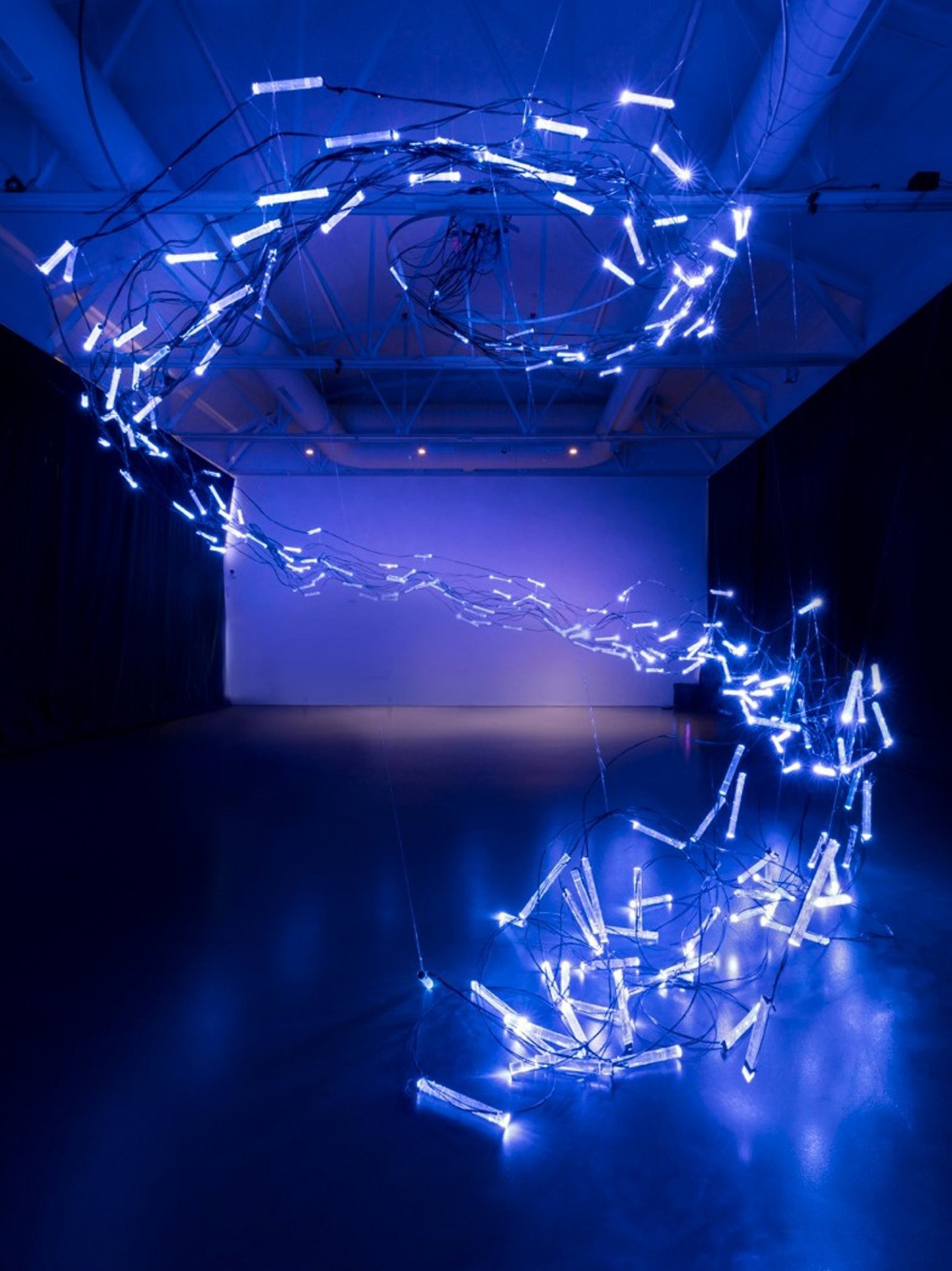
© Helga Griffiths · Helga Griffiths (official site)
The last year of coal
In 2018 Germany ended underground hard coal mining. For the Ruhr, where mines had shaped cities, factories and the lives of generations, it was a major turning point. A trade that had lasted centuries came to a stop.
That same year, at the Kunstmuseum Mülheim an der Ruhr, Helga Griffiths showed Essence of Coal. The museum showed it again in 2022.
Its full title contains 18C. C is the chemical symbol for carbon, the element coal is made of. 18 is the year 2018. So the title is both a formula and a date: carbon, in the year it stopped being dug.
Distilling a black mass
Essence of Coal has several parts. The first is a distillation: coal passed through a separation process to draw out an essence, carried out under the supervision of chemistry professor Michael Reggelin. A video records the whole process, so viewers watch the black mass slowly become liquid.
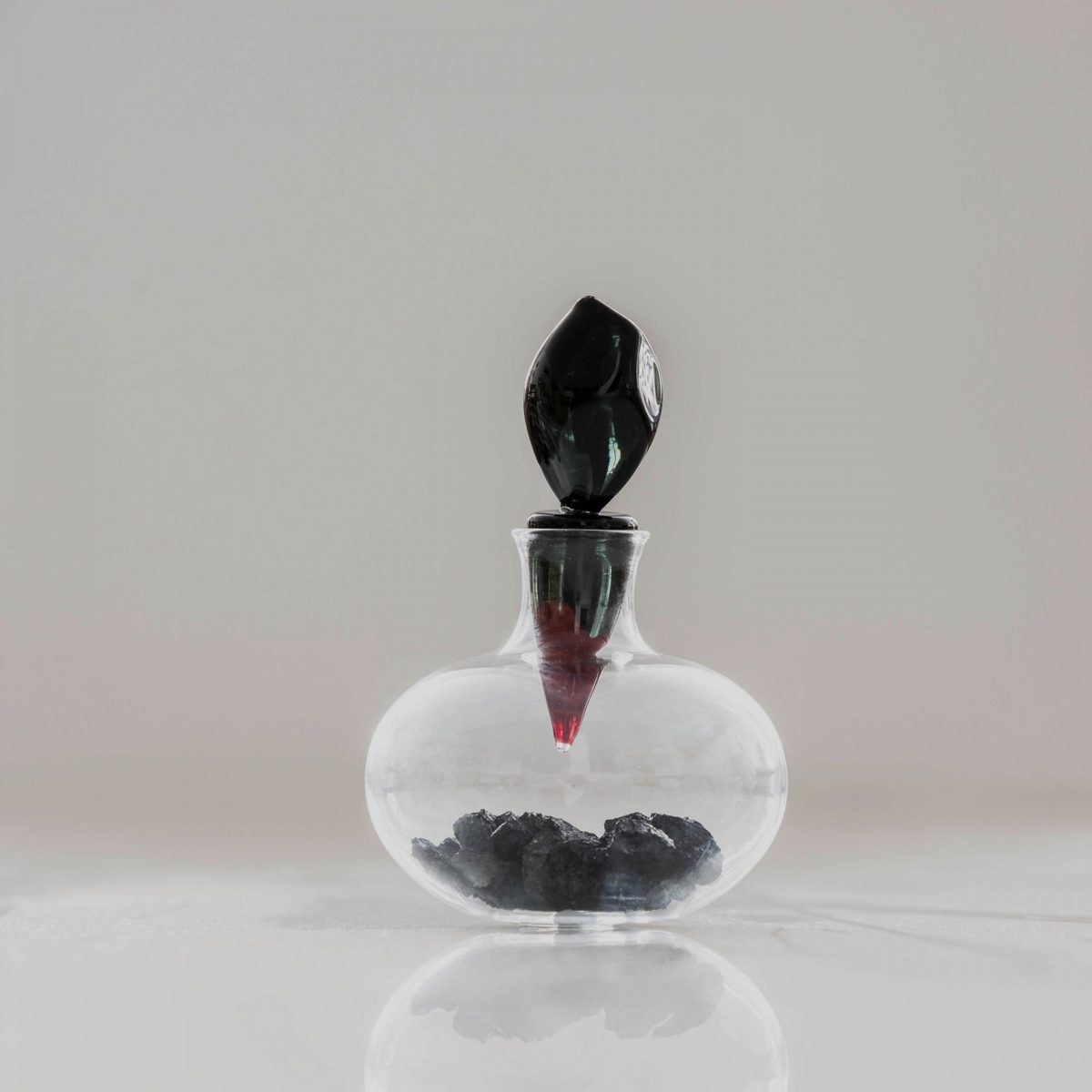
The second part is a perfume. From the coal essence, perfumer Karl-Heinz Bork made a scent. According to the artist's site, it recalls both primeval forest and the landscape of the coal mines. It was conceived as a store of memory for a whole era.
The two images do not conflict. Coal forms from the plants of very old forests, buried and compressed over long spans of time. A coal mine is where people dig those forests back up. A smell that recalls both forest and mine follows the whole life of the material.
In the installation the perfume does not stand as merchandise. It is an object to smell and to remember, placed beside the video of the process that produced it.
From coal to diamond
The third part goes another way. Bernd Mildenberger and Thorsten Stühler of Battuta produced synthetic diamonds from carbon bearing material, under very high pressure and temperature. A second video records the process.
Side by side, the two videos tell two fates of one element. Coal is soft, dark, layered. Diamond is hard, clear, precious. Both are carbon. They differ only in how the atoms are arranged, and in what has happened to them.
The final part is a three dimensional light installation, controlled so that it shifts constantly. Visitors walk through it and meet four elements in turn: fire, earth, air, water. These are also what coal passes through in its history, from forest to furnace.
Keeping a landscape through smell
When an industry ends, its landscape changes fast. Pit towers are dismantled or turned into museums. Spoil heaps are grassed over. Miners grow old. What disappears first is usually what no one thought to archive: coal dust in the air, the smell of work clothes coming home.
Griffiths chose to archive exactly that, by a roundabout route. She did not capture the smell of the mine. She distilled the material itself and let its smell speak of where it came from.
The same year she made another work on the same subject: she went down into the last working coal mine and sealed its air in a glass vessel. That work is L'Air du Charbon. If Essence of Coal asks what a material still holds, L'Air du Charbon asks what a place still holds.
Essence of Coal neither mourns a hard trade nor glorifies it. It does one thing: it refuses to let carbon leave without leaving a smell.
Olfactory Art