
Essays · Contemporary Art
Hito Steyerl. Factory of the Sun.
Every light has someone making it.
MOCA Los Angeles · MOCA Los Angeles
A screening room like a beach
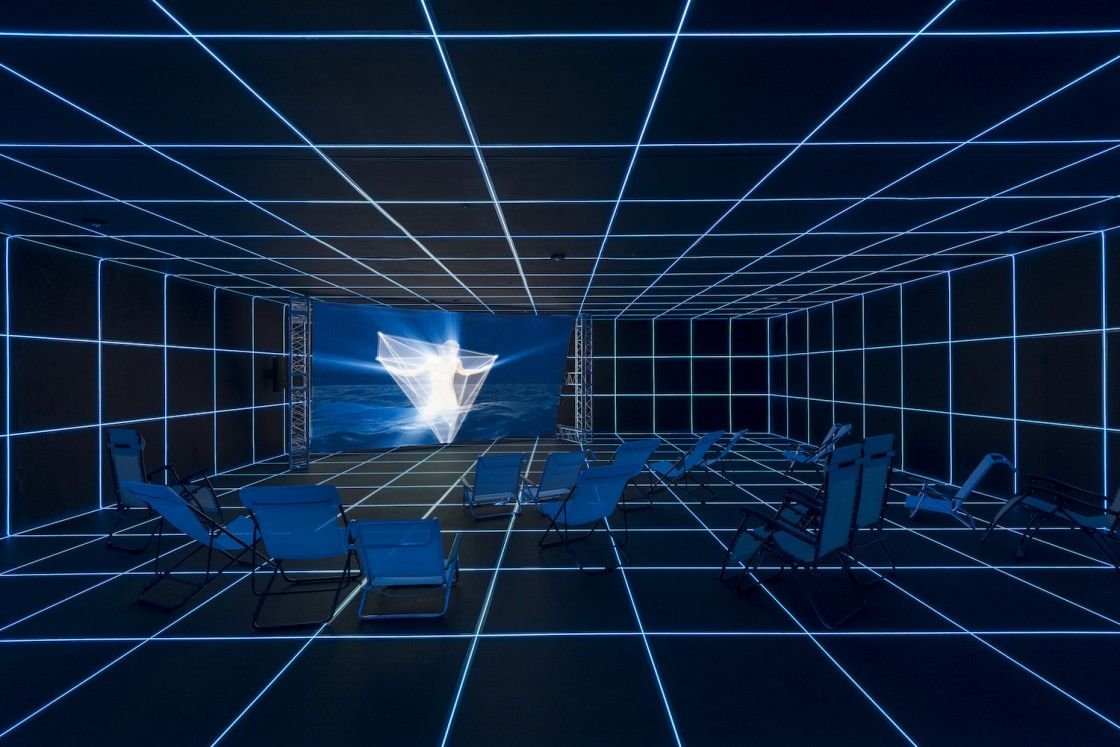
Factory of the Sun premiered in 2015 in the German Pavilion at the Venice Biennale. Visitors did not find a screen on a white wall. The room was bathed in blue. Lines of light ran across walls and floor in a grid, like the measuring grid of a motion capture studio. In front of the screen stood lounge chairs, the kind set out on a beach.
Viewers lay down to watch. A relaxed posture, the posture of holidays and sun. What they watched was anything but relaxed.
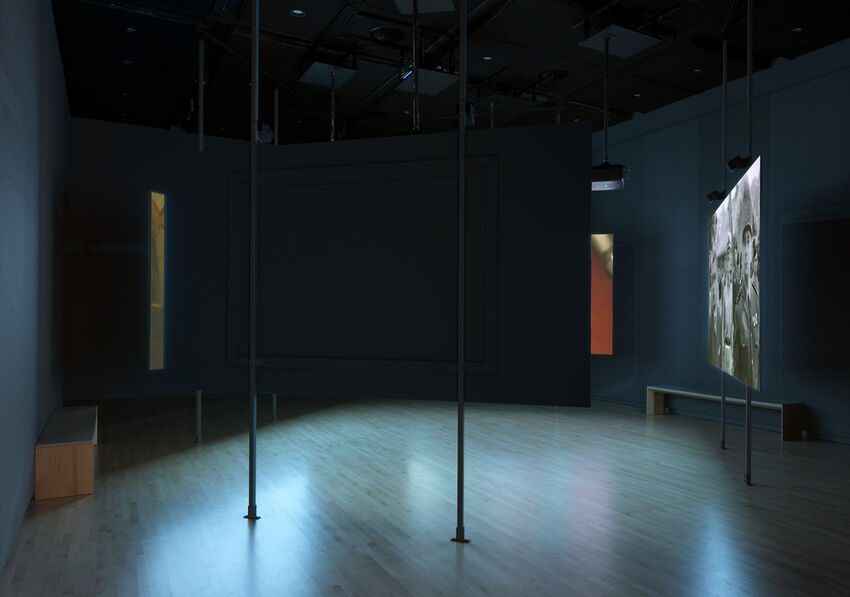
The following year the Museum of Contemporary Art, Los Angeles gave the work its US premiere in a solo presentation at MOCA Grand Avenue, from February to September 2016.
Movement into light
The video tells a strange story. In a motion capture studio, workers are forced to dance. Every movement of their bodies is captured and converted into artificial sunshine. The more they dance, the more sun there is. No dancing, nothing.
Motion capture studios make images for films and games. Performers wear suits dotted with markers; computers read their movement and attach it to a virtual character. The real body disappears, leaving data. Steyerl pushes this one step further: the body becomes not just an image but energy.
The story does not run straight. It jumps between news reports, documentary, video game scenes, viral dance videos. At times viewers cannot tell real news from invented footage. That confusion is part of the work.
MOCA names light and acceleration as its central motifs. Everything is fast: music, cuts, characters moving as if fast forwarded. Too fast to stop and ask who profits.
Labour, surveillance, forced joy
Hito Steyerl is a German artist and writer, known for essays on images in the network age, including one on the poor image, the compressed, copied pictures that travel everywhere. Many of her videos are both artworks and half ironic lectures.
Factory of the Sun offers an uncomfortable picture: joy under compulsion. Dancing usually signals freedom. Here it is a shift. The workers must look happy, because that happy movement is the product.
MOCA writes that the work asks what possibilities remain for collective resistance when surveillance has become an ordinary part of an increasingly virtual world. In the studio every gesture is recorded. There is no blind spot.
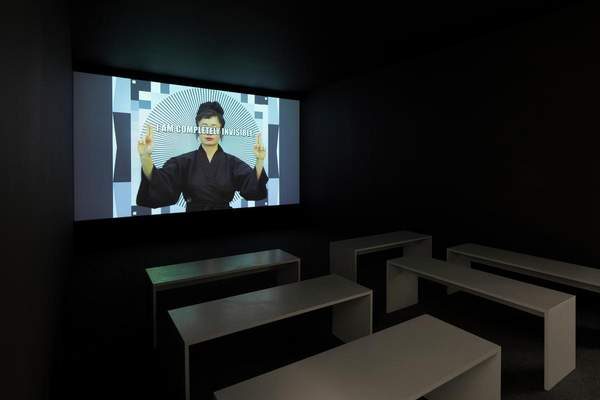
Two years earlier she had asked the reverse question in How Not to Be Seen: how to avoid being seen. Factory of the Sun is the other face of it. Here everyone is watched, and being watched is what creates value.
Lying under a fake sun
Back to the lounge chairs. Viewers lie in a dark room under blue light from the grid and the screen. They bathe in a fake sun while watching the people who make it.
The work does not need to say it outright. The posture says it. We relax on the labour of others, and we rarely see that labour.
What keeps the work worth watching is that it does not age with its technology. The games may look dated, the dances may have passed. The question remains: for every bright image we scroll past each day, who had to move to make it?
Contemporary Art