
Essays · Contemporary Art
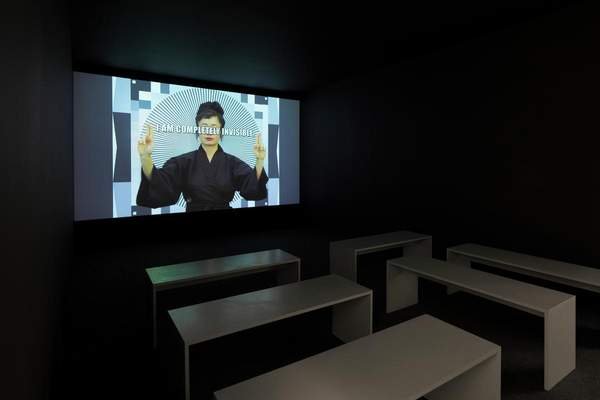
Hito Steyerl. How Not to Be Seen: A Fucking Didactic Educational .MOV File.
Some things are present without leaving an image.
Tate · Tate
A lesson in sixteen minutes
How Not to Be Seen: A Fucking Didactic Educational .MOV File is an HD video by Hito Steyerl, made in 2013. Her gallery lists it at fifteen minutes and fifty two seconds. It is in the Tate collection and has been shown at Tate Modern in the display Performer and Participant.
The title carries most of the tone. A .MOV file, the familiar video format on any computer. A teaching document. And a swear word dropped in the middle, like the sigh of someone writing a lecture they know is useless.
Steyerl was born in Munich in 1966 and lives in Berlin. She makes films and writes, and both circle the same question: how images work within today's economics and politics. In her writing she has defended poor images, compressed, copied, circulating across the web, as images with lives of their own.
How Not to Be Seen goes the other way. It does not ask where images go. It asks how not to become one.
Desert, green screen, pixel
The video opens somewhere strange: a resolution target in the desert, painted squares and bars on the ground used to test cameras photographing from above. It is where images are measured for sharpness. Steyerl chooses that very place to teach disappearance.
The lesson comes in parts, read by a flat synthetic voice. Hide from the camera. Hide in plain sight. Become a picture. Be smaller than a pixel. People stand before a green screen, then are keyed out of the frame, leaving an empty ground. Some passages are as earnest as a training film; others play like a comedy sketch.
Humour is how Steyerl makes the question easy to hear. The question itself is not funny. Satellites photograph the ground at ever higher resolution. Cameras are everywhere. Who is seen, who is overlooked, who is erased: that is a matter of power, not technology.
The video suggests that some people were invisible long before they wished to hide: the undocumented, the uncounted, those who vanish without record. For them, not being seen is not a skill. It is a condition.
Outside the frame
What keeps the work true more than a decade later is that it offers no way out. None of the lessons really works. Each way of disappearing leads back to another image. Hide in the green screen and you become an effect. Hide in a crowd and you become data.
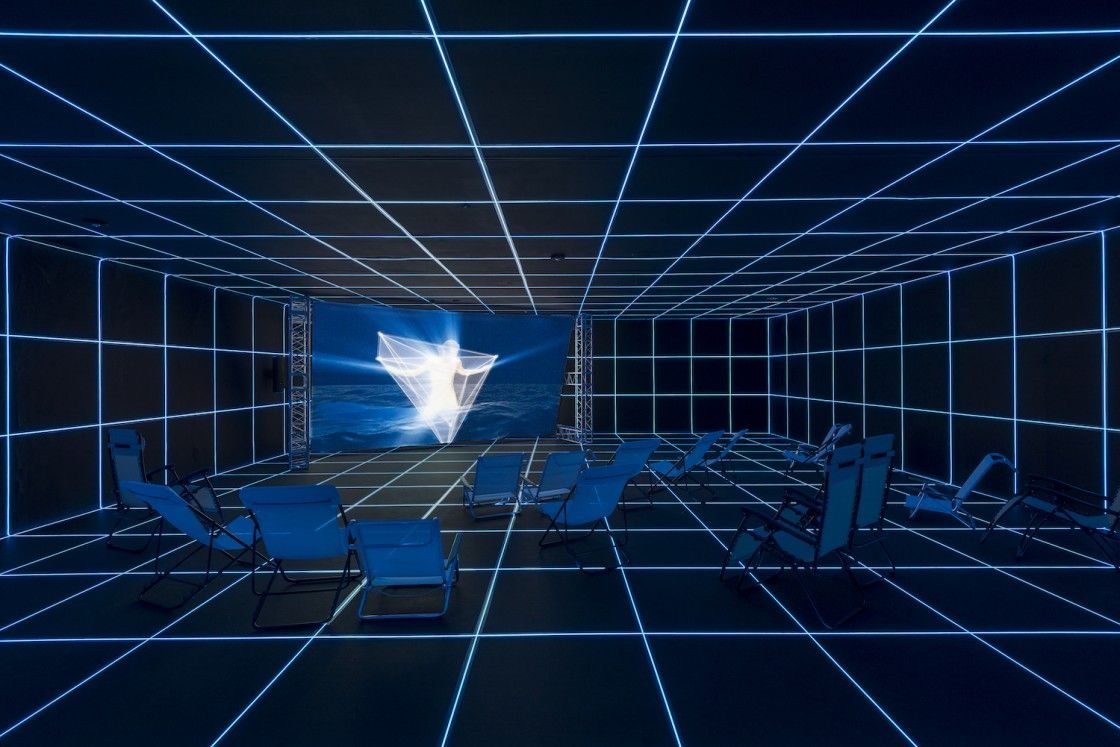
Steyerl pursued the question in later works such as Factory of the Sun, where people are turned into light inside a video game. In How Not to Be Seen, it is still at its simplest: a person, a camera, and the wish to be left alone.
Afterwards one looks at the familiar cameras around differently. The phone on the table. The dark dome on a supermarket ceiling. The satellite view of one's own roof on a map.
Perhaps the video's only lesson is that invisibility has become a luxury. And what still escapes the frame, a voice in the next room, a smell drifting through a door, becomes more precious.
Contemporary Art