
Essays · Photography
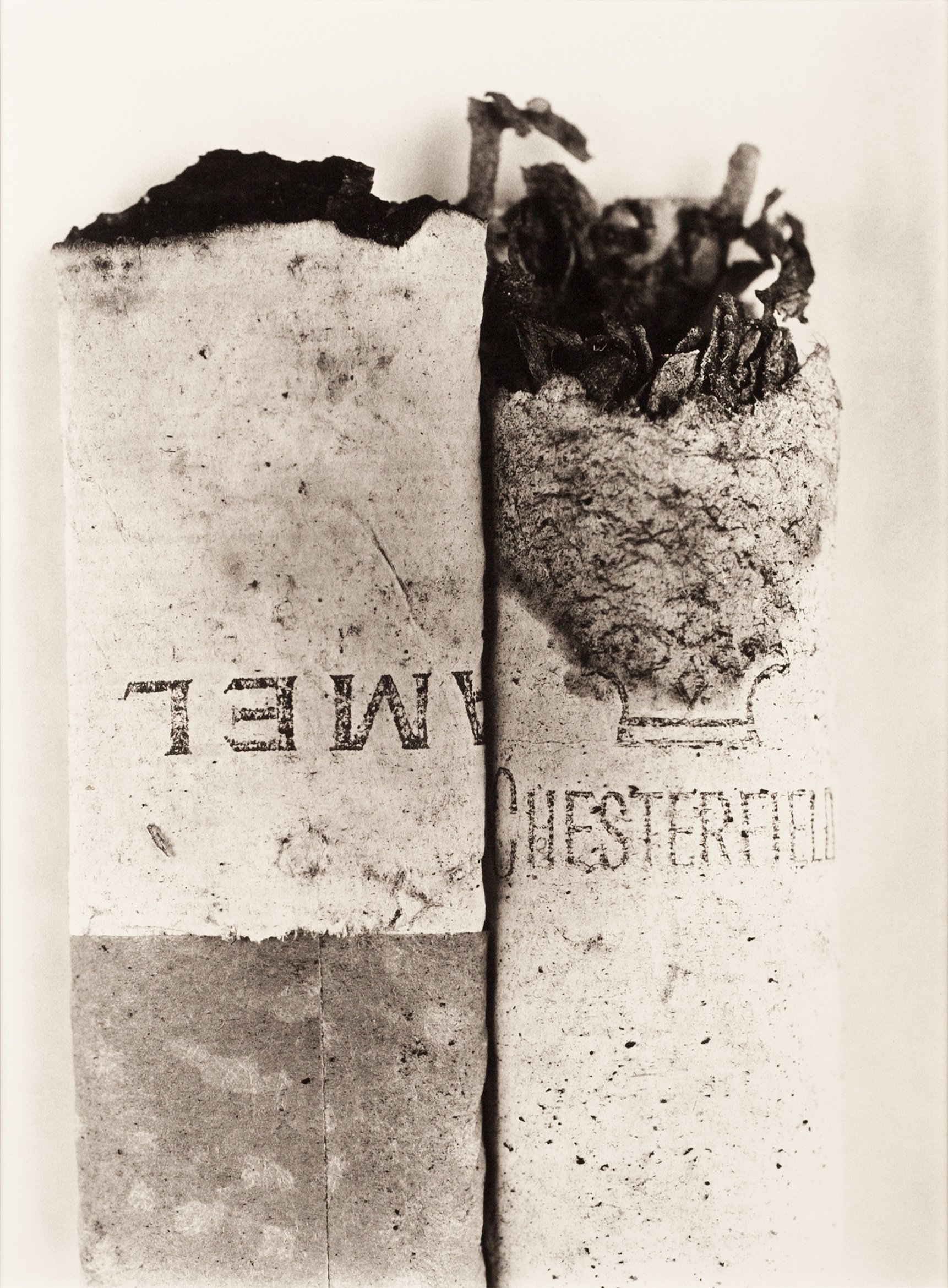
Irving Penn. Cigarettes.
What people threw away, Penn printed in platinum.
Fraenkel Gallery · Fraenkel Gallery
Picked up from the pavement
In 1971 Alexey Brodovitch, Irving Penn's teacher and guide in photography, died of cancer. Less than a year later, Penn began doing something odd for one of the best known fashion photographers in America: he walked the streets of New York and picked up cigarette ends that people had dropped on the pavement.
He took them back to the studio. Every one was dirty, flattened, half burnt, each bent in its own way. Penn set each one apart and photographed it very close, as one might a piece of jewellery or a small sculpture.
The pictures carry plain titles, a number and a place: Cigarette No. 37, New York. Cigarette No. 69, New York. All were made in 1972. No story, no person in the frame. Only the object, and the trace of whoever smoked it.
Rubbish printed in precious metal
What sets this series apart from ordinary pictures of litter is the way Penn printed it. He used platinum and palladium, a nineteenth century process that had been all but abandoned. Metal salts are brushed onto paper and contact printed under a lamp, giving a long, soft, warm range of greys with almost no absolute black.
The process is slow and costly. Some prints of the cigarettes were made as late as 1977, years after the pictures were taken. Some are large, mounted on aluminium, around 80 by 65 cm framed. A butt a few centimetres long appears on the wall like a piece of architecture.
Putting rubbish into precious metal is a gesture both serious and wry. Penn does not prettify the butts. He keeps the scorch, the creases, the stains. But the quality of the print makes the viewer look at them as long as at an antique.
Fragments of a time
In 1975 the Museum of Modern Art in New York showed Penn's cigarettes. Its director of photography, John Szarkowski, suggested they could be read as metaphors: shards of ancient sculpture, pieces of architecture, the discarded costumes of kings and jugglers. That reading opened a wide space around objects no longer than a finger joint.
In 1990 Fraenkel Gallery in San Francisco opened 14 Cigarettes, from 5 September to 20 October, showing fourteen pictures from the series. By then the cigarettes had become a familiar part of Penn's career, next to his fashion work for Vogue and his portraits.
The timing matters. In the early 1970s Penn was moving from fashion photography toward fine prints he made himself in the darkroom. Cigarettes is one of the clearest markers of that shift.
Many have read the series in the shadow of the loss Penn had just suffered. Penn did not explain. The pictures carry no text, and if there is grief, it lies in how he chose to look: close, slow, without disgust.
Why a cigarette end stays with you
Cigarettes sits between two worlds. It is still life, careful and almost classical. And it is street photography, except that the people have gone and left exactly one thing behind. The viewer is asked to look at what they step over every day.
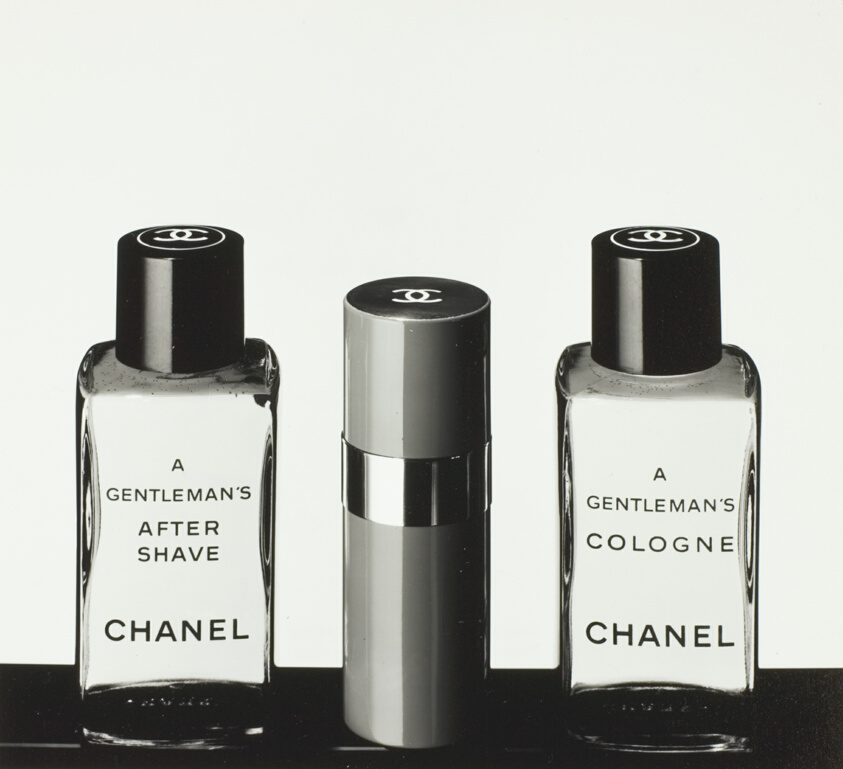
In other pictures, such as his still life of three Chanel products, Penn made new things desirable. Here he does the reverse. He shows the object after desire has been satisfied and the thing thrown away. Both directions come from the same eye.
Photography