
Essays · Photography
Irving Penn. Flowers.
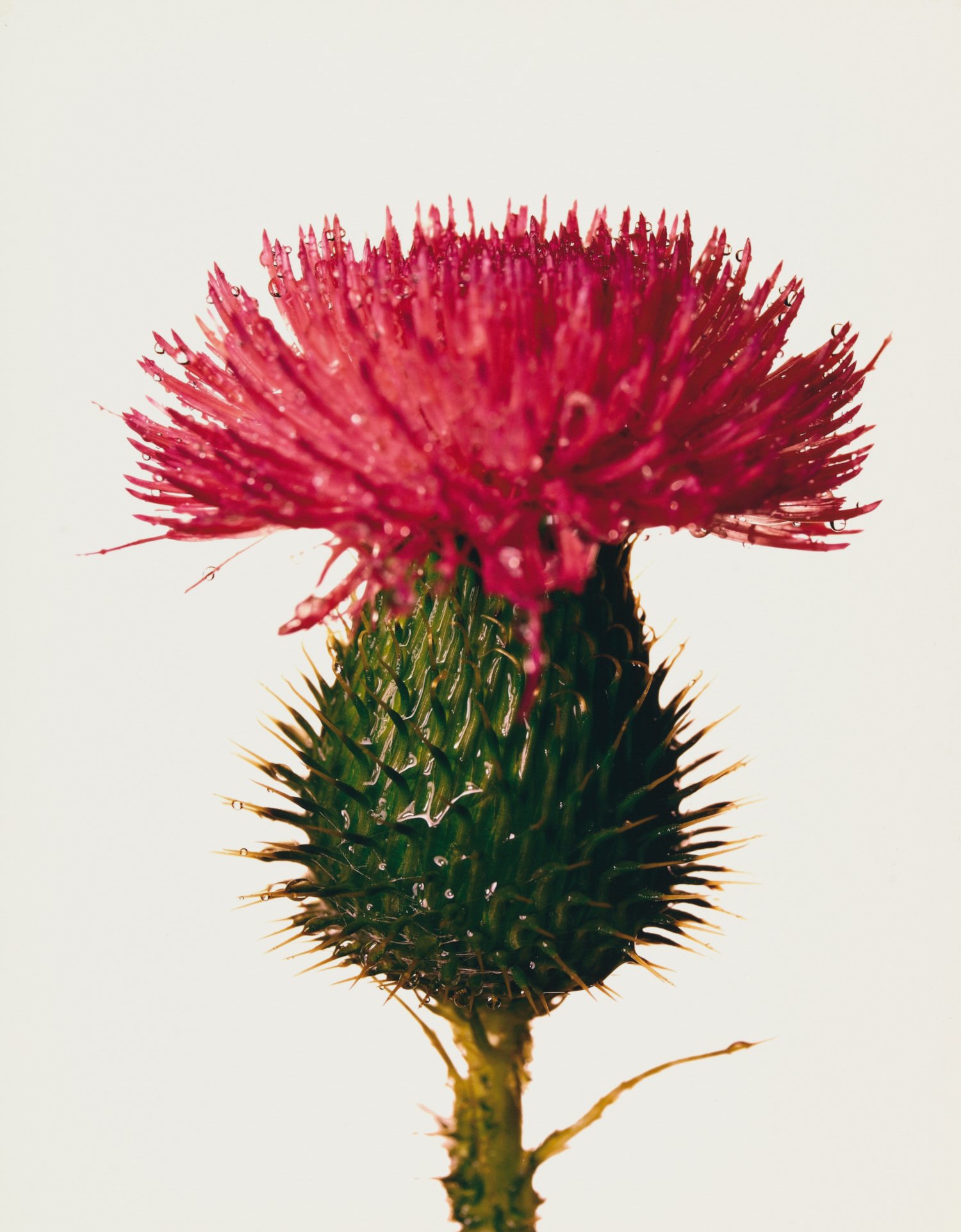
Penn waited for the flower to pass its best.
© The Irving Penn Foundation · Fraenkel Gallery
A commission for the Christmas issue
In 1967 Alexander Liberman, art director of American Vogue, asked Irving Penn to photograph a series of flower still lifes for the December issue. The first were tulips. The job became a habit: for the Christmas issues from 1967 to 1973, Penn photographed flowers for the magazine.
Seven kinds of flower passed before his lens in those years: poppies, tulips, roses, lilies, peonies, orchids and begonias. No garden, no arranged bouquet. Each bloom was set on its own, before a plain neutral ground, and photographed almost as a portrait.
Penn already worked this way with people. He was known for portraits made in a narrow corner of the studio, before an old backdrop, with no props. With flowers he used the same restraint. The flower is not decorated. It is only looked at.
Photographing flowers after their peak
What sets Penn's flowers apart from calendar flowers is the moment he chose. Many blooms in the series are not at their freshest. A tulip opened as wide as it can go, its petals no longer holding together. A poppy with petals thin as paper, beginning to crumple. The viewer sees the part of the flower about to let go, not only the part on display.
At this stage a flower loses the neatness of the bud. But it shows what the bud hides: veins, the translucence of a petal, the way a form opens and then lets go. Fraenkel Gallery's text on the series speaks of both the vitality and the impermanence of beauty. Both are in the same bloom.
The plain ground makes this easier to see. Nothing to compare, no setting to tell a story. The eye has to stay with the form, texture and colour of the flower itself. A bull thistle or a Rhyncholaelia digbyana orchid with its fringed lip is studied as closely as an object in a museum.
Slow colour, a late book
Penn photographed the flowers in colour, when most art still life photography of the time was black and white. Colour was the hard part. Printing the shift across a poppy petal or the violet of a cyclamen accurately was expensive.
Because of those printing costs, it took Penn almost ten years to find a publisher for a book of the series. Flowers finally appeared in 1980 from Harmony Books in New York, with 75 colour plates.
Some prints were made as dye transfers, a demanding colour process that allows each colour channel to be controlled separately. An orchid photographed in 1969, in Fraenkel Gallery's holdings, is a dye transfer printed in 1990. Many later prints are inkjet.
Penn did not stop with the Vogue series. The flower pictures listed by Fraenkel run from the late 1960s to 2006: Iceland poppy, oriental poppy, Persian violet cyclamen, lily, China Pink tulip. Flowers became a subject he returned to for almost forty years.
Why these flowers stay with you
Flower pictures easily become decoration. Penn avoids this by refusing to flatter the flower. He does not choose the perfect moment, adds no dew, no handsome vase. He lets the bloom stand alone at its real stage.
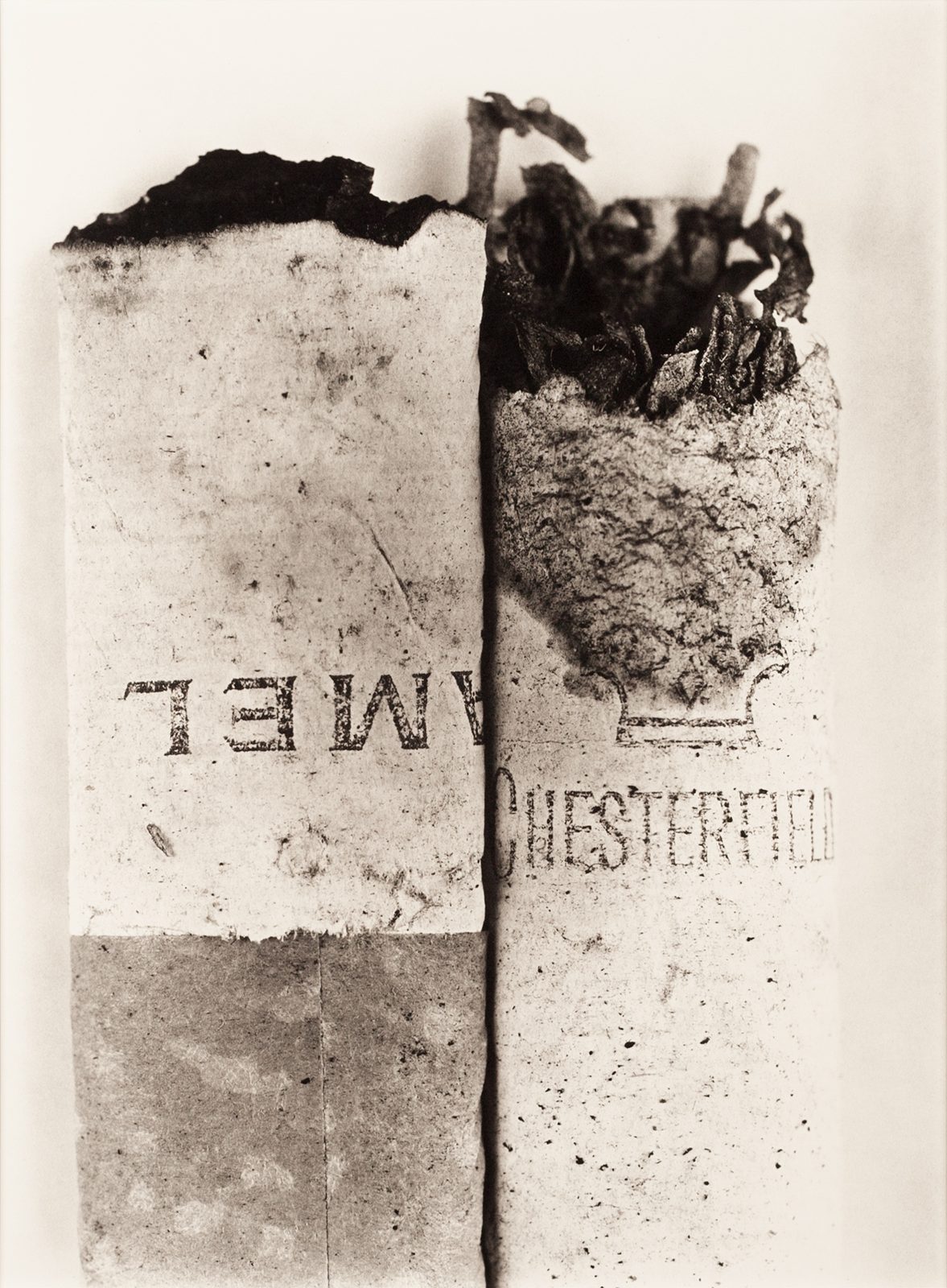
The same eye, a few years later, bent down to cigarette ends on the pavement. Flowers and butts: one thing people give each other, one thing people throw away. For Penn, both were objects passing through time, and both deserved a slow look.
Photography