
Essays · Photography
Ishiuchi Miyako. ひろしま hiroshima.
Every garment once had someone inside it.
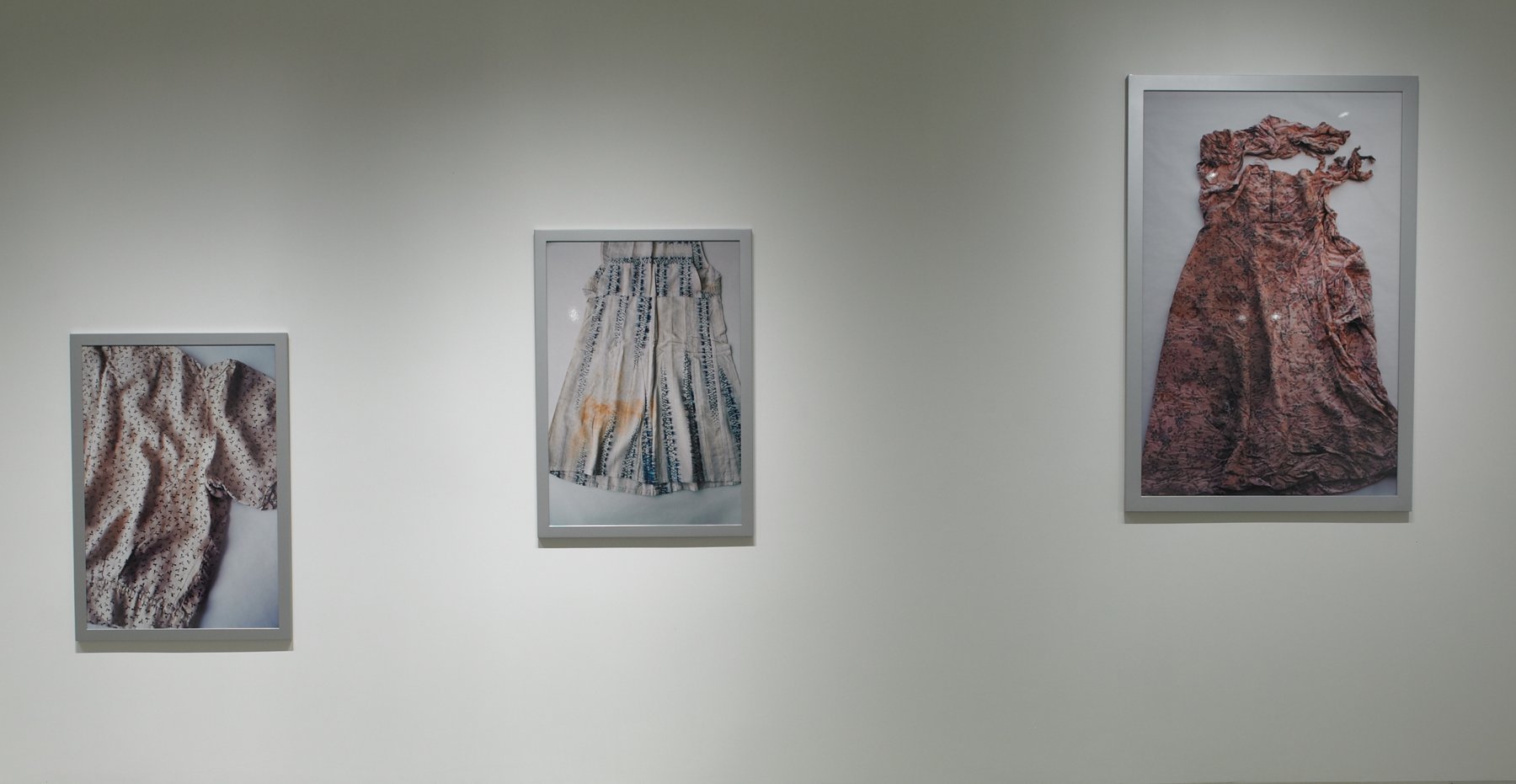
Museum of Anthropology at UBC · Museum of Anthropology at UBC
An invitation in 2007
In 2007 the editor Yamamoto Junji invited Ishiuchi Miyako to photograph objects in the Hiroshima Peace Memorial Museum for a book. The museum holds objects left after the atomic bombing of 6 August 1945, among them clothing and belongings people had on their bodies that day.
Ishiuchi accepted. Two years earlier she had completed Mother's, a series about the objects her mother left behind. Hiroshima was a very different next step: this time the belongings of strangers, and a loss that no longer belonged to a single family.
The book appeared in 2008. But Ishiuchi did not stop. She kept returning to the museum in the following years. The series is dated from 2007 to the present.
Light through cloth
Ishiuchi's method is simple. She lays each item on a light box, the kind of table lit from below that photographers use to view film. Light passes through the thin fabric. The weave appears. Tears, burns, places where the cloth has thinned with age all become areas of light and shadow.
The garments look almost transparent, weightless, as if floating. A dress. A blouse. A pair of gloves. Many are printed life size or larger, enough for the viewer to see each stitch.
This is not ordinary museum documentation, where objects are shot flat and evenly lit for the record. Ishiuchi photographs as if making portraits. Each item is looked at on its own, like a person.
Colour and a softer script
The familiar images of Hiroshima are black and white: a flattened city, shadows on stone, the mushroom cloud. Those images are necessary, but they also hold the catastrophe at a historical distance, remote and cold.
Ishiuchi works in colour. Colour brings the objects into the present. A viewer recognises a fabric pattern their own mother or grandmother might have worn. The Museum of Anthropology at the University of British Columbia, when it showed the series, observed that the pictures are both testimony to deep trauma and a glimpse of the beauty and complexity of individual lives.
The title is a choice too. Ishiuchi writes Hiroshima in hiragana, ひろしま, rather than the usual kanji. Hiragana is the softer script, historically associated with women's writing in Japan. She wanted the work to carry a feminine point of view. Many of the items she chose are women's clothes, things that were touching their bodies at the moment of the blast.
From Hiroshima to Vancouver
From October 2011 to February 2012, the Museum of Anthropology at UBC in Vancouver showed 48 photographs from the series. It was the first time ひろしま hiroshima had been presented outside Japan.
That an anthropology museum, not an art museum, chose to show it is worth noticing. It places the pictures between two fields: art, and the study of people through the objects they leave.
Placed beside Mother's, her series on her own mother's belongings, ひろしま hiroshima shows a consistent method. Ishiuchi believes objects hold people. With her mother, that was one person. With Hiroshima, it is tens of thousands, yet she still looks at them one by one.
The series does not retell the bombing. It leaves the viewer standing before a small dress glowing on a light box, wondering who put it on that morning.
Photography