
Essays · Olfactory Art
Lee Bul. Majestic Splendor.
Sequins do not rot. Fish do.
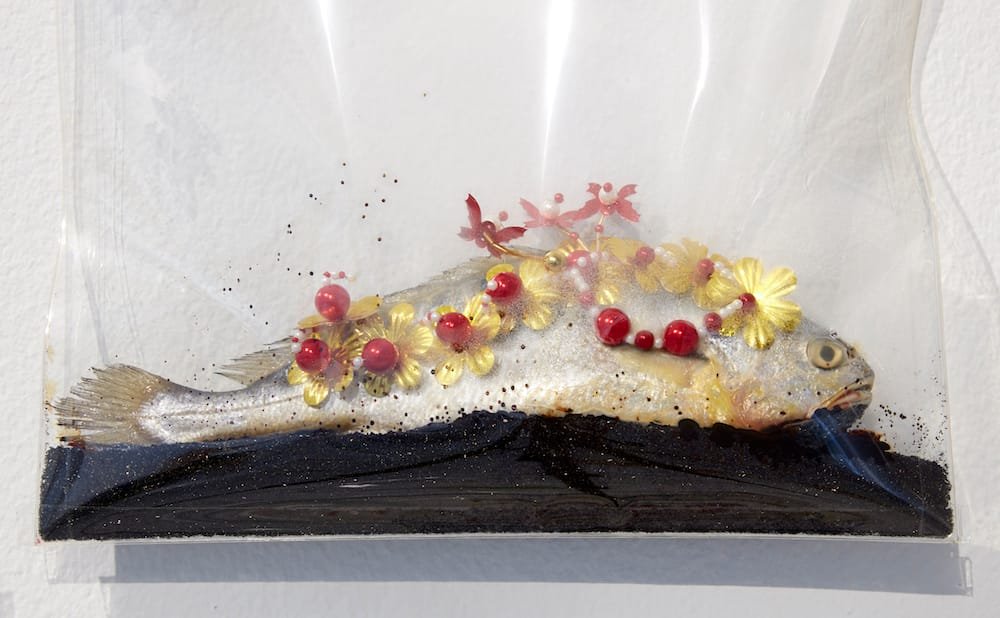
Photo by Sang-tae Kim; courtesy Art Sonje Center · Hyperallergic
Fish, sequins, plastic bags
In 1991 the Korean artist Lee Bul made Majestic Splendor. The materials: dead fish, sequins, gaudy beaded bracelets, fake jewels and small plastic bags. In the first version, each fish was sequined by hand.
The fish were dressed like jewellery, sealed in clear plastic bags and hung on the wall. They glittered under the gallery lights. And for the length of the exhibition, they rotted.
The work does not hide this. It depends on it. Each day the sequins shine as before, while the flesh underneath softens, changes colour, and smells. The viewer stands before something that is both ornament and corpse.
Majestic Splendor has been installed many times at institutions around the world. Each time with fresh fish. There is no single object to conserve. The work exists only while it is decaying.
Removed twice
In 1997 a version was shown in MoMA's Projects series in New York. According to Hyperallergic, the stench was so strong that it made guards physically ill and drifted up to the museum restaurant. The main cause was a faulty refrigerator holding some of the fish. When those fish were taken out, Lee withdrew the whole work.
Twenty one years later, in 2018, the Hayward Gallery in London opened a major Lee Bul exhibition. Majestic Splendor was meant to be in it. Hours before the preview, it was removed.
This time the reason was not the smell. In recent years the work had included potassium permanganate, a strong oxidising chemical. The Hayward said the substance is highly flammable in combination with other chemicals. During deinstallation a fire broke out, causing damage and delaying the opening.
Two incidents twenty years apart tell one story. A museum is built to keep things still: steady temperature, measured light, filtered air. Majestic Splendor refuses to stay still. Every attempt to hold it back, cold or chemistry, can create a problem of its own.
Beauty and decay
Hyperallergic describes the work as a tension between beauty and decay. The fish decompose; the sequins keep shining. The two cannot be reconciled, and the work lets them stand side by side to the end.
In European still life painting, overripe fruit, wilting flowers and skulls reminded viewers that everything passes. They saw decay on the canvas but never smelled it. Lee Bul removes the paint. Here the decay is real, and it enters the viewer's lungs. Other artists, such as Anya Gallaccio with her thousands of apples, have also let organic matter decay inside the gallery.
Dressing the fish is not incidental either. Sequins, beads and fake gems are cheap things made to look precious. They promise a beauty that never expires. Pinning them to something certain to expire lets the promise expose itself.
Majestic Splendor stays in memory because it makes the nose the judge. The eye can be persuaded by sequins. The nose cannot. A work removed from a museum because of its smell has done exactly what it set out to do: show that some truths cannot be decorated.

Olfactory Art