
Essays · Photography
Masahisa Fukase. Karasu.
Look at the raven, see the photographer.
Michael Hoppen Gallery · Michael Hoppen Gallery
A marriage ends
Masahisa Fukase was born in 1934 in Bifuka, a small town in the Nakagawa district of Hokkaido, in northern Japan. He graduated from the photography department of Nihon University in 1956, and became a freelance photographer in 1968.
The woman who appeared most often in his pictures of the preceding years was his wife, Yōko Wanibe. When the marriage broke down in the mid 1970s, Fukase lost not only a partner but the central subject of his photography.
In 1975 he began a new series. This time there was no model. Only ravens. The work continued until 1982 and became known by its Japanese title, Karasu, or in English, Ravens.
Ravens, snow and dark
Most of the pictures were taken in Hokkaido, his home region, and in snow covered cities. The ravens appear in every form: one perched on a pole, a flock scattering across the sky, a dark shape sweeping over a roof, and dead birds too.
Around them are other scenes: streets at night, figures against the light, shapes without faces. Everything is printed very dark. Coarse grain, hard contrast, often black swallowing most of the frame, leaving only a streak of snow.
This is not how one photographs to document a bird. The viewer learns nothing about how ravens behave. These pictures are not describing an animal. They borrow the animal to say something else.
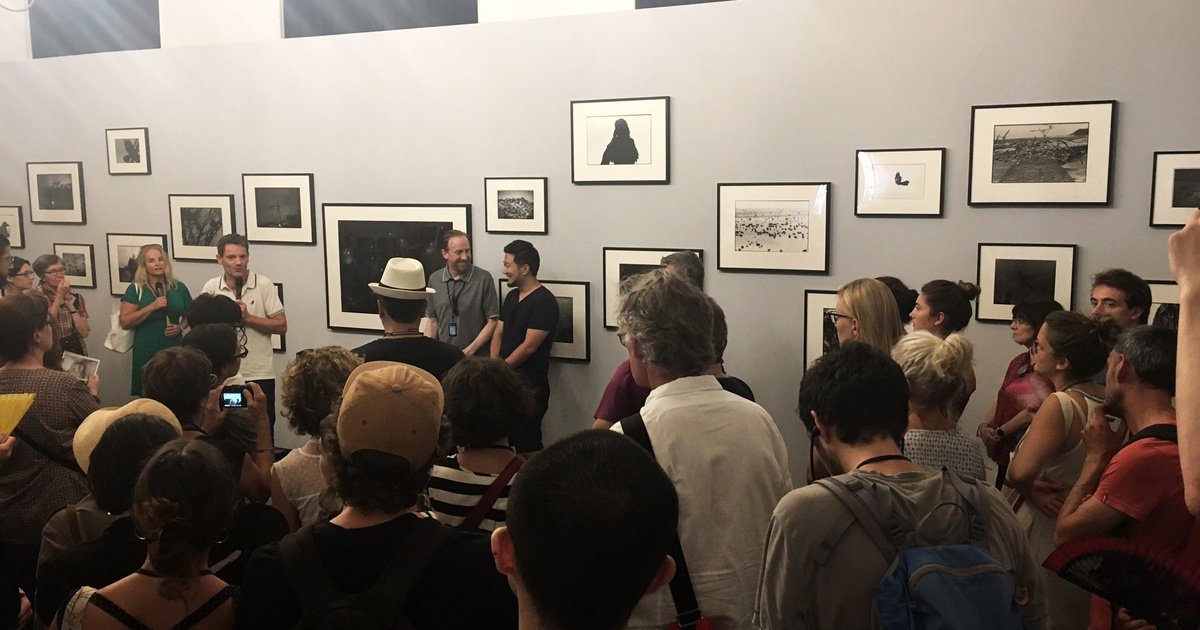
The Michael Hoppen Gallery in London, which showed the series in 2016 as Solitude of Ravens, described it as a private lament, a mirror of the photographer's own darkening outlook.
Becoming a raven
In Japanese culture the crow carries many meanings. It is clever, lives close to people, and is often linked to ill omen, death and solitude. Fukase never explained why he chose ravens. But the more he photographed, the clearer the identification between man and bird became.
By 1982 he said that he had become a raven. The remark is often cited as the key to the whole series. Karasu is not a set of pictures about birds. It is a self portrait seven years long, in which the photographer never shows his face.
Read this way, it is clear why the pictures are both beautiful and hard to look at. Each raven alone on a wire is an image of isolation. Each scattering flock is an image of turmoil. The viewer does not need the biography to feel it.
The book and the years after
The series was published as a book in 1986 under the title Karasu. It has been reissued several times, and many regard it as one of the most significant achievements of postwar Japanese photography. Its influence is still visible in later generations of photographers.
Fukase's life afterwards was not calm. In 1992 he fell down the stairs of a bar in Tokyo, suffered severe brain damage and never photographed again. He died in 2012. Read in that light, Karasu weighs even more: a man who saw his own darkness coming, and photographed it.
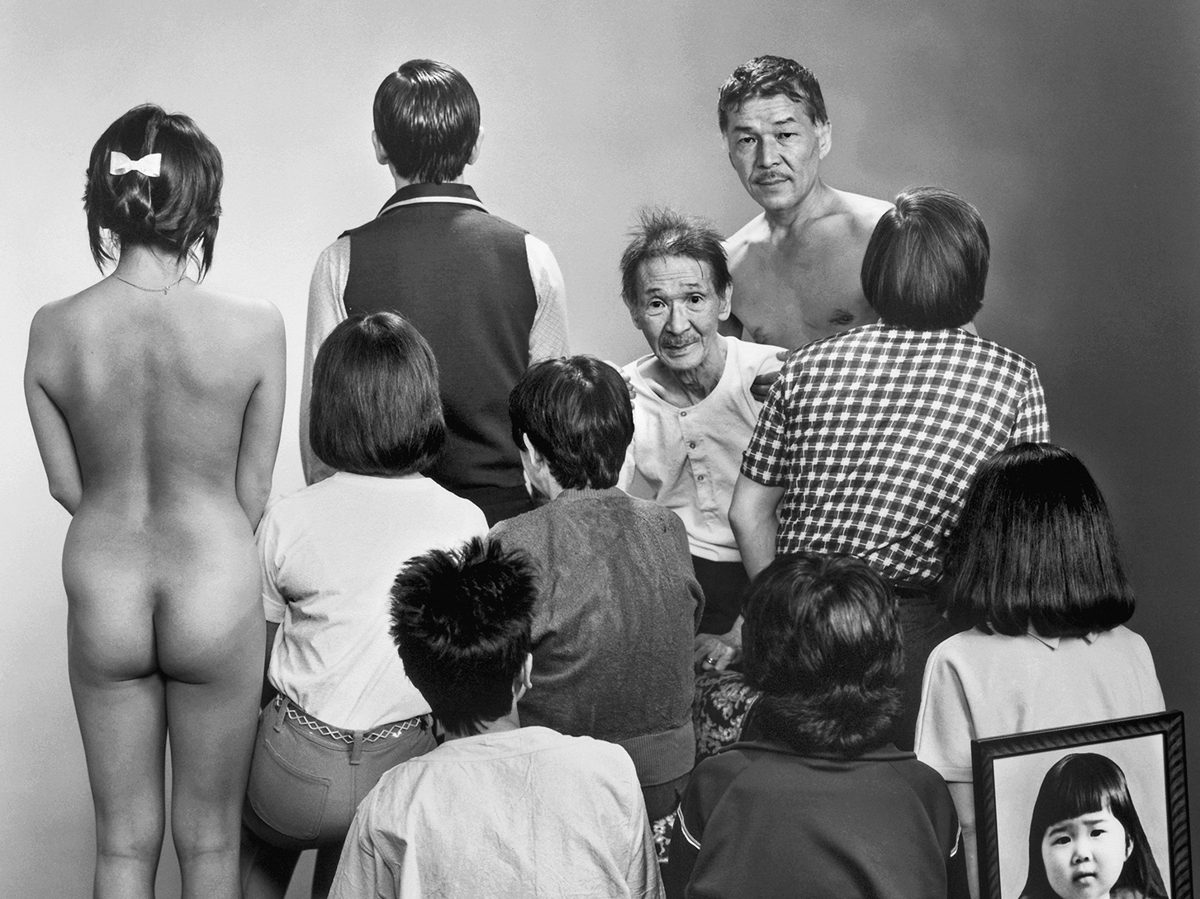
In the same years Fukase was making another series, almost opposite in spirit: Family, commemorative portraits of his relatives in the studio back home. On one side, solitary birds in the cold. On the other, a whole family posed before a backdrop. Side by side, they show two faces of one man.
Karasu continues to be exhibited and studied. It reminds us of something simple: sometimes the clearest way to see a person is to look at what they chose to look at.
Photography