
Essays · Contemporary Art
Nam June Paik. TV Garden.
A garden where screens grow beside leaves.
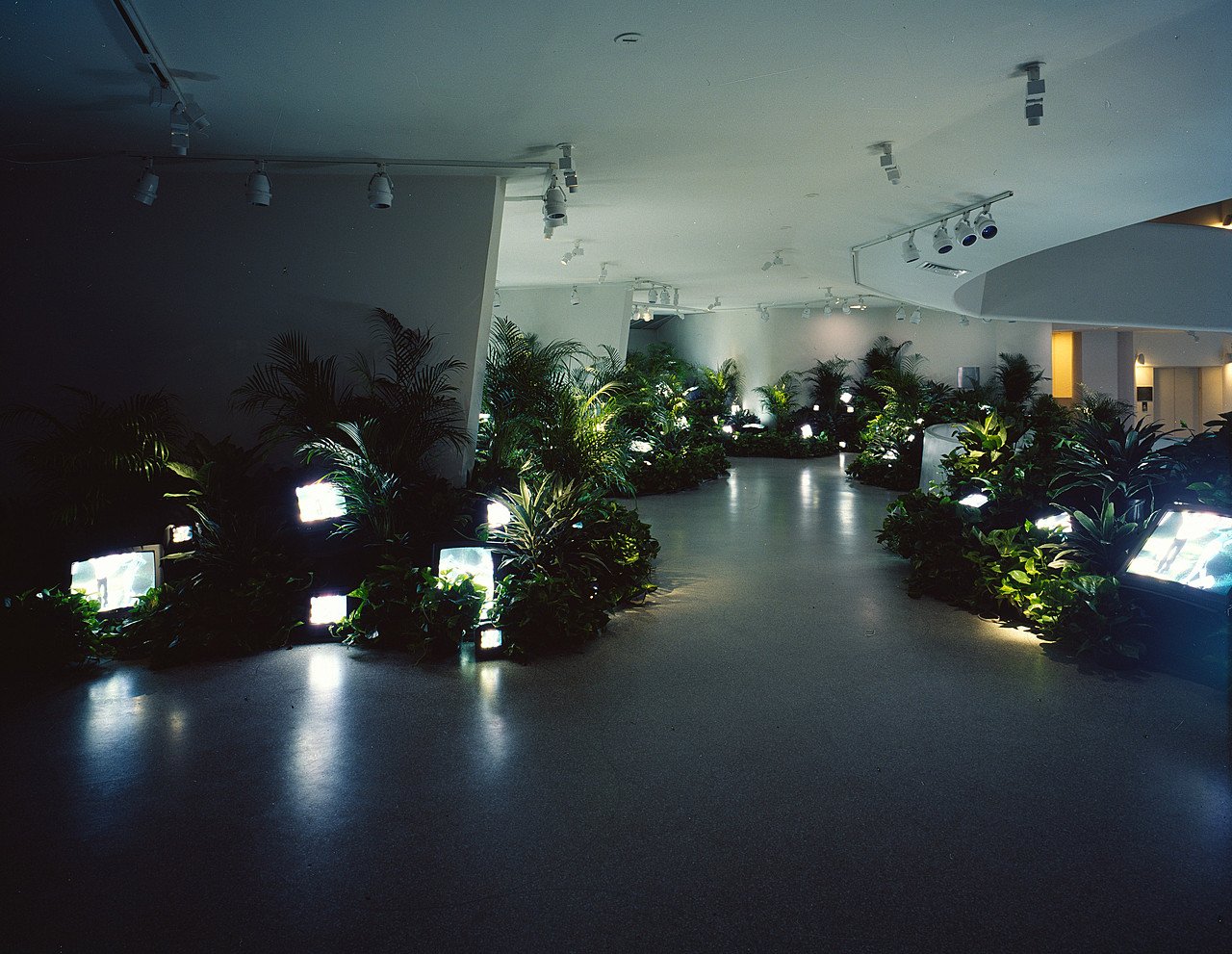
Solomon R. Guggenheim Museum · Solomon R. Guggenheim Museum
Entering an electronic garden
TV Garden is an installation Nam June Paik made in 1974. Visitors walk into a room thick with live plants, dense as a patch of jungle. Hidden among the leaves are video monitors of many sizes, large and small, lying like flowers growing up from the ground.
Every monitor plays the same tape: Global Groove, the video Paik made in 1973 with John J. Godfrey. Its soundtrack fills the room, part music, part voices, running alongside the flicker of the screens.
The Solomon R. Guggenheim Museum in New York, which holds the work, describes entering it as meeting an uncanny fusion of the natural and the scientific. Plants half hide the screens. Screens light the leaves. Neither is background for the other.
Global Groove
Global Groove is a dense montage. Paik spliced performers from around the world into a whirling stream: dance, music, faces, colours altered electronically. It resembles an imaginary television channel broadcasting to the whole planet at once.
On a single monitor, Global Groove is a video work. Multiplied across many screens and set among plants, it becomes something else. There is no single point of view. Visitors wander, meeting the same image here and then there, like finding one flower blooming in several corners.
Television, usually watched sitting still in a living room, now has to be found among leaves. Paik reversed the habit. He spoke of wanting to turn television inside out. TV Garden is one way of doing it.
The man who put television into art
Paik is often called the father of video art. Born in Seoul in 1932, he moved from Asia to Europe to the United States. His grounding was in music and performance, with an early interest in electronics. He arrived in New York in the mid 1960s and became a leading figure in Fluxus.
Fluxus turned everyday actions into art. In the video Button Happening, from around 1965, Paik simply buttons and unbuttons his coat. He also wanted viewers to take part rather than stand outside, and liked to bring surprise into his work.
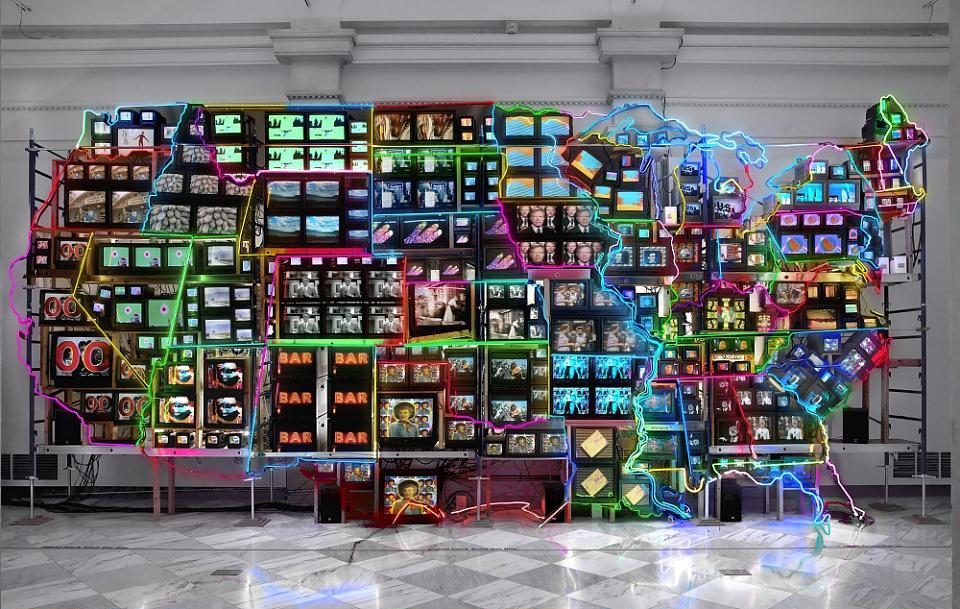
He worked with altered television sets, live performance, global broadcasts, single channel videos and installations. He went on to larger works about television, such as Electronic Superhighway. At the start of the twenty first century he turned to laser light as a new sculptural material.
A garden rebuilt
In 2000 TV Garden was restaged for The Worlds of Nam June Paik at the Guggenheim in New York. A garden cannot stay fixed like a painting. Plants must be planted again, screens arranged again. Each installation is a new garden with the same idea.
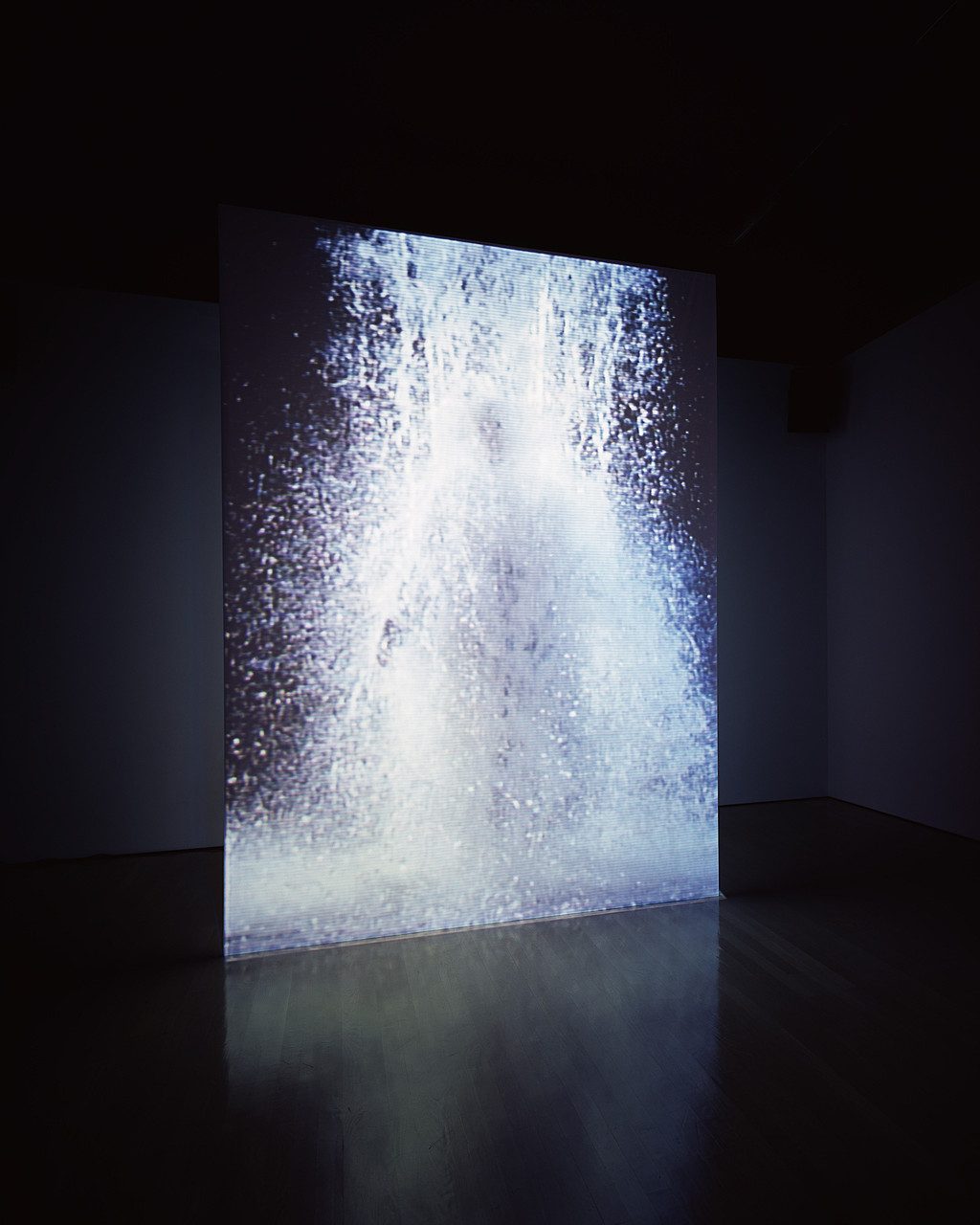
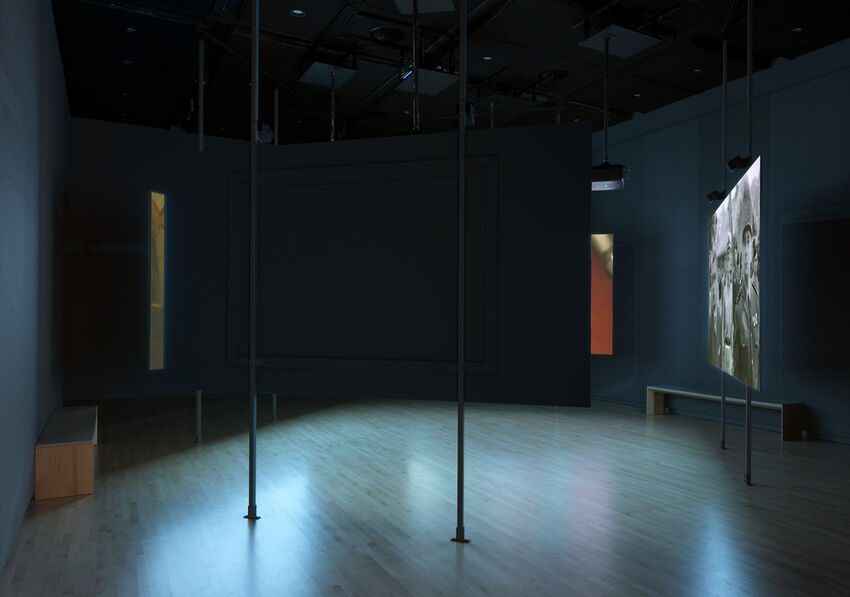
The museum notes that TV Garden set a new standard for immersive, site specific video installations, and that its influence can be seen decades later in room sized works by Gary Hill and Bill Viola.
More than fifty years on, the televisions in TV Garden have become antiques. The plants do not age that way. The plants in each restaging always belong to that year. So the work always carries two times at once: the time of the screens and the time of the leaves.
Contemporary Art