
Essays · Olfactory Art
Pierre Huyghe. Hole for Rat.
A scent not written for humans.
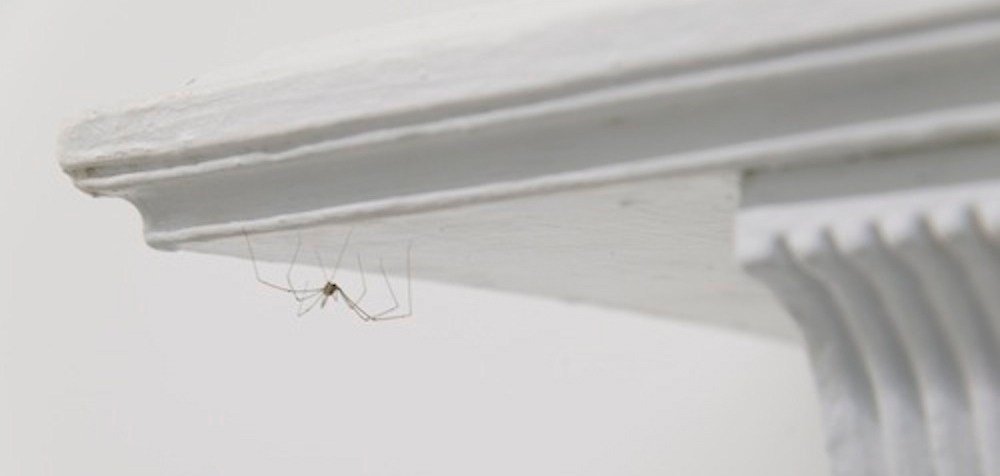
Spiders, The Artist's Institute 2014. Courtesy The Artist's Institute · ARTnews
A hole in the floor
In the summer of 2014 Pierre Huyghe made an exhibition at The Artist's Institute, Hunter College's art space on Eldridge Street on New York's Lower East Side. It ran until 17 August and was divided into four parts.
What appeared in the rooms was not painting or sculpture but living things. Brown cellar spiders were released into the small basement gallery. Flies were there too. And an invitation went out to rats.
The invitation was called Hole for Rat. Huyghe had a deep, narrow tunnel dug through the Institute's floor, a passage through which rats from outside could enter freely and leave freely. No cage, no trap, no keeper.
Then he added smell. Surfaces in the room were coated with squalene, a colourless liquid secreted by female rats that acts as a sex pheromone. According to ARTnews, it is also known to attract cockroaches.
An audience that is not human
An ordinary exhibition has two sides: the work and the viewer. Huyghe added a third. Spiders spun webs across the ceiling and corners. Flies passed through. Rats, if they came, would follow the smell. Their movements, adaptations and escapes made up the core of the work.
Many of the spiders vanished within days. Some wandered outside, some burrowed out of sight, some were stepped on at the opening. Nobody controlled that, and Huyghe did not try to.
Hole for Rat takes the idea furthest. A rat pheromone means almost nothing to a human nose. The visitor enters, sees a hole in the floor, knows that something has been put on the walls, but cannot sense it as a rat would. The smell in the room is written in a language humans stand outside of.
When ARTnews reported on the show, the only outside creature to have come through was a mouse. Not the rat Huyghe had named. The work did not fail because of that. It simply showed that an invitation cannot decide who will arrive.
The artist as maker of conditions
Pierre Huyghe was born in Paris in 1962. Since the late 2000s he has worked more and more with living systems: animals, plants, microorganisms, small ecosystems that run themselves. At documenta 13 in 2012 he made Untilled in a corner of a park in Kassel, with a dog whose leg was painted pink and a reclining figure whose head was a beehive.
In these works Huyghe does not make a finished object. He sets up conditions and lets things happen. Where the spiders spin, whether the rats come, how fast the smell fades: nothing is fixed in advance.
Smell suits that way of working. It does not stay put like a statue. It evaporates, clings to surfaces, drifts, weakens with time. A pheromone applied on opening night is different a few weeks later. The work changes without anyone touching it.
Who is invited
What stays with you about Hole for Rat is that it pushes people to the edge. Most art, including art made with smell, is made for viewers. Here the viewer is only a witness. The real guest is an animal most people want out of the house.
The choice is a little funny and a little uncomfortable. It makes you ask whom the gallery belongs to. White walls, clean floors, opening hours: all of it is built for one species. Huyghe cuts a small hole in that assumption.
He carried the question into later works, including UUmwelt, where flies and images share a room. But on Eldridge Street in 2014 it was asked with the smallest means: a hole, and a smell the human nose barely registers.
Olfactory Art