
Essays · Olfactory Art
Rhea Dillon. NEGR-OID.
A scent that refuses to be a stereotype.
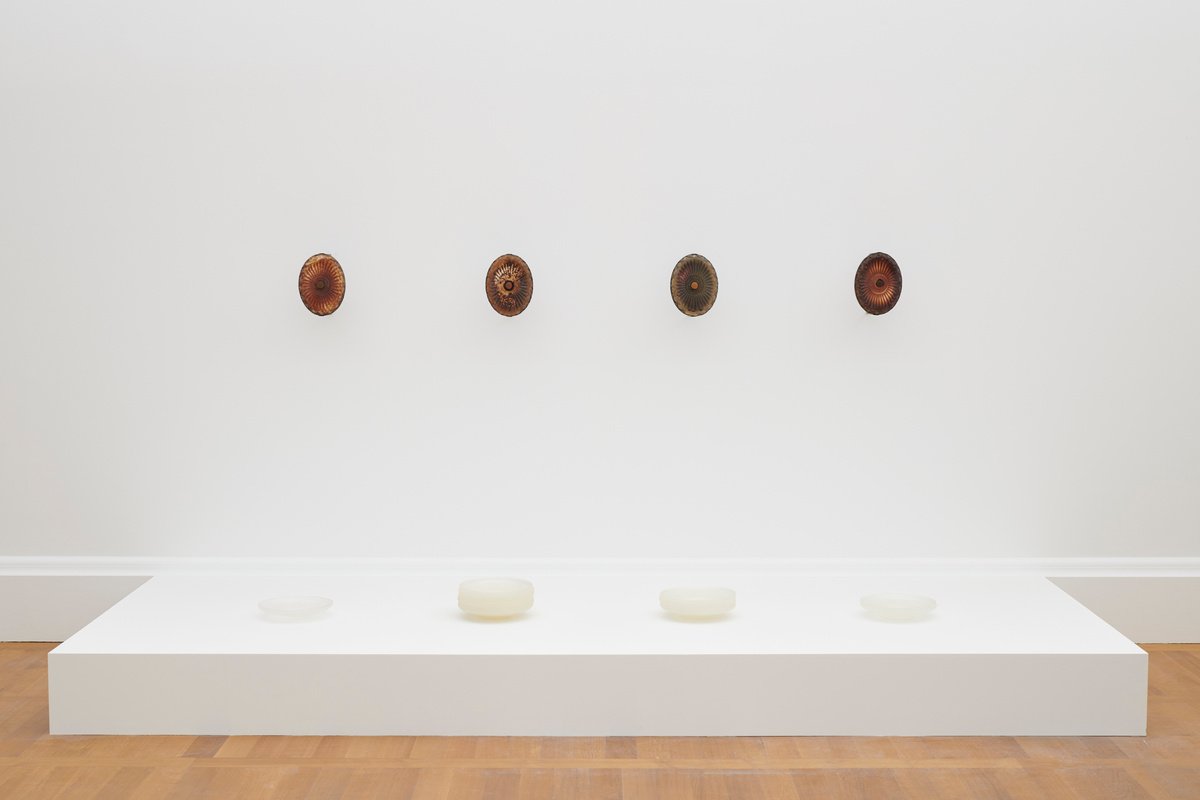
© Rhea Dillon · Rhea Dillon (official site)
A remark on television
In 2015 the actress Zendaya arrived at the Academy Awards wearing faux dreadlocks. On the E! programme Fashion Police, the host Giuliana Rancic remarked that she looked as if she smelled of patchouli oil and weed.
The line was short and delivered as a joke. But it did something very old. It smelled no one. It looked at a hairstyle, inferred a smell from the hair, and inferred a way of life from the smell. The hairstyle was tied to Black people, and the smell was assigned accordingly.
Seven years later Rhea Dillon answered that remark with a work. Not with an essay or an interview, but with the very material that had been used as an insult: a smell.
Metal, glass and a scent
NEGR-OID dates from 2022. The artist's own page lists it plainly: scent, metal and glass, 31 cm high, 15.5 cm wide and deep. No explanatory text. The object has the size of something to hold, to set on a plinth, to lean close to.
It was first shown in The Sombre Majesty (or, on being the pronounced dead) at Soft Opening, a London gallery, in the same year. Dillon composed the scent herself. In 2023 the Institute for Art and Olfaction named NEGR-OID a finalist for the Sadakichi Award for experimental work with scent, crediting Dillon both as artist and as perfumer.
Dillon was born in London in 1996 and lives there. She works across video, painting, sculpture, writing, performance and smell. The subjects she returns to include Black women's bodies, the Caribbean, colonial legacies and environmental injustice. Smell is one of her languages, not a separate field.
The title is part of the object. NEGR is the root of words Europeans once used to classify Black people. The suffix oid means resembling, like, almost. Together the title names something that only resembles, and never is.
A smell like nothing in particular
What matters most about the scent is what it deliberately does not do. Asked about it, Dillon explained that it smells of no one thing in particular, because Black women do not all smell of one thing.
That answer is simple, and accurate in the way smell is accurate. Every body has its own smell, shifting with food, weather, clothes, home, age, a day's work. There is no smell of a race. There is only the smell of each person, at each moment.
So NEGR-OID does not offer a portrait in scent. It offers a scented gap. We are used to naming what we smell: this is wood, that is a flower, this reminds me of someone. Here the habit is blocked. The smell is present, but it accepts no label.
Read with its title, the scent is an incomplete resemblance. It suggests that every stereotype is only an approximation of the same kind. A prejudice assumes it knows what others smell like. The work shows it cannot.
Why smell is so often used to sort people
History is full of smells assigned to groups in order to lower them: labourers, migrants, people of colour. Smell lends itself to this because it is hard to check. No one can photograph a smell to disprove a claim. A remark about smell passes and stays in the listener's memory longer than an image.
Dillon moves the argument to where it belongs. She does not leave the smell inside words. She gives it a body of metal and glass, sets it in a gallery and invites people to actually smell it. Once the smell is really smelled, the insult shows itself as projection.
That is why this small work stays with you. It does not raise its voice. It places a question under the visitor's nose and lets them answer it alone.


Olfactory Art