
Essays · Olfactory Art
Sean Raspet. New Olfactory Molecules.
A floral smell with no flower behind it.

Courtesy The Art and Olfaction Awards · Sean Raspet (official site)
A molecule that never existed
Its chemical name is 2-benzyl-1,3-dioxan-5-one. Its trade name is Hyperflor. According to Sean Raspet, before it was made in 2018 the molecule had never existed in nature, nor appeared anywhere in the scientific literature.
Raspet is an American artist who has long worked where chemistry, flavour, smell and art meet. For Hyperflor he designed the molecule and developed the reaction pathway to produce it. It was synthesized between 2018 and 2019 in the laboratory of chemist Shengping Zheng at Hunter College, part of the City University of New York, with assistance from Sihan Li.
On his site Raspet notes that Hyperflor has a very strong floral aspect even at high dilution. He also finds it more natural and complex than many floral molecules that occur in nature. Something wholly synthetic described as more natural than nature: that paradox is where the work begins.
Structurally, the molecule shares features with phenylacetic acid, a plant hormone involved in root growth. A floral smell distantly related to something that helps roots grow. It is hard not to notice.
Smell as a scene transition
In 2019 Hyperflor went to the Okayama Art Summit in Japan, the edition titled IF THE SNAKE, with Pierre Huyghe as artistic director. The molecule was not placed in a vitrine. It was diffused at sites of the exhibition across the city.
Raspet describes its role as scene transitions between spaces. As in film, when one scene gives way to the next, visitors moved from one place to another and passed through a floral smell that belonged to neither.
Most passers by probably had no idea they had just smelled a new molecule. They noticed something floral, and moved on. That is how the work operates: it does not ask to be looked at, only breathed.
One source reports Raspet describing the smell as somewhere between flower petals and overripe vegetation. Floral, but slightly past its peak, about to turn into something else.
One molecule, three identities
Hyperflor is not only an artwork. It is patent pending, and it is being commercialized for industrial scent use and scented products.
So one molecule carries three identities. It is a creative act: synthesizing something that did not exist. It is a legal and commercial entity, with a name, a patent application, a market. And it is an artwork, operating materially, conceptually and economically.
Art usually stands outside production and comments on it. Raspet steps inside. He does not make pictures about the scent industry. He adds a new raw material to its shelves.
Two molecules in an empty room
New Olfactory Molecules sets Hyperflor beside a second new molecule, E12. The artist's site does not describe E12, so Penta will not guess at its smell here.
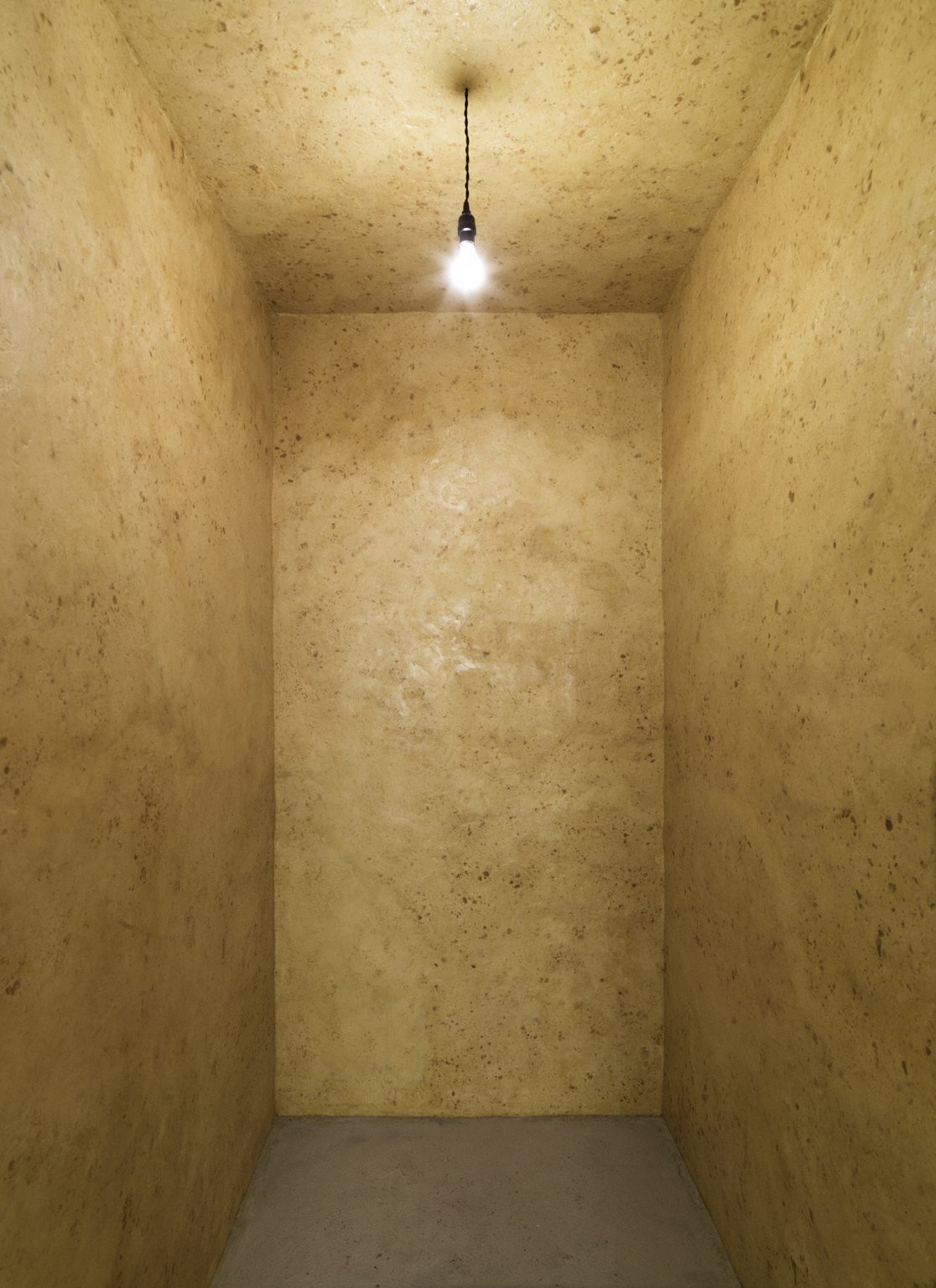
In 2025 the work was a finalist for the Sadakichi Award at the Art and Olfaction Awards. The citation describes two new scent molecules presented in a minimal installation, without additional visual adornment.
That emptiness is a choice. No elegant bottle, no flower photograph, no story of a region. Only the molecule and the nose. Visitors face the simplest question: what is this smell, when it refers to nothing else?
Most smells we know borrow the name of a thing: rose, cedar, orange peel. Hyperflor has no thing to borrow from. It has only a formula, and the name its maker gave it.


Olfactory Art