
Essays · Olfactory Art
Sissel Tolaas, Christina Agapakis. Selfmade.
The body signs its name on a cheese.
Eleven cheeses, eleven people
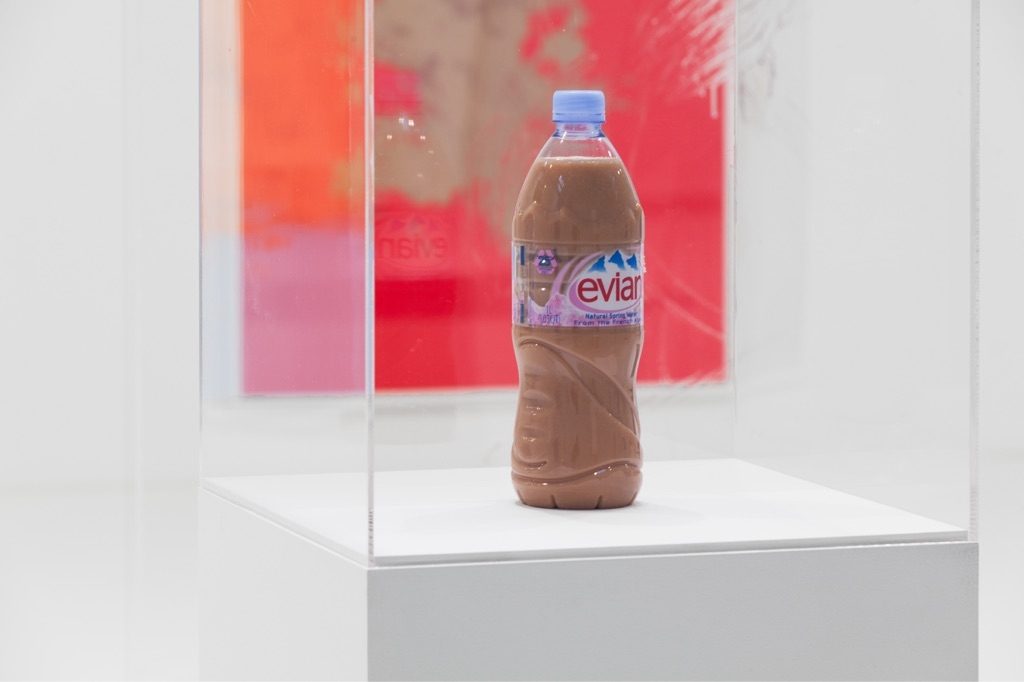
In 2013, at the Science Gallery at Trinity College Dublin, the exhibition Grow Your Own: Life After Nature showed a row of cheeses. At a glance they looked like any cheese counter: round, rinds turning yellow, some smooth, some speckled with mould. The difference was that each one carried a person's name.
The work is called Selfmade, made by the smell artist Sissel Tolaas and the biologist Christina Agapakis. Together they raised eleven cheeses, each begun from bacteria taken from a human body. According to Hyperallergic, four were on display when the piece was written.
The donors and the sampling sites are named. The tears of the artist Olafur Eliasson. The nose of the curator Hans Ulrich Obrist. The belly button of the writer Michael Pollan. The toe of Ben Wolfe.
Samples were taken with cotton swabs and introduced to milk. From there the work belonged to the bacteria and the ageing time. Alongside the cheeses ran a short film of interviews with the donors.
Portraits raised in milk
Cheesemaking has always been a collaboration with microbes. The cheesemaker prepares milk, temperature and humidity, then lets bacteria and moulds turn the milk into something else. Much of a cheese's smell is the smell of those organisms eating and excreting.
Human skin is an environment of the same kind. Between the toes, in the navel, around the nose, distinct bacterial communities live, and they help shape each person's body odour. People have compared feet to certain cheeses for a long time without needing a laboratory to agree.
Tolaas and Agapakis joined the two environments. They called the cheeses microbial sketches, portraits in cultured food. According to the project, each cheese smelled like the person who gave the sample.
The cheeses were edible in principle, but not for visitors. They were there to be looked at and smelled, the way a portrait is there to be looked at.
The donors were not chosen at random. The project describes them as people with interesting stories about microbes, cheese, food, or the body and its surroundings. Each swab carried a little biography.
Culture, in both senses
In English, culture means both a way of life and a colony of microbes grown in a medium. Selfmade sits exactly where the two meanings meet. The project describes itself as an inquiry into the intersection of human and microbial cultures.
For Tolaas, it continued years of work with body odour and the smells of cities. She had collected the smells of cities, of sweat, of fear. In Selfmade she did not collect an existing smell; she let it grow back in another material.
For Agapakis, who works in synthetic biology, the project questions how we see bacteria. We wash, disinfect, spray deodorant, as if bacteria were always strangers. Yet cheese, bread, wine and pickles are all their work. The line between clean and dirty turns out to be the line between microbes we know and microbes we do not.
Selfmade stays in the mind because it makes disgust visible. Nobody minds smelling a ripe cheese. Many people mind learning that the cheese began on a stranger's toe. The smell stays the same. Only our knowledge changes, and with it, the nose.
Olfactory Art