
Essays · Olfactory Art
Ade Darmawan. Santalum Album Family.
A precious wood, burning on an oil drum.
Installation view, ROH, Jakarta. Photo: Maruto Ardi · Artforum
An oil drum, a gas stove, a smell of wood
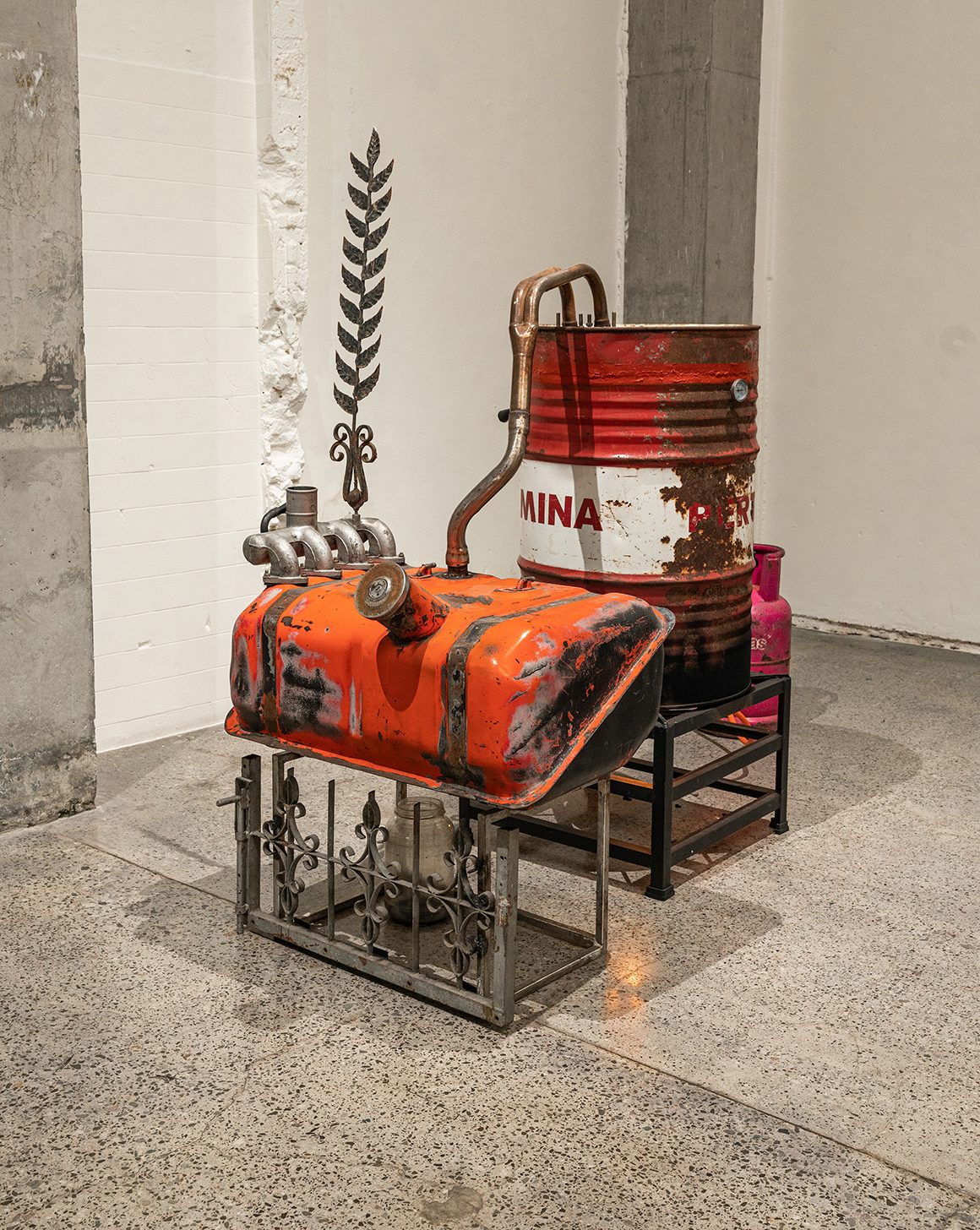
Santalum Album Family is a work Ade Darmawan made in 2024. Its main material is an oil drum marked Pertamina, Indonesia's state oil and gas company. The drum is fused to an orange gas stove, the kind found in ordinary kitchens.
What comes out of the stove's hose is not the smell of gas. It is the smell of burning sandalwood. It spreads around the drum, deep and smoky, nothing like the petrol one expects from such an object.
That mismatch is the first thing a visitor meets. The eye sees an industrial oil drum. The nose finds a precious wood, the kind used in temples, in ceremonies, in costly things. The two do not belong together, and the work lets them stand side by side until the viewer asks why.
The work was shown at ROH, Jakarta, in Water Resistance in 2024, an exhibition Darmawan split between two venues, the second being Cemeti in Yogyakarta.
Cendana: a street and a family
The answer lies in the name. Santalum album is the botanical name of white sandalwood. In Indonesian, sandalwood is cendana. And Cendana is the name of the street in Jakarta where Suharto, Indonesia's second president, built his private home.
In Indonesia the name Cendana has long been tied to his family. So the word Family in the title needs no explanation for a local viewer. A smell of wood becomes a way of naming, discreet and clear at once.
The Pertamina drum takes the pun to a specific history. The work refers to the Pertamina oil crisis and to the part Suharto and his family played in draining the country's oil wealth. Oil is common property. The smell of burning sandalwood says it was burned for a few.
Darmawan writes no slogans. He lets the smell do it. Someone who does not know the story smells only fragrant wood. Someone who does can never smell it the same way again. A kitchen object and a temple smell, side by side, are enough to say what for years people only said quietly.
Water, oil, resistance
Water Resistance uses distillation and the transformation of matter as an image for the history of extraction in Indonesia, from colonial spice to modern oil. Darmawan, a co-founder of the Jakarta collective ruangrupa, has spent years on the question of who benefits from a country's resources.
The title reads two ways. Water resistant, like a coating that keeps water out. Or the resistance of water itself, of things that are liquid, drifting, hard to hold. Oil and essential oil both belong here: they flow, they evaporate, they seep into places no one invited them.
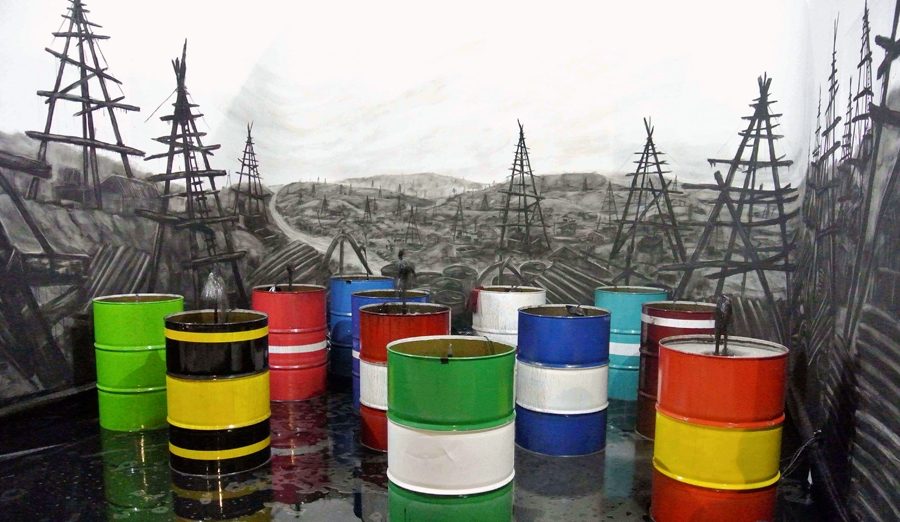
The same exhibition included Tuban, where stills of spices drip oil onto biographies of Suharto. Both works point at one man, by different roads. Tuban goes through writing and literature. Santalum Album Family goes through a name and an oil drum.
In both, smell is evidence without a signature. It does not retell history. It simply drifts out and lets the one who smells connect the rest.
Olfactory Art