
Essays · Photography
Alec Soth. I Know How Furiously Your Heart Is Beating.
A photograph sees the room. It cannot see the heartbeat.
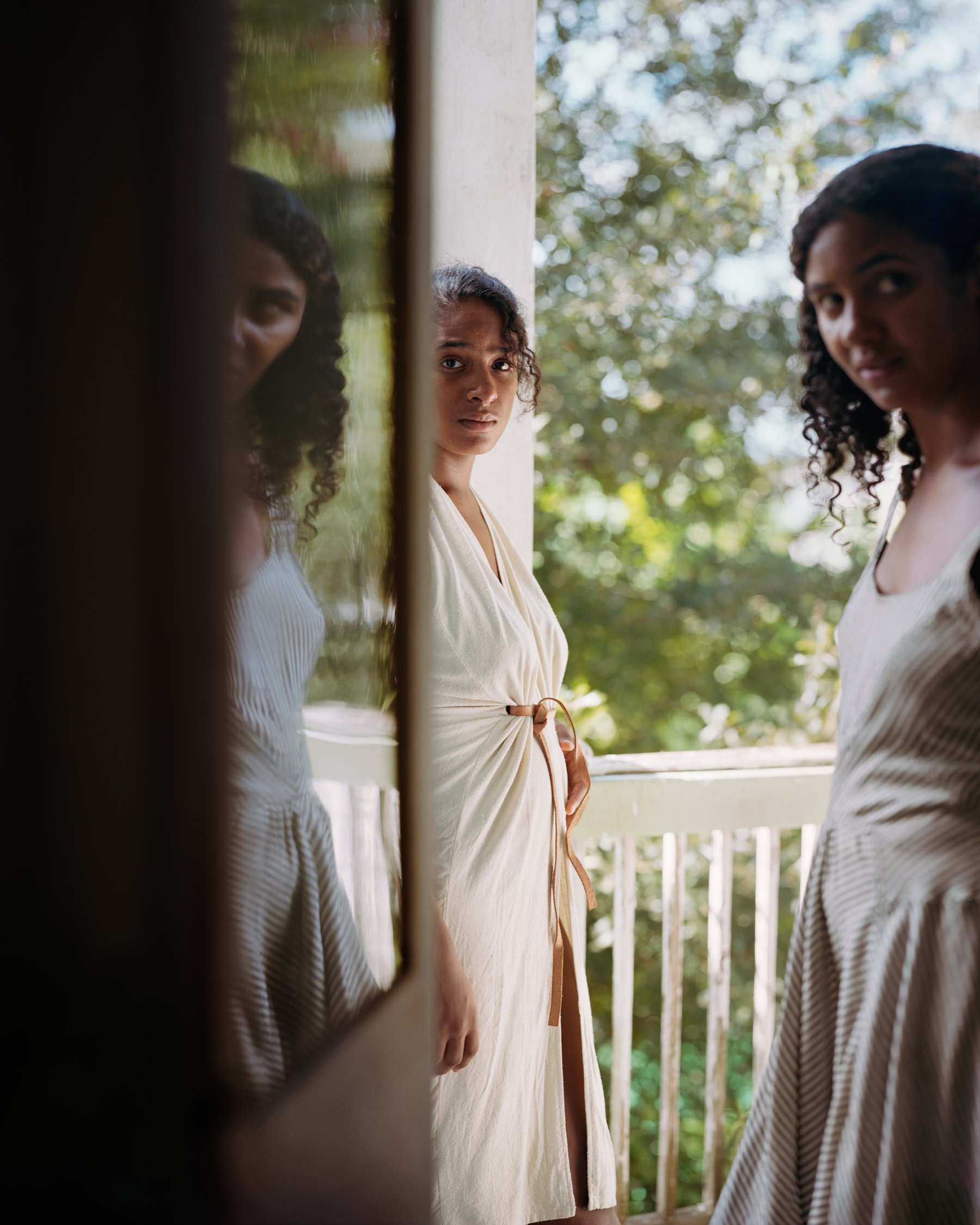
Fraenkel Gallery · Fraenkel Gallery
A line of poetry as a title
The title comes from a line in The Gray Room, a poem by the American poet Wallace Stevens. The line tells someone: I know how furiously your heart is beating. The speaker sees another person calm on the surface, and guesses at what stirs beneath.
Alec Soth borrowed the line to put a question to photography. How much can a picture convey about the inner life of the person in it? And where does it stop?
According to Fraenkel Gallery, the project examines both the possibilities and the limits of what photographs can say about the inner lives of their subjects. Not to prove that photographs can do everything. Nor to say they are useless. But to stand exactly on the line between the two.
Rooms in many cities
Most of the pictures were made in 2017 and 2018. All were taken indoors: living rooms, bedrooms, studies, the places where people spend their days.
The cities range widely. New Orleans, Minneapolis, Los Angeles and Brooklyn in the United States. Berlin, Toulouse, London and Odessa in Europe. The titles are short as notes. Nick, Los Angeles. Yuko, Berlin. Galina, Odessa. Sonya and Dombrovsky, Odessa. Leyla and Sabine, New Orleans.
Some titles point not to a person but to something that belongs to one. Emily's Flowers, Brooklyn. Véronique's View, Toulouse, and Susanne's View, London: the view from someone's room. The person may step back from the centre, but what they see every day stays in the picture.
These are large format colour photographs. The people sit, stand, lie down, sometimes looking into the lens, sometimes away. No one poses as in a studio. They are in their most familiar space, among objects they chose and arranged over years.
A distance that cannot be closed
In earlier work, Soth often travelled long distances, looking for strangers along a river or across a region. Here he stays longer in each room. The pace is slower. The camera is closer.
But closer does not mean understood. That is what the series makes clearest. We see every fold of a shirt, every object on a shelf, every patch of sun on a wall. We see a face, a posture. And we still do not know what the person is thinking.
Soth does not hide that distance. He puts it at the centre of the work. Each picture is an admission: this is all the camera can see. The rest belongs to the person in it.
So the room becomes almost a second portrait. A book on the table, a picture on the wall, a chair set at an angle. They speak of a person indirectly, like traces left by habit. But traces are not the person.
There is respect in that. The people photographed are not turned into stories. They are kept as they are: someone in their own room, with an inner life no one else can read.
The book, and why it stays
The series was published as a book by MACK in March 2019, with a conversation between Soth and the writer Hanya Yanagihara. The book is a sequence of large format colour photographs, with no commentary on each person.
Looking back at the journey along the Mississippi nearly twenty years earlier, we see Soth change direction. Then it was the road and its stops. Now it is the room and what cannot be seen inside it.
I Know How Furiously Your Heart Is Beating stays with us because it is modest. It does not promise to show anyone's soul. It only lets us stand close, and feel the other person's heartbeat through the silence of the picture.


Photography