
Essays · Photography
Nicholas Nixon. The Brown Sisters.
The order never changes. Only time does.
Aperture · Aperture
Four people, one order
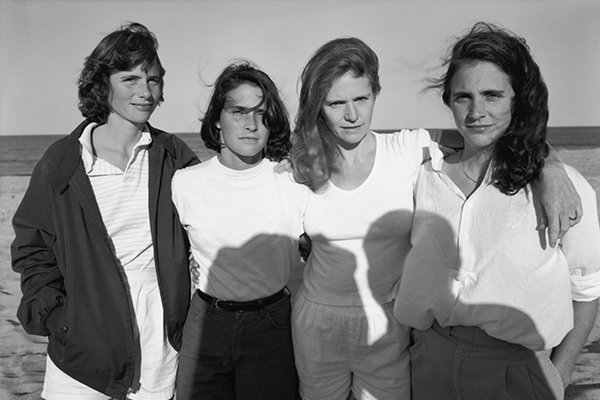
In 1975 Nicholas Nixon took a family picture. In it were his wife, Bebe, and her three sisters: Heather, Mimi and Laurie. The four Brown sisters stood side by side. From left to right: Heather, Mimi, Bebe, Laurie.
The next year he took another. Then the year after. The order stayed the same. From then on Nixon photographed the four sisters once a year and chose one picture to keep. The series is called The Brown Sisters, and it has now run for more than forty years.
Nothing about the idea is complicated. No elaborate staging, no declared theme. Only a quiet commitment: do it every year. And a condition few notice: the four sitters also had to agree to come back, year after year, and stand in their places before the lens.
An 8x10 camera and slowness
Nixon uses an 8 by 10 inch view camera, the kind that stands on a tripod while the photographer looks under a dark cloth at an upside down image on ground glass. Each exposure is a single sheet of film. Every year he makes many exposures, then chooses just one as the portrait of that year.
The pictures are black and white. The large film records fine detail: the weave of a shirt, a strand of hair, the lines at the corner of an eye. The slow camera makes the four stand still and look into the lens longer than in an ordinary family snapshot. Many pictures meet the viewer head on, unsmiling, almost solemn.
That slowness separates the series from the family album. Album pictures mark holidays and happy days. The Brown Sisters records a regular appointment with the camera, needing no other reason.
What changes and what does not
Placed side by side, the pictures show what none can show alone. Four young women become four middle aged women, then older still. Hair changes colour, posture changes, the way they lean on one another changes. Some years they stand apart; some years they hold each other close.
The fixed order is the frame that holds everything. Because Heather is always on the left and Laurie always on the right, one can follow each sister across the years like reading a line of text. With the frame fixed, change becomes visible, almost tangible.
Nixon adds no captions. We do not know which year held a funeral, which a wedding, which an illness. The pictures offer only faces and bodies. The rest the viewer guesses, and usually guesses about themselves.
This concern with passing time is not limited to the series. It runs through Nixon's work, from landscapes and scenes of rural poverty to street life in Boston.
In the museum
The Museum of Modern Art in New York holds many pictures from the series and staged Forty Years of The Brown Sisters when it reached its fortieth year. The museum also published The Brown Sisters: Thirty Three Years, with an afterword by Peter Galassi.
From 13 December 2017 to 22 April 2018, ICA Boston showed Nicholas Nixon: Persistence of Vision, presenting The Brown Sisters in full, interspersed with other pictures he made in the same years.
The series sits close to On Kawara's I Got Up postcards: a small gesture, repeated long enough to become a record of a life. The difference is that Nixon does not record time in numbers. He records it in faces.
Photography