
Essays · Olfactory Art
Alex Da Corte. A Season in He'll.
When even the air is a prop.
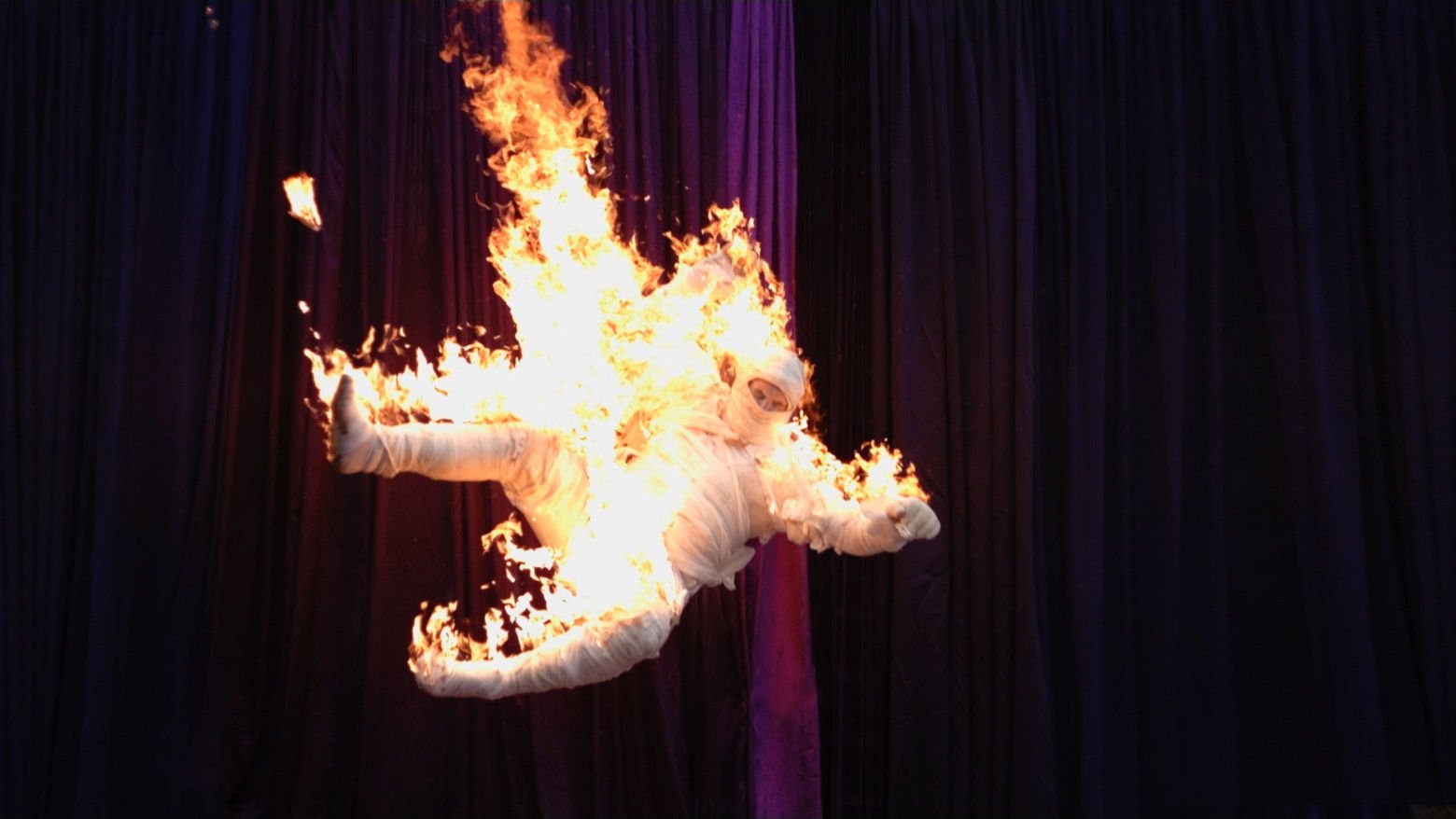
Hammer Museum · Hammer Museum
A season away from the museum
In the summer of 2016, from 9 July to 17 September, the Hammer Museum in Los Angeles did not show Alex Da Corte inside its own building. It took the exhibition to Art + Practice, a space at 4339 Leimert Boulevard in Leimert Park. The curator was Jamillah James, then assistant curator at the Hammer.
Da Corte was born in 1980 in Camden, New Jersey, spent part of his childhood in Venezuela, and lives and works in Philadelphia. He makes video, installation and sculpture, and often uses cheap goods from dollar stores as paint and props.
The title borrows from Une saison en enfer, A Season in Hell, the prose poem Arthur Rimbaud wrote in 1873. Da Corte turns Hell into He'll. One apostrophe, and the word for hell becomes a promise: he will.
A stage and its smell
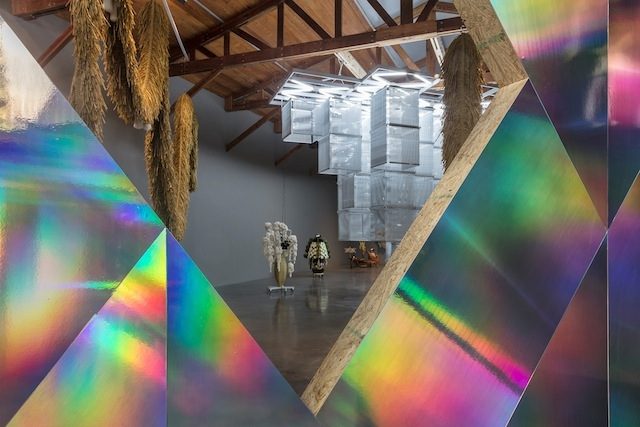
Art + Practice became a stage. There was a stained glass window with the rose from Disney's Beauty and the Beast. There were curtains of chain link. There was an oversized witch hat. The floor was covered in ornamental patterns creating optical illusions, so that anyone walking on it could not be sure of the plane underfoot.
And there were aromatic diffusers altering the smell of the room. The Hammer lists this as part of the installation, on equal footing with the glass and the chain link. Smell here is not a side effect. It is a layer of material.
Think of how a room usually smells: floorboards, dust, people passing, the building itself. Those smells are traces of the room's life. The diffusers lay another layer over all of it. Visitors no longer smell the real room. They smell the room the artist wants them to believe in. Like the chain link or the witch hat, the smell is brought in from outside and put in its place.
The sources of A Season in He'll run from Disney's Fantasia and Beauty and the Beast to the horror films of Dario Argento and Lamberto Bava. These are two worlds that share saturated colour and pent up emotion: one sweet, one sinister. In Leimert Park they share a room.
Scattered through the installation were old family photographs, shown out of their context. They made the space both familiar and strange, like the house of someone we do not know.
Short films
Within that stage, visitors watched video. The Hammer lists six films: A Season in Hell, Bad Blood and The Impossible from 2012, and A Night in Hell, Part II, Easternsports and The Old Fart from 2014. Bad Blood is also the title of a section of Rimbaud's poem.
Installation and video mirror each other. What appears on screen, colour, objects, a staged atmosphere, also appears around the viewer. The line between film and room blurs. Smell blurs it most of all, because a screen has no smell. A room does.
In other olfactory works, such as Pamela Rosenkranz's Our Product, smell is also manufactured to accompany an artificial material. Da Corte uses smell the way a stage designer does: to make the audience believe in the scene.
A Season in He'll stays with us because it reminds us that the air in a room is never neutral. Someone chose it, or left it alone. Da Corte chose, and let visitors know he had chosen.
Olfactory Art