
Essays · Olfactory Art
Anicka Yi. 6,070,430K of Digital Spit.
A taste once eaten can return through the nose.
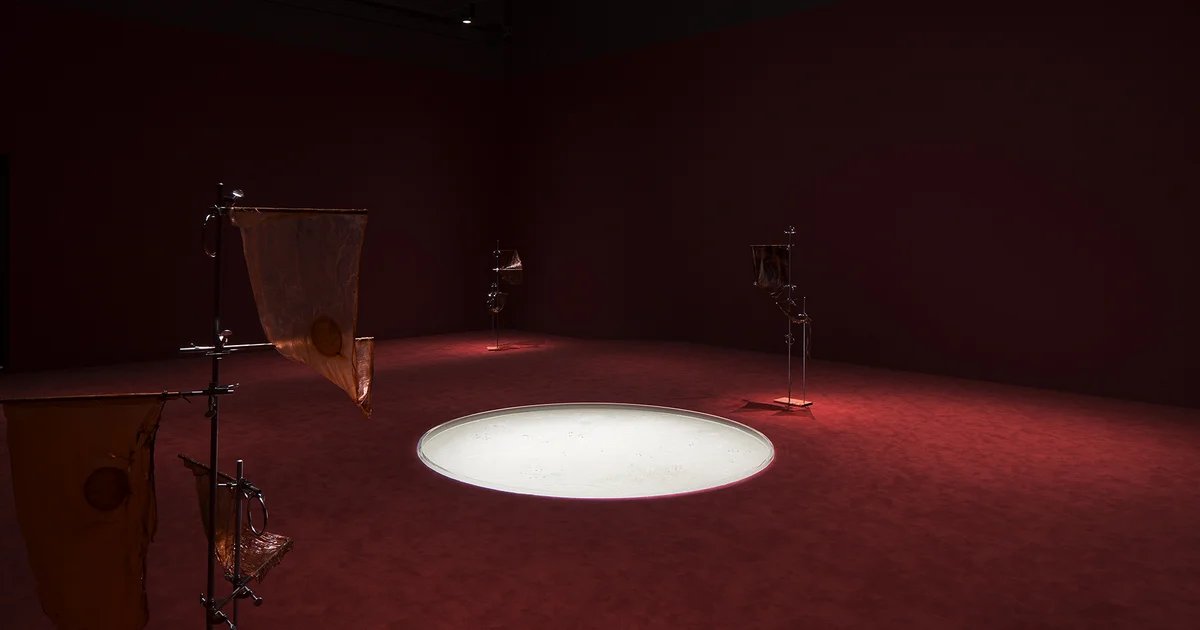
Installation view, MIT List Visual Arts Center, 2015 · MIT List Visual Arts Center
A small room in Cambridge
From 22 May to 26 July 2015, the Reference Gallery at the MIT List Visual Arts Center in Cambridge, Massachusetts, showed a solo exhibition by Anicka Yi. Its title was an odd number: 6,070,430K of Digital Spit. It was curated by Alise Upitis.
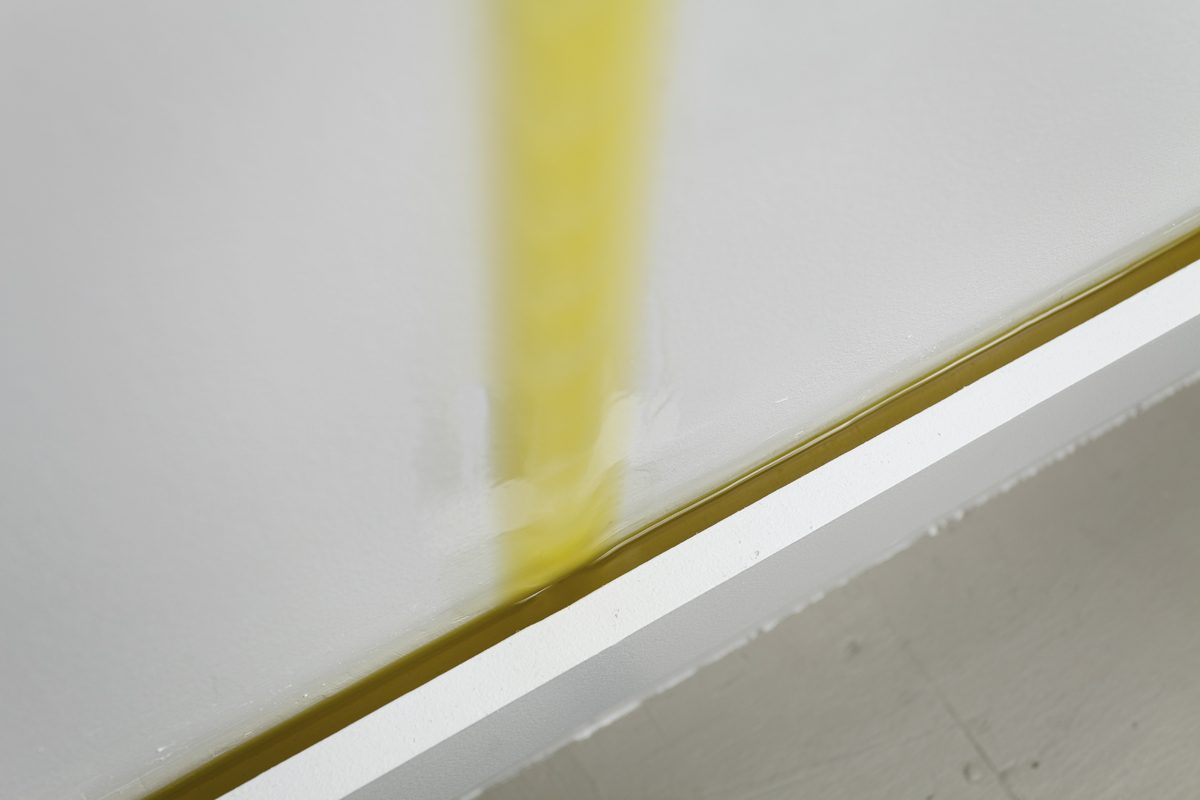
The materials in the room were hard to list together. Hair gel. Coloured contact lenses and circle lenses. A cellulose "leather" grown from kombucha cultures. Theatrical lighting. Sound. And a smell across the whole gallery: menthol.
These things share something. They belong to the body, to grooming, to eating, but inside a gallery they lose their function. The lenses sit on no one's eye. The gel holds no hair. They are only material now: clear, sticky, quick to dry, quick to spoil.
The quilt and the mint
One work in the room is titled Our Love Is Bigger Than An AIDS Quilt, made in 2015. Its list of materials includes plexiglas, hair gel, contact lenses, dressmaker pins, projector lenses, light, sound and menthol. The smell is listed as a material like everything else. It is not decoration.
According to MIT List, Yi linked the menthol to Mint Pond, a molecular gastronomy dish once served at elBulli, the celebrated Spanish restaurant that has since closed. No one in Cambridge in 2015 could eat that dish. The restaurant was gone. But a smell tied to it could still be brought into the room.
This is how Yi works with memory: not by retelling or showing images, but by rebuilding part of a sensation. A taste exists only while we eat. A smell can leave the food, travel through space, and call the taste back.
Flavour as a genome
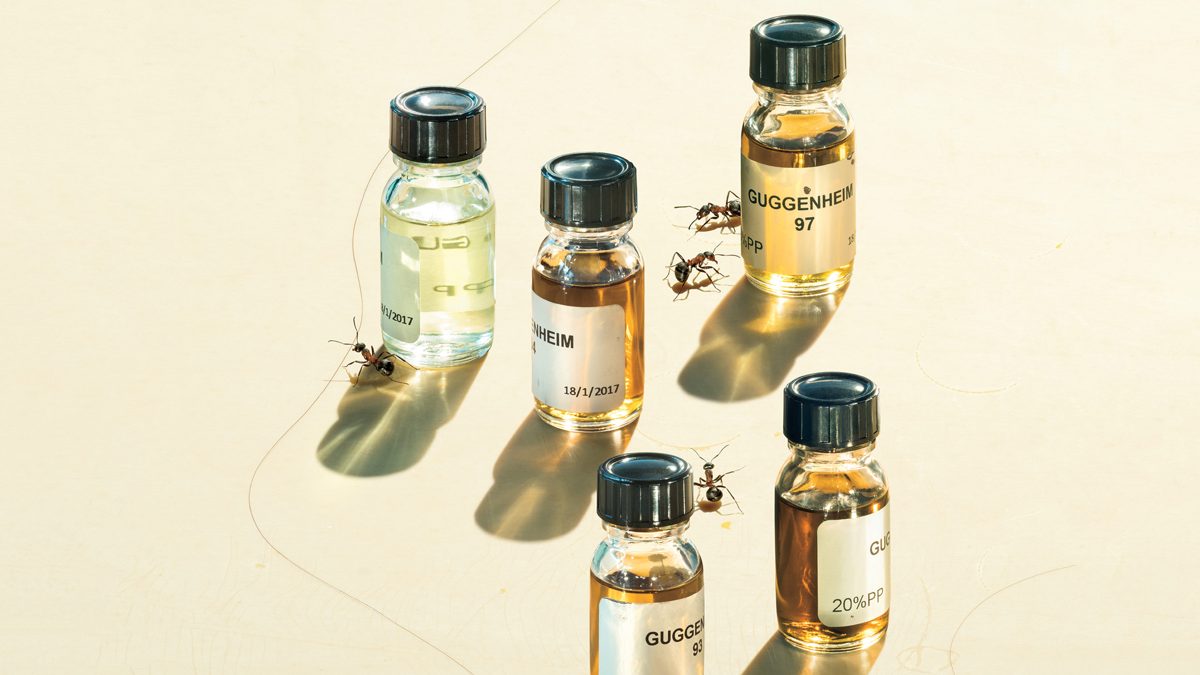
The show connects to a long running project of Yi's, The Flavor Genome. Flavour here is wider than the tongue. MIT List describes the exhibition as a look at visual, olfactory, gustatory and auditory "flavours" and how they produce sense memories and longing.
Yi does not stop at private sensation. The show also asks about value. In a global market, how is a flavour priced? Who decides what is delicious, what is refined, what is desirable? MIT List calls it the politics of taste. A dessert from a famous restaurant, a lens that makes eyes look larger, a jar of hair gel: each carries a standard of beauty and of wanting.
The perishable materials have a reason. Kombucha leather dries and shrinks. Gel changes state. Smell fades day by day. The work does not keep its form for two months. It ages with the exhibition, like the memory it speaks about.
The show was supported by the New York gallery 47 Canal, with a catalogue published by MIT List and Mousse Publishing. A few weeks later in Basel, Yi opened another show with an almost identical title, one digit different: 7,070,430K of Digital Spit. The number grew, as if the memory were still being written.
Olfactory Art