
Essays · Olfactory Art
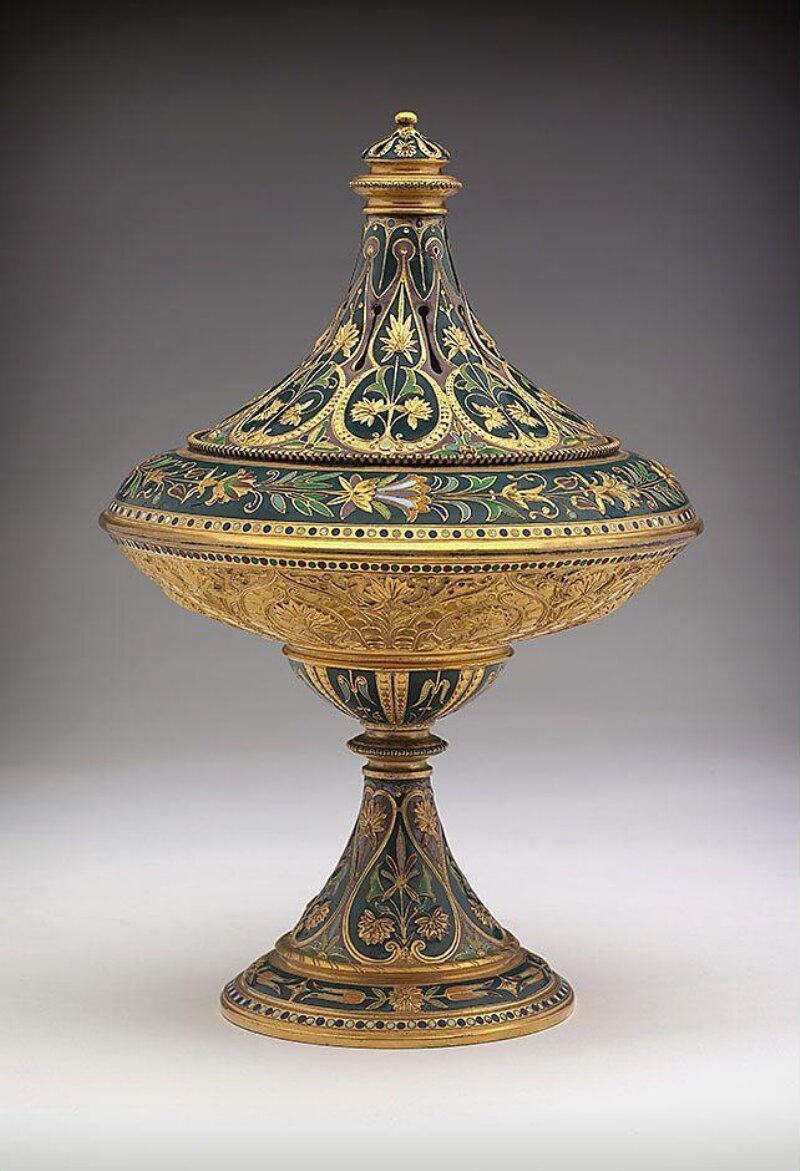
Auguste Adolphe Willms, Elkington & Co. Perfume burner.
The outside is for looking. The inside is for knowing.
© Victoria and Albert Museum, London · Victoria and Albert Museum (V&A)
A bowl, a lid, a foot
The burner is about 24 cm tall. A shallow round bowl with an inturned rim sits on a hemispherical boss and a trumpet shaped foot. The lid flares too, pierced halfway up with small slots to let the scent out. On top sits a round finial, also pierced.
The outside is enamelled deep green, with details in blue, grey, red, green and mauve. The foot and lid carry gilded ovals crowned with cusped leaves, which the museum traces to Persian ornament. A band of running foliage circles the rim.
The Victoria and Albert Museum records it as made in Birmingham around 1873 by Elkington & Co. The designer was Auguste Adolphe Willms, who lived from 1823 to 1899 and was Elkington's chief designer. The model was shown at the Vienna Universal Exhibition of 1873.
The museum admits the object has gone by several names: perfume burner, pot pourri, tazza. The slots in the lid suggest it was meant for scenting rooms.
Copper grown in a mould
Elkington was known for electroplating, and this burner was not cast in the usual way. It was electroformed: copper in solution was drawn by an electric current onto an open mould, layer upon layer, until thick enough to stand on its own when removed. It was then electrogilded and enamelled.
The side pressed against the mould comes out crisp, every line sharp. The open side is granular, lumpy, like stone. Usually that side is hidden. Here it is not. The underside of the bowl is gilded but left without enamel, showing a row of cusped arches with flowers. The inside of the bowl, the underside of the lid and the foot are left raw.
This, the museum says, makes it a rare case in which the construction is plain to see. Many of Elkington's enamelled vases resemble true cloisonné so closely that one cannot tell whether the cells were wired or electroformed, because they are lined and sealed. This burner opens itself up.
The Los Angeles County Museum of Art owns another of the same model, and a third was sold at Christie's. All three came from the same model and share the same form. Only the arrangement of enamel colours differs, each one its own.
A scent drawn from the past
Elkington's enamel series of vases, plates and burners was first inspired by a mix of medieval European and early Islamic art, and later by Japanese cloisonné and champlevé. This burner sits at the turn. The museum points to medieval and Renaissance enamels whose layout and form it borrows.
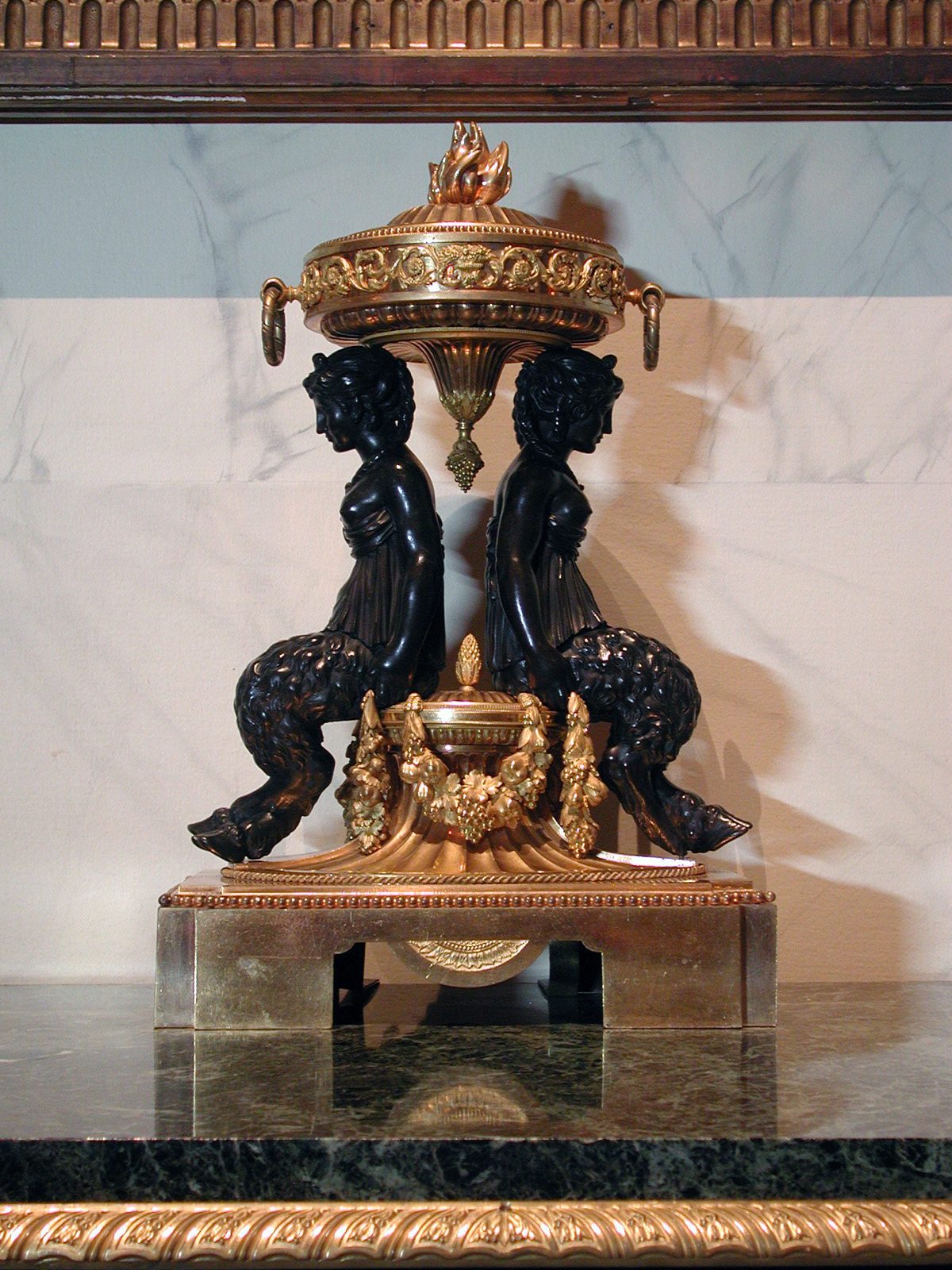
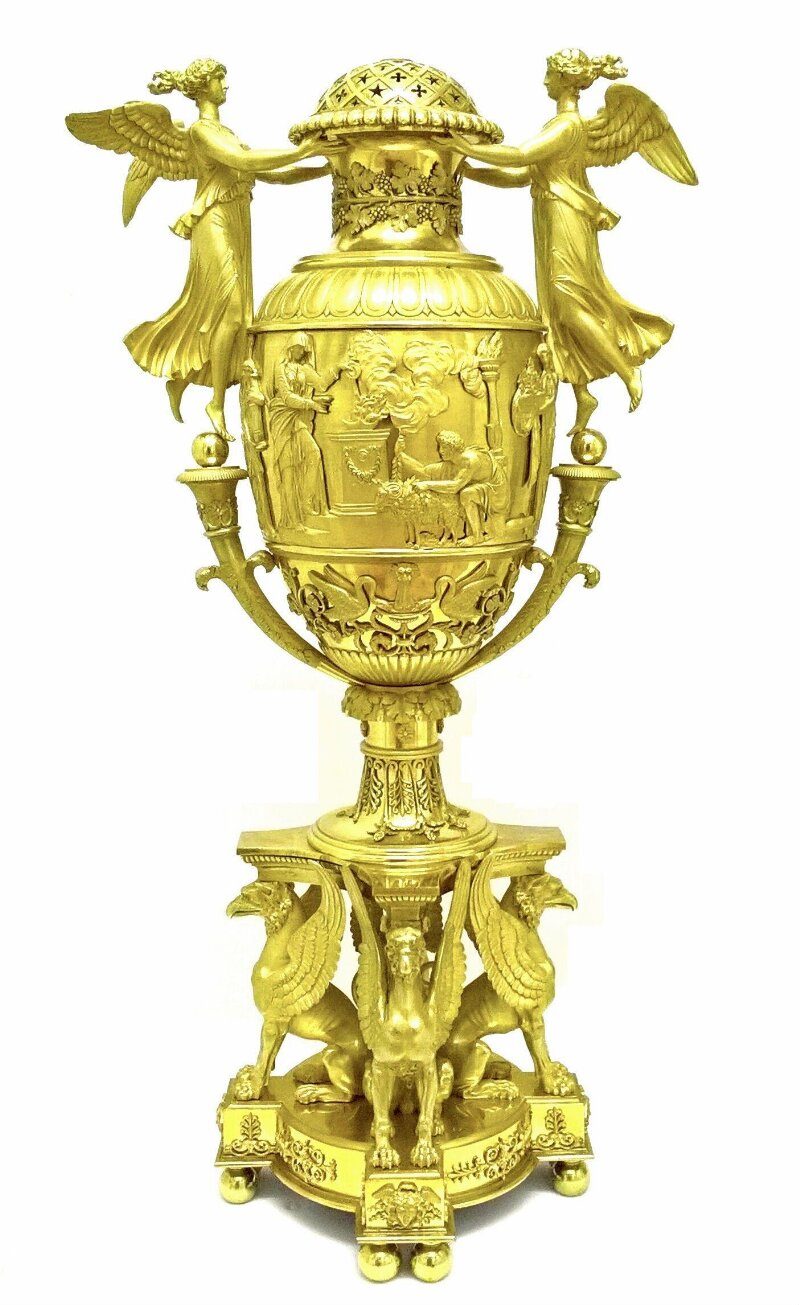
For the Victorians, looking back was a way of designing. It had happened a century earlier too, when the architect James Stuart drew a perfume burner in the form of a Greek temple tripod. This time the sources were not only Greece but the Middle Ages, Persia, Japan.
One small detail in the record brings the object closer. Two Elkington visitors' books survive in the National Art Library. One lists purchases at the Elkington stand at international exhibitions between 1855 and 1878. On 29 December 1876, in Philadelphia, a Mrs Alexander Thomson of Albany bought an enamelled perfume burner for 135 dollars, duty paid. If it was this model, the museum suggests it was largely ornamental, since there are no fixtures inside for burning.
Elkington's enamels did not last long. Once trade with Japan opened, importing Japanese enamels was easier than imitating them. Electroforming saved a great deal of labour, but enamelling could not be hurried. By the 1880s Elkington had more or less stopped.
Olfactory Art