
Essays · Olfactory Art
Turba Tol Hol-Hol Tol.
One millimetre of peat a year. A bog is a very slow notebook.
Eight people in the dark
In 2022, at the 59th Venice Biennale, Chile brought neither a painting nor a sculpture. It brought a bog. The pavilion was called Turba Tol Hol-Hol Tol. Turba is Spanish for peat. The rest is Selk'nam, the language of the Indigenous people of Tierra del Fuego; according to the team, Hol-Hol Tol says that one's heart is made of peat.
Only eight people entered at a time, for fifteen minutes. The room was dark. Underfoot lay a thick carpet of sphagnum moss. Water dripped all around, slow and steady. Along the walls, red plastic crates were stacked, like the storeroom of a research station.
The first thing to arrive was smell. Wet moss has a green, damp smell, at once living plant and rotting leaf. Before the eyes adjusted to the dark, the nose already knew it was somewhere else.
Above, on a raised platform, hung a translucent screen. A film was projected onto it: peatlands at the southern tip of the Americas, wide, low, full of water. Sound surrounded the visitor, mixing music with natural sounds, whispers and breath.
A collective, not an artist
Turba Tol Hol-Hol Tol was a project of Ensayos, a research collective started by the curator Camila Marambio, an independent Chilean American curator. Ensayos has worked for years in Karukinka, in Tierra del Fuego, a land of vast peat bogs.
The pavilion team spanned many fields: sound artist Ariel Bustamante, art historian Carla Macchiavello, filmmaker Dominga Sotomayor, architect Alfredo Thiermann, ecologist Bárbara Saavedra, and the Selk'nam writer Hema'ny Molina.
Molina's presence matters. The Selk'nam were long described as extinct after the killings and displacement in Tierra del Fuego in the late nineteenth and early twentieth centuries. Naming the pavilion in Selk'nam says the language is still here, and that someone holds that land as a heart.
The screen had its own story. It was made from algae, collagen and acetic acid, a biological membrane in place of fabric or plastic. The Brooklyn Rail reviewer found its texture distracting at first, but read it as part of the same commitment to low impact materials. The team also calculated the project's carbon footprint and worked with recycling services.
What peat keeps
Peatlands cover a small share of the planet's surface, yet they are the largest carbon store on land, holding more than forests. Drained for farmland or dug for fuel, they release that carbon as greenhouse gas.
Because peat grows about a millimetre a year, a metre of it is roughly a thousand years. Inside are pollen, seeds, insects, traces of past climates and lives. Scientists read peat as an archive.
The pavilion did not show these facts as charts. It placed the visitor inside a bog's conditions: dark, damp, soft underfoot, the sound of water. Understanding came through the body first, words later.
The review points out one small detail. The sphagnum moss did not come from Tierra del Fuego but from an agricultural farm in Germany. No one carried a real bog across the world to Venice. What arrived was its feeling, and its smell.
A lesson in slowness
The Biennale is a place of big, bright, loud works. This pavilion went the other way. Few people at once. Little light. A lot of standing still.
Eight people for fifteen minutes, on moss, listening to water. It is closer to the pace of a bog than to the pace of an art fair. Visitors did not pass through the work. They stayed in it for a while.
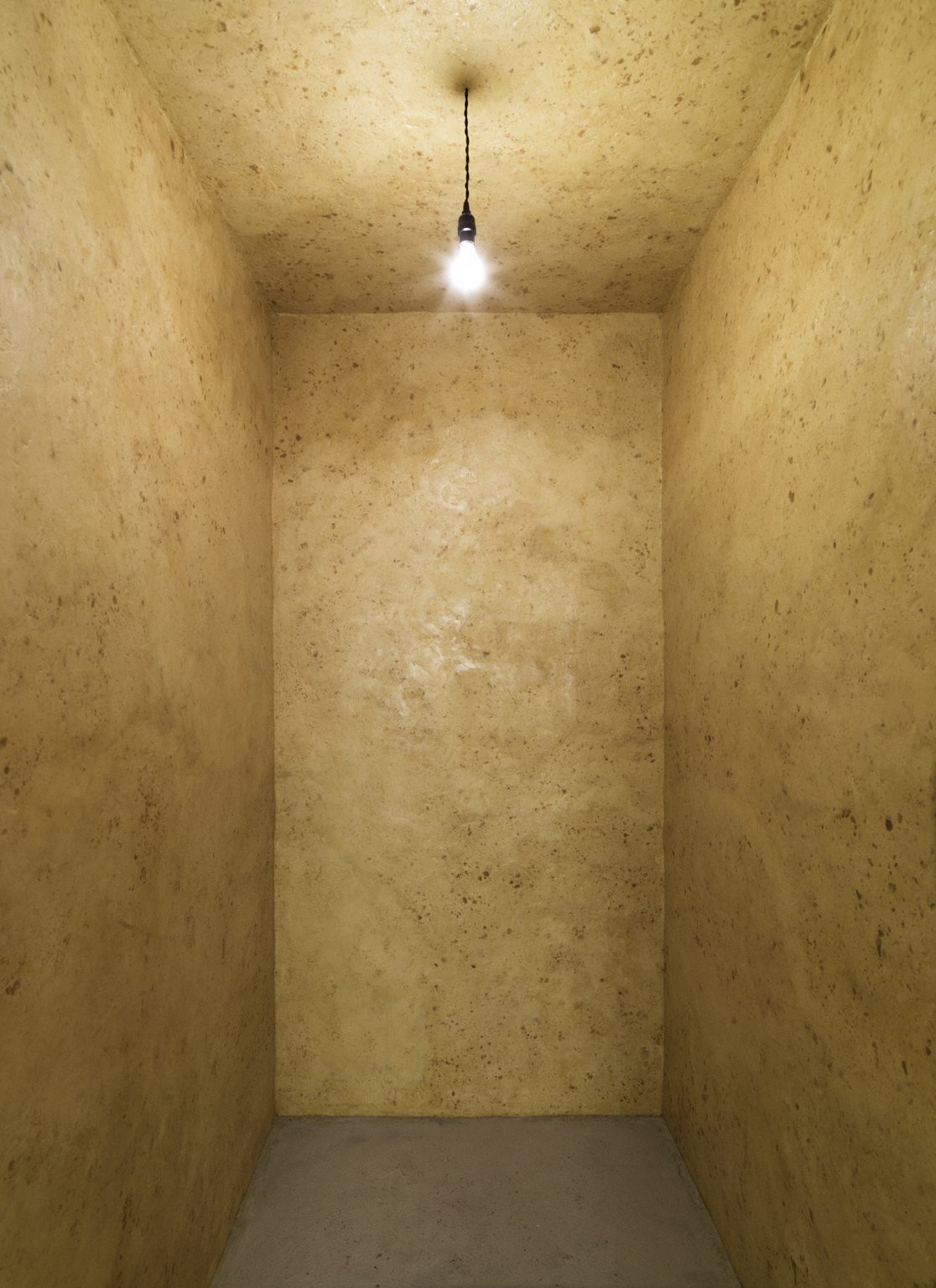
Ensayos were not alone in reaching wetlands through smell. Two years later in New York, Gala Porras-Kim brought Yucatán swamp clay into a hot, humid room in The motion of an alluvial record. Both works show that a wetland is not empty. It is holding a great deal, and it holds by being slow.

Olfactory Art