
Essays · Contemporary Art
Christian Boltanski. Les Archives du Cœur.
Each heartbeat is proof that someone was here.
Benesse Art Site Naoshima · Benesse Art Site Naoshima
A small house in Karato
In Karato, a corner of Teshima island in the Seto Inland Sea, a low house stands near the water's edge. Inside there are no paintings, no sculptures. Only recordings of human heartbeats.
This is Les Archives du Cœur, the Heart Archive, by the French artist Christian Boltanski. He began recording heartbeats in 2008. In 2010 the house on the island opened to hold them and let people listen.
The collecting did not stay on Teshima. Heartbeats were recorded in many places around the world and sent here. Someone in a large capital, someone in a town the island's visitors may never have heard of. All in one archive, not sorted by country, not sorted by age.
Benesse Art Site describes the work as a testament to the existence of the people recorded. Not a portrait, not a biography. Only proof that they were present.
Three rooms
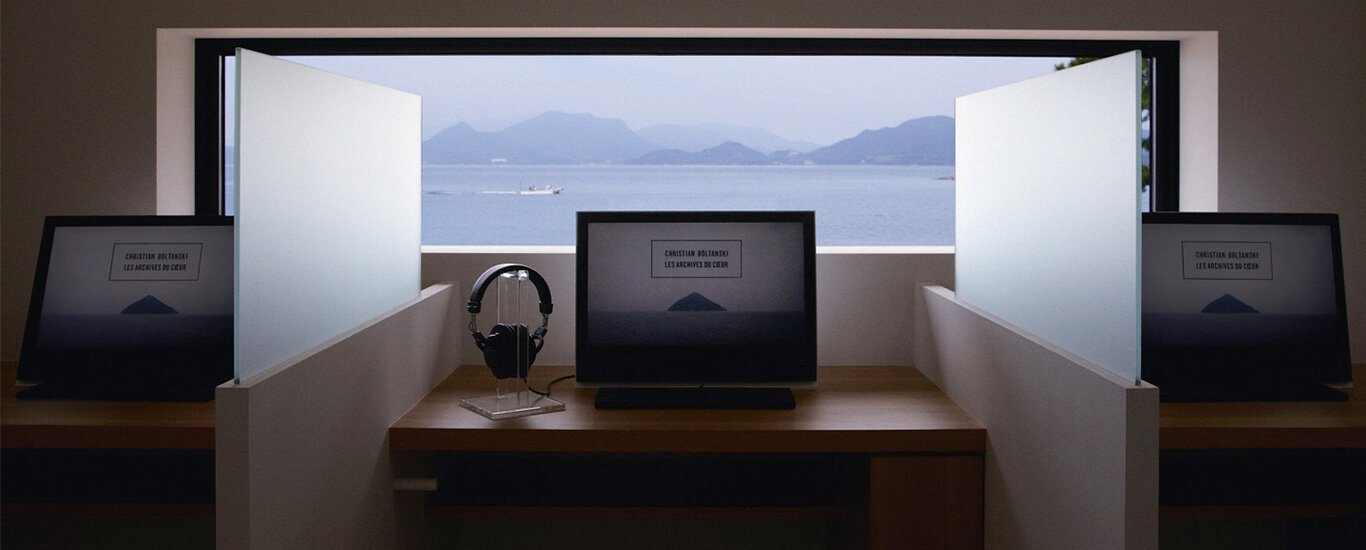
The house has three parts. The Heart Room holds an installation by Boltanski, where one enters and listens. The Recording Room is where visitors record their own heartbeat. The Listening Room has computers for searching and replaying the stored recordings.
In the Recording Room, a visitor can record a heartbeat with a personal message. They pay a registration fee and take home a CD and a small booklet. Their recording stays in the archive.
In the Listening Room, visitors can search for a name. Some look for their own heartbeat, recorded years earlier. Some look for someone close to them. Some choose at random and hear a stranger's heart beating in their headphones.
Three rooms, three gestures: listen, leave, find again. The work is incomplete without people coming.
An archive of the absent
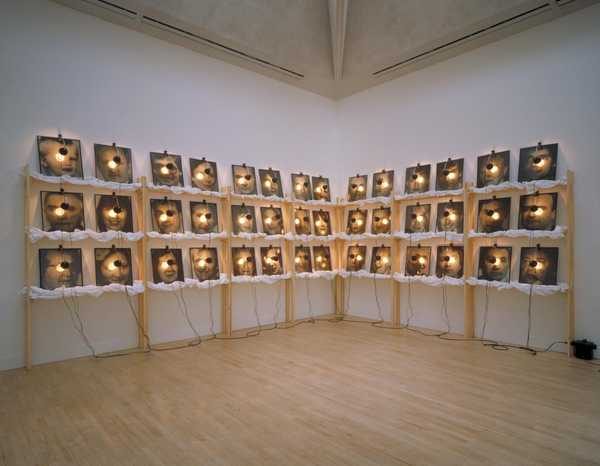
Boltanski worked all his life with memory and loss. He used old photographs of nameless people, worn clothing, tin boxes stacked like files. He was drawn to things that point to a person without saying who, as in The Reserve of Dead Swiss.
Les Archives du Cœur continues that method with another material. Photographs fade. Clothes tear. A recording of a heartbeat keeps the exact rhythm, the speed, the small skips of one body at one moment.
A heartbeat is also hard to identify. Hearing a few seconds, one cannot tell whether it belongs to a man or a woman, someone old or young. Privacy stays intact. The archive is at once deeply personal and entirely anonymous.
An ordinary archive keeps papers to prove something: a contract, a birth, a verdict. Boltanski's archive proves nothing but life. It does not ask what people did. It only records that their heart beat, on a certain day, in a small room.
Why go all the way to an island
Boltanski chose to place the archive on a small island far from the city. To listen, one has to take a boat, then walk or cycle along the coast. That journey is part of the work, a small pilgrimage.
The distance also changes the listening. In a city museum a heartbeat might blur into voices and traffic. On Teshima the surroundings are sea and wind. The heartbeat stands out.
Boltanski died in 2021. The archive keeps receiving new heartbeats. The work did not end with its maker. It grows with each person who passes through.
Contemporary Art