
Essays · Olfactory Art
Chypre de Coty. An island in a bottle.
The island is forgotten. The moss is remembered.
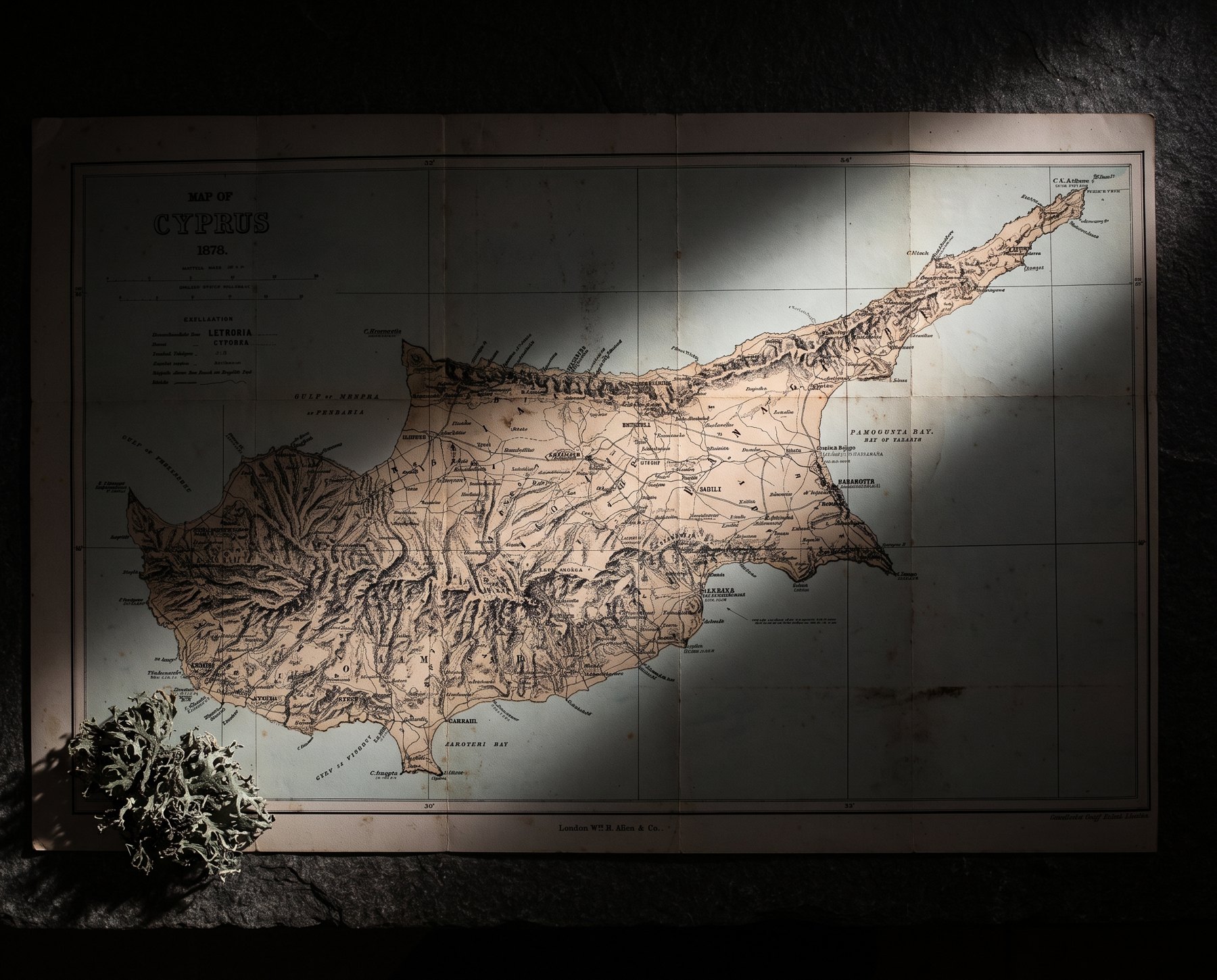
Coty, 1917
In 1917 Europe was in the middle of the First World War. In Paris, François Coty released a bottle called Chypre. Coty was by then a major perfume house, known for bringing perfume to more people and for working with the best bottle makers of the day, among them René Lalique.
The word Chypre was not new. Long before, it had been attached to various scented preparations in Europe, such as a perfumed powder based on oakmoss. In the nineteenth century several houses sold products called Chypre. They shared no common formula.
Coty's bottle was different. It was a large commercial success, and its structure was clear enough for others to recognise and follow. After 1917 the word Chypre no longer meant a single item. It meant a way of building a scent.
From an existing name, Coty made a landmark. Not by inventing the word, but by giving it a fixed shape.
Bergamot, oakmoss, labdanum
Chypre's structure is recorded as bergamot above, rose and jasmine in the middle, oakmoss, labdanum and patchouli below. The flowers are discreet. What stands out are the two ends: the sour brightness of bergamot and the damp, bitter, slightly smoky ground of moss.
Oakmoss is not a moss. It is a lichen, Evernia prunastri, growing on oak bark and gathered mainly in the Balkans and Morocco. Its smell recalls earth after rain, ink, wet bark.
Labdanum is a resin from cistus, a Mediterranean shrub. It is warm, a little leathery, a little like honey. Patchouli brings dry earth and wood.
Together they make a very particular impression: light and dark at once, fresh and old at once. That is how a Chypre is recognised, whichever house made it.
Cyprus: an island becomes a family
Chypre is the French name for Cyprus, an island in the eastern Mediterranean. The name suggests a warm, stony land thick with aromatic shrubs. But Coty's scent is not a record of the island. Its oakmoss came from other forests.
After Coty's success other houses built variations on the same frame. In 1919 Jacques Guerlain made Mitsouko, adding a peach note. Later came Chypres with aldehydes, with leather, with the green bite of galbanum resin.
In the classification of the Société Française des Parfumeurs, Chypre is family D, with seven branches. One bottle, named after an island, became the name of a whole family.
It is a strange journey for a word. The name of a place becomes the name of an object. Then the name of an object becomes the name of a kind. At each step the island moves a little further away.
Oakmoss today: rules and change
Oakmoss contains atranol and chloroatranol, two substances that can strongly irritate skin. European Union Regulation 2017/1410 bans them in cosmetics. From 23 August 2019 new products containing them could not be placed on the EU market. From 23 August 2021 existing products had to be withdrawn as well.
The IFRA standard requires oakmoss extracts to hold less than 100 ppm of each. The oakmoss used today is therefore a treated grade. It is lighter, with less of the inky quality of the moss of 1917.
Coty's original Chypre is no longer on the shelf. New Chypres lean more on patchouli and woody molecules. The frame remains, but the materials inside have changed.
Perhaps that is Chypre's last lesson: a structure outlives the materials that built it. The island has already receded. Now it is the moss's turn.


Olfactory Art