
Essays · Contemporary Art
Douglas Gordon. 24 Hour Psycho.
The familiar, slowed down, turns strange.
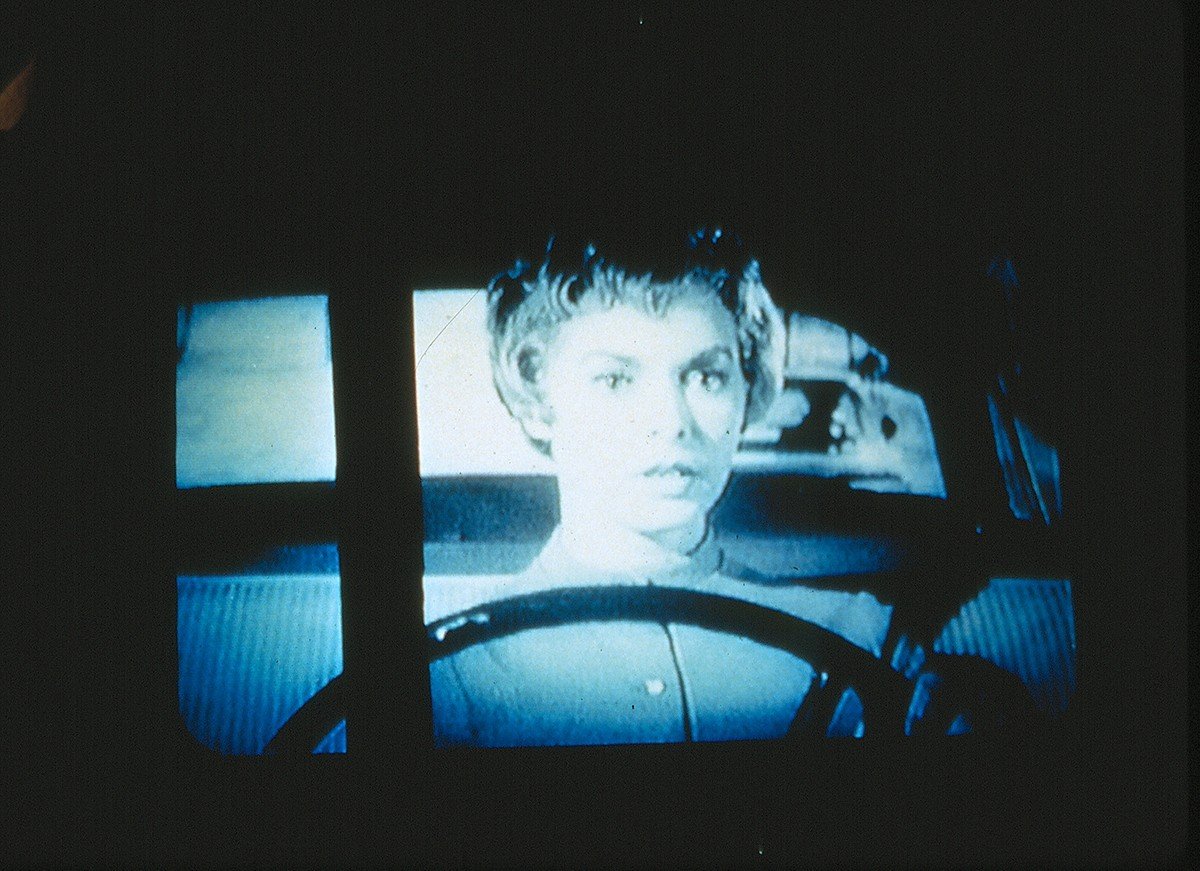
© Studio lost but found/VG Bild-Kunst, Bonn 2017/from · Gagosian
A film that lasts a day
Alfred Hitchcock's Psycho came out in 1960. It is one of the most watched, discussed and quoted films in the history of cinema. Many people know the shower scene without ever having seen the whole film.
In 1993 Douglas Gordon, a young Scottish artist, took the entire film and did one thing to it: he slowed it down. Instead of the usual 24 frames per second, he projected it at about two. A film of under two hours was stretched to a full 24.
The work is called 24 Hour Psycho. It was first shown at Tramway, Glasgow, in 1993. Gordon shot nothing new, cut nothing, altered nothing. The work consists entirely of appropriation: someone else's film, placed inside a different frame of time.
The image is projected on a large screen in a dark room. There is no sound. Whenever viewers walk in, they meet the film at exactly that moment, and leave whenever they wish.
To look slowly is to look differently
At normal speed, Psycho is a machine for suspense. Hitchcock measured every cut to make the audience hold its breath. Slowed, the machine stops. Suspense disappears. What remains are frames, one after another.
A turn of the head takes minutes. A door opens as if it will never finish opening. An actor's face holds still long enough to see each fold of skin, each streak of light. What was made to be passed over now has to be looked at.
Without sound, the room changes too. No shrieking strings to announce the fear. Only other visitors' footsteps, breathing, a door opening and closing. A film famous for its sound now has to stand alone on its images, and those images drift so slowly they are almost a still photograph, breathing.
Gordon has long been interested in how memory holds on to films. We often remember a film more vividly than it is, or remember it wrong. 24 Hour Psycho sets that memory beside the original, but at a speed memory cannot match. The viewer stands between two things: the film in the mind, and the film on the screen.
Almost no one watches all 24 hours. The work does not ask them to. Each person takes away a fragment of a few minutes, and no two fragments are the same.
Time as an object
In 1996 Douglas Gordon won the Turner Prize. 24 Hour Psycho was among the works that made his name widely known, and it has since been shown in many places around the world.
In 2017 it was chosen to open the newly built Hurley Gallery in the Lewis Arts complex at Princeton University, from 29 September to 22 October. Nearly 25 years after its debut, the same film at the same speed was still strange enough to open a new space.
What keeps 24 Hour Psycho with us is not the boldness of the appropriation. It is the way it turns time into something that can be held and looked at. Two frames a second. Twenty four hours. Those numbers are the whole work.
Years later another artist, Christian Marclay, also made a 24 hour work out of other people's films: The Clock, stitching together thousands of scenes with clocks that match the real time. The two works go in opposite directions. Marclay joins time in film to time outside it. Gordon stretches time in film until it comes loose from life. Yet both ask the same thing: where are we standing in the time of an image?
Contemporary Art