
Essays · Contemporary Art
Felix Gonzalez-Torres. "Untitled" (Portrait of Ross in L.A.).
A portrait can grow smaller.
Felix Gonzalez-Torres Foundation · Felix Gonzalez-Torres Foundation
A pile of candy in a corner
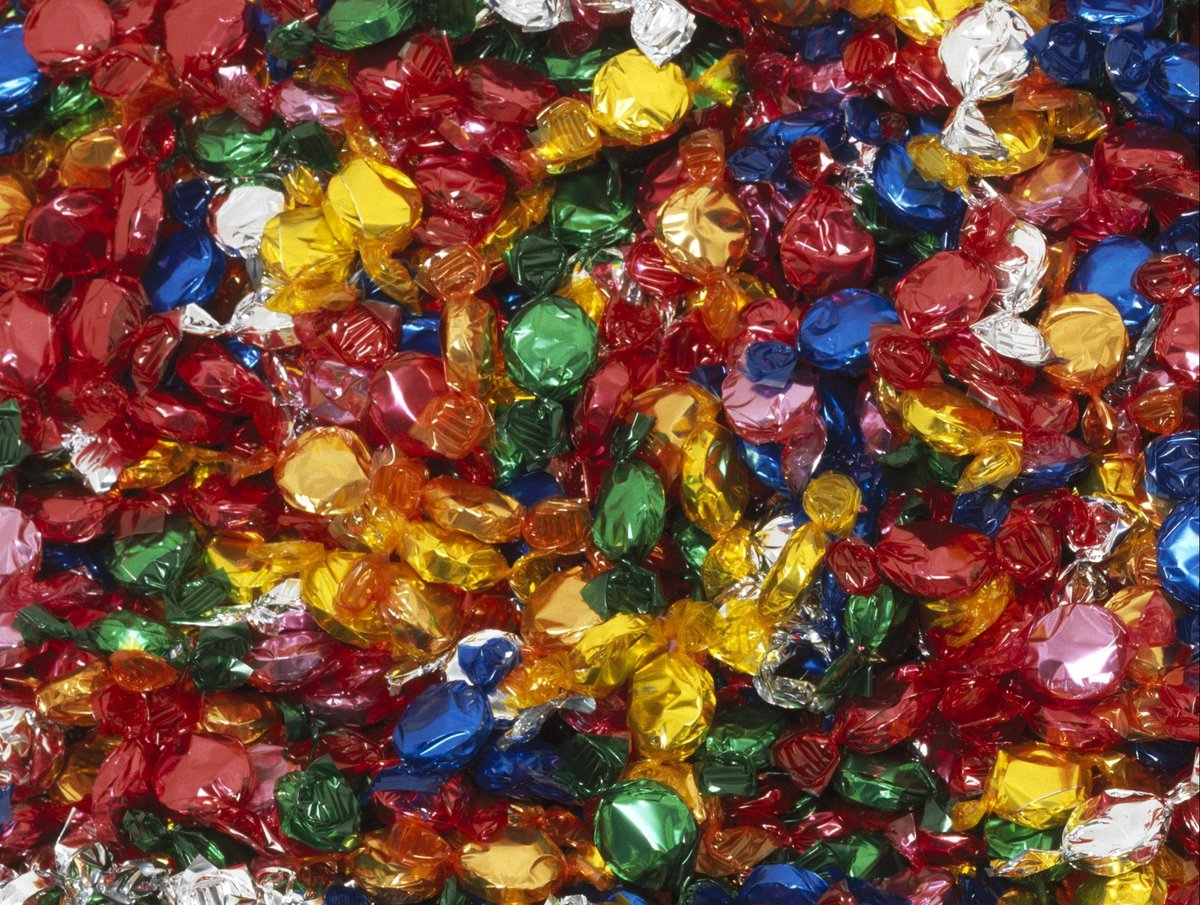
In the corner of a gallery, on the floor, is a pile of candy. Sweets in shiny wrappers of many colours, the mass produced kind sold anywhere. No plinth, no glass. The wall label reads: "Untitled" (Portrait of Ross in L.A.), 1991.
Visitors may bend down and take one. Many hesitate. In a museum, one is used to touching nothing. Here, taking something away is part of the work.
The Felix Gonzalez-Torres Foundation lists the medium as candies in variously coloured wrappers, endless supply. The dimensions vary with each installation. Only one figure is fixed: an ideal weight of 175 pounds, about 79 kilograms.
The work is in the collection of the Art Institute of Chicago and has been shown in many museums around the world.
Ross
The Ross in the title is Ross Laycock, the artist's partner. Ross died in 1991 of complications related to AIDS. Gonzalez-Torres died in 1996, also of AIDS.
The figure of 175 pounds is often read as Ross's ideal weight when he was well. The Art Institute of Chicago is more careful: the number may correspond to the average weight of an adult man, or to the ideal weight of the person named. The artist offered no further explanation. That uncertainty is part of the work.
In the early 1990s in the United States, AIDS was an epidemic and also a silence. People who were ill visibly lost weight. Gonzalez-Torres did not show that body. He showed a pile of candy shrinking day by day, and left viewers to understand.
The title always begins with "Untitled", in quotation marks. The part in parentheses is where he hands the viewer a key. Portrait of Ross in L.A. A person, a city.
Taking and replenishing
As visitors take candy, the pile changes shape. Some days it is much lower, some days nearly gone. The museum may then replenish it, bringing it back close to the original weight. As the Art Institute of Chicago describes it, these changes come from two sides: visitors choose whether to interact, and museum staff decide on replenishment, configuration and placement.
So the work has two rhythms. One of loss, as each person takes a piece. One of continuation, as the museum pours in more. Neither wins outright. The portrait never disappears, but it never stands still either.
This is what separates it from a monument. A stone monument wants to last forever. A portrait made of candy accepts being carried away, and survives by being made again.
Why a piece of candy weighs so much
A sweet is about the smallest thing one can imagine. Cheap, sugary, childish. In the mouth it dissolves in minutes. Because it is so light, it can carry something very heavy without a word.
Whoever takes a candy becomes part of the story without knowing it. They make the portrait smaller. They also carry a piece of it out of the museum, into the street, home. Ross's memory is, in this way, shared among thousands of strangers.
Other works also hold on to the dead through fragile things, such as Christian Boltanski's archive of heartbeats. But few let the viewer carry the absent person with them, in the mouth, in a coat pocket, as simply as this.

Contemporary Art