
Essays · Photography
Gauri Gill. Acts of Appearance.
The mask does not hide. The mask shows.
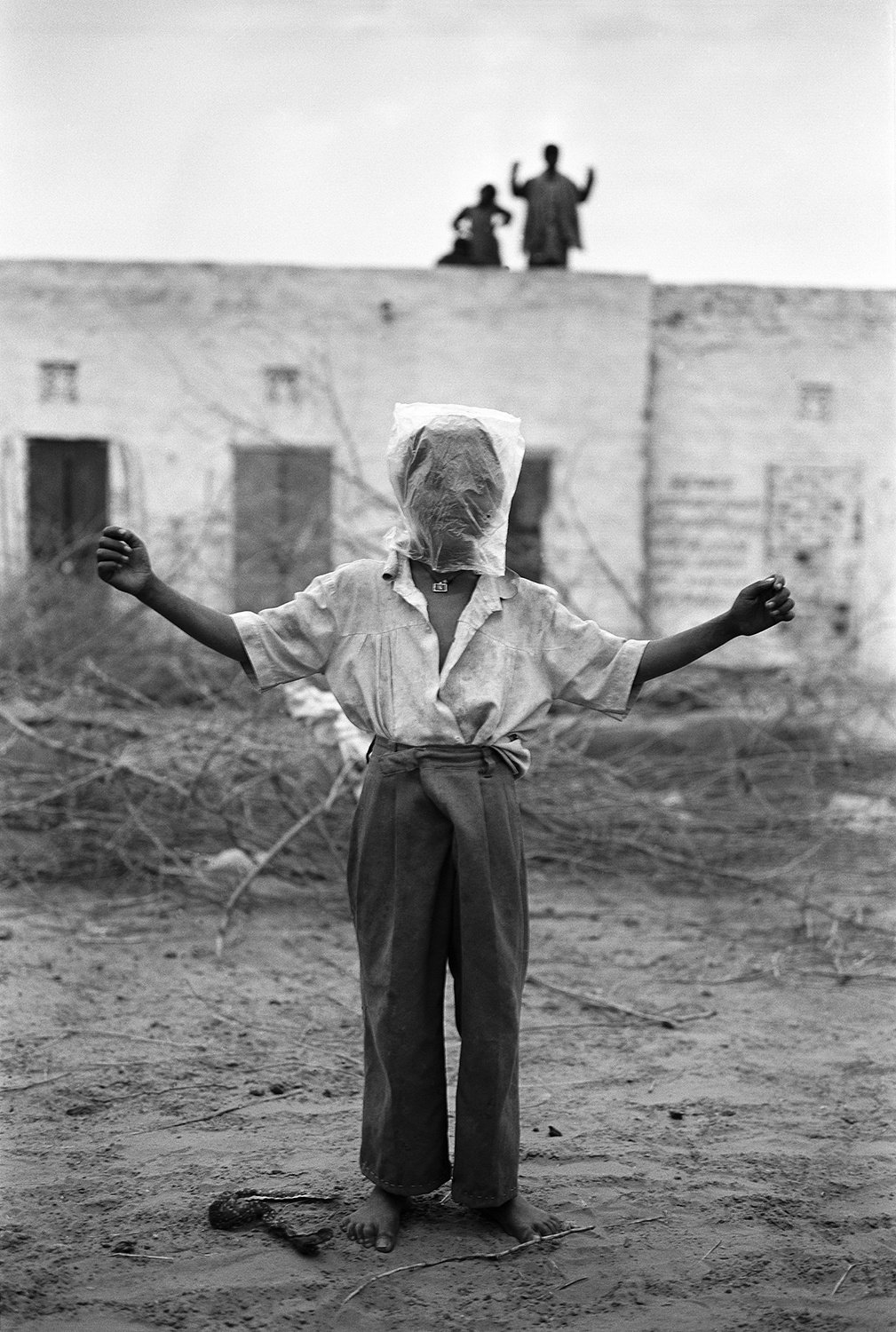
documenta 14 · documenta 14
The masks of Jawhar
Jawhar is a district in the state of Maharashtra, in western India. The Kokna, an Adivasi community, have long lived here, and the region is known for its papier mâché objects. The best known are masks: gods, demons and figures from old stories, worn during the Bohada festival.
Mask making is passed down through families. The brothers Subhas and Bhagvan Dharma Kadu belong to one such family. In 2015 Gauri Gill came to them with a proposal.
Gill was born in 1970 in Chandigarh. She once worked as a photojournalist, then spent years photographing rural and migrant communities in the Rajasthan desert for the series Notes from the Desert. Before Acts of Appearance she had worked with the Warli artist Rajesh Vangad on Fields of Sight, where her photographs and his drawings share a single sheet. Working with people, rather than photographing them, is a choice she has made again and again.
No gods, no demons
Gill's proposal was simple. Instead of the traditional gods and demons, make masks for what is present in life today. She had been thinking about the distance between festival figures and the real lives of people in Jawhar now, and wanted to see what that distance looked like if the villagers closed it with their own hands.
The Kadu brothers agreed. Their families and a group of volunteers, more than thirty people in all, set to work. They made masks of people they knew, of animals, of objects. Things close at hand, not sacred ones.
Only then came the photographs. Gill and her collaborators composed scenes of people wearing the masks while going about their usual routines. Walking, sitting, working, standing outside a house. Many scenes were improvised on the spot. No one played a written role. They did what they always did, with another face.
Colour, staging, real people
Acts of Appearance is in colour. The detail matters, because much of Gill's earlier work was black and white silver prints. The paint on the masks, the clothes, the soil, the walls all sit side by side in a clear frame, without blur or drama.
What is strange in these pictures is not the mask. Masks belong to that place. What is strange is a mask appearing on an afternoon with no festival. The viewer is unsure whether this is a document or a stage. Probably it is both.
The title says as much. Appearance means coming into view, and it also means the look of a thing. An act of appearance is stepping out to be seen, in a way one has chosen. Decades earlier, Lygia Clark also made masks, but to change how the wearer saw and smelled the world. In Jawhar the mask faces outward: it changes how others look in.
From Jawhar to Kassel
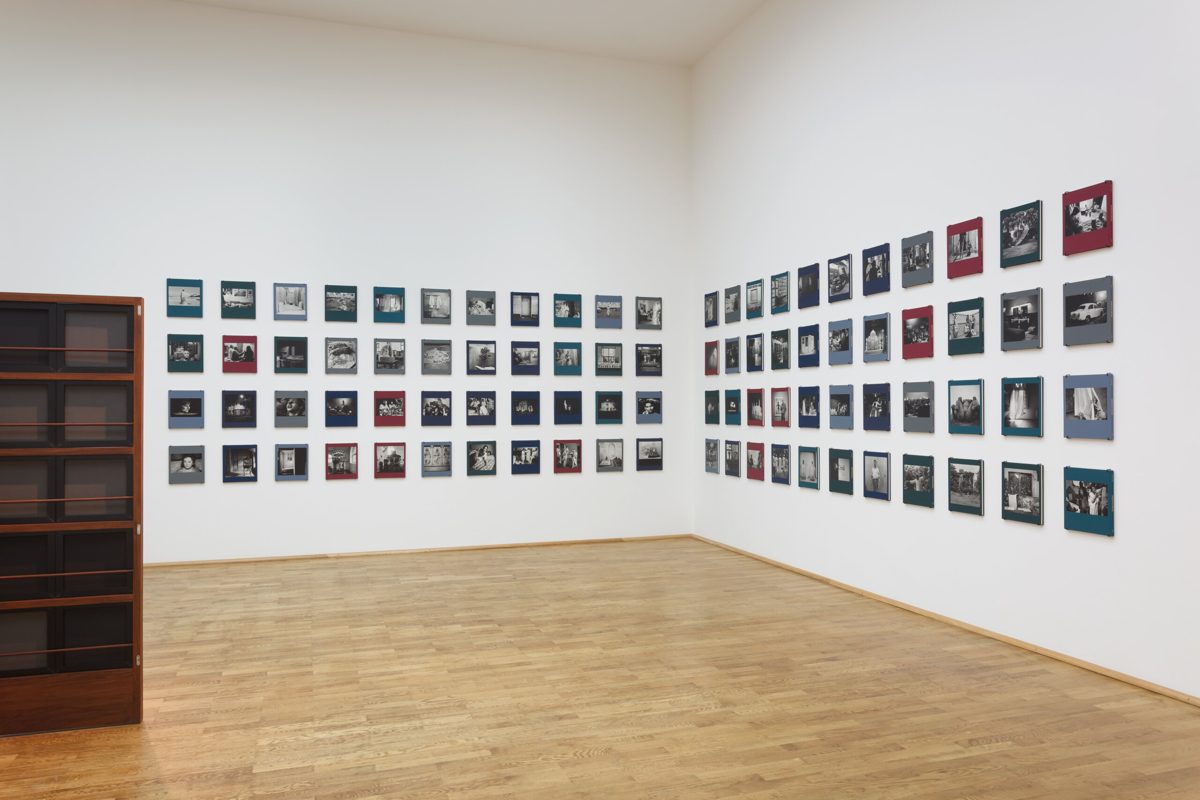
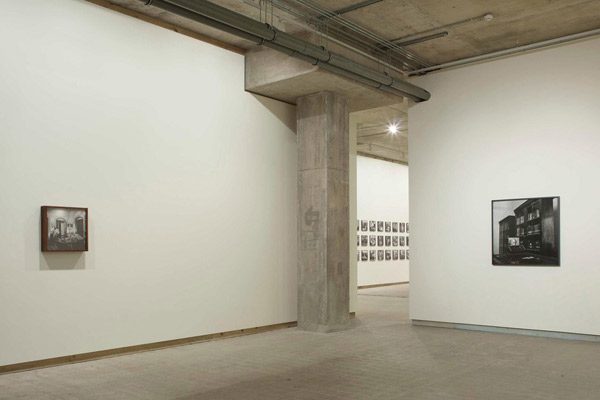
At documenta 14 in 2017, twenty five archival pigment prints from Acts of Appearance hung in the Hessisches Landesmuseum in Kassel, in two sizes: 67 × 101.6 cm and 40.6 × 61 cm. In Athens, during the same documenta, Gill showed other black and white series at the Epigraphic Museum.
The series did not end there. Gill has continued to work with the community in Jawhar, and the project is listed as ongoing. Masks are still being made; scenes are still being staged.
What stays with you is that the work hands the power of image making back to the people in the picture. The mask makers decide the face. The wearers decide the pose. The photographer is one member of the group. The pictures do not look at a community from outside. They are something that community made together.
Photography