
Essays · Photography
Dayanita Singh. Museum of Chance.
There is no right order. Only this arrangement.
Dayanita Singh official site · Dayanita Singh official site
A museum that folds
Dayanita Singh is an Indian photographer. She has described herself as a bookmaker who works with photography. That line explains a good deal about Museum of Chance.
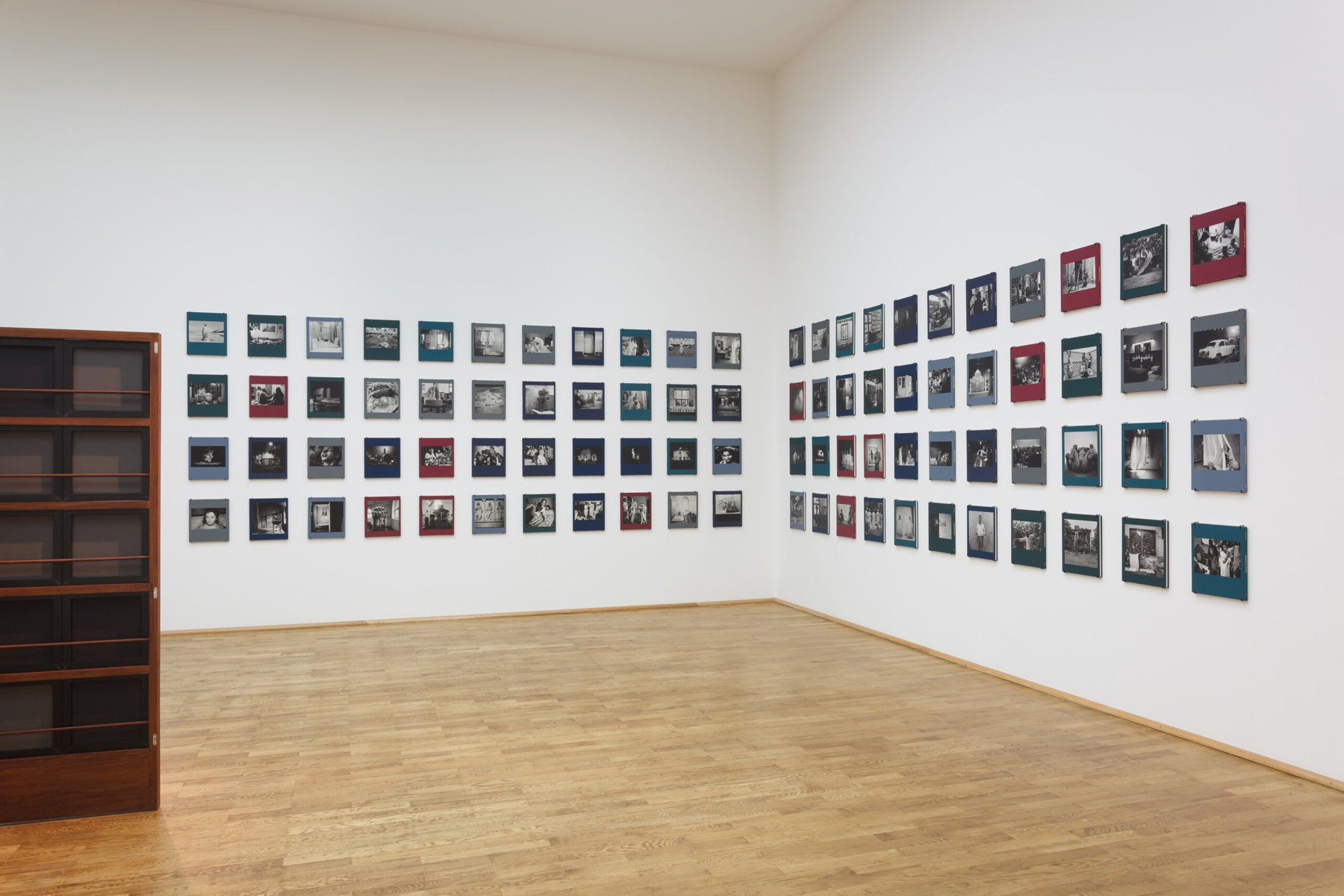
In 2014 Singh built Museum of Chance as a wooden display structure. Inside were 163 photographs drawn from an archive of roughly thirty five years of her work. The structure is not a wall for hanging pictures. It opens, folds, and stands in the room like a piece of furniture. Images can be swapped, moved, stored inside.
Museum of Chance belongs to Museum Bhavan, the name Singh gives to her whole family of small museums. She calls Museum Bhavan the mother museum. Each museum within it is its own wooden structure, its own group of images, its own way of opening. Before this, she had tried the approach with File Museum, a wooden structure holding pictures of paper archives.
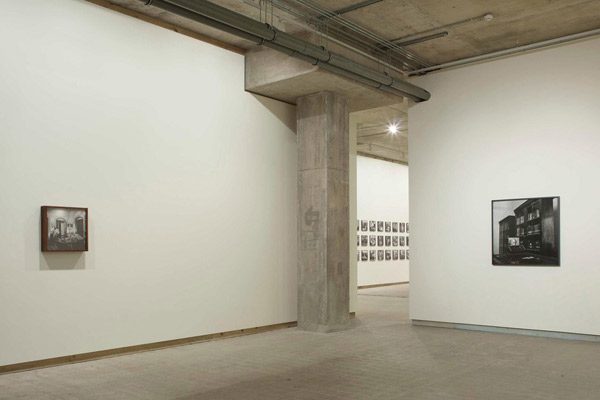
That same year the museum stood at Max Mueller Bhavan in Mumbai and at the Museum für Moderne Kunst in Frankfurt. Two cities, two rooms, and in each a different arrangement.
A book with 44 covers
In 2015 Museum of Chance became a book, printed by Steidl. It holds 88 photographs printed in quadratone on Munken paper, 28 by 32.5 cm, 96 pages.
The most memorable detail is the cover. The 88 images are paired into 44 couples, each pair forming the front and back of one cover. So there are 44 different covers. Two people who buy the book may hold objects that do not look alike. The book has no single face.
Singh also turned the book into something to display. A wooden frame lets it hang on a wall or stand on its own, open at the page its owner chooses. In 2015 she made a version of five such book objects joined in an accordion fold, carried in a leather case, in an edition of seven. In 2016 came Suitcase Museum: two suitcases, each holding 22 book objects, in an edition of three.
The museum could now be carried by hand. In 2016 it travelled to Photo Dubai and to Venice.
Letting chance arrange
Museums usually have rules. Works are ordered by period, school, artist. The visitor follows a marked route. Museum of Chance drops those rules. Singh lets images meet by chance, not by subject or date.
The result is closer to a dream than to a catalogue. No clear first page, no clear last. A room may sit beside a person, then beside an object, and between them a connection appears that no one planned. The viewer moves through it as through a small labyrinth.
This changes the role of whoever installs the work. Hanging is no longer the last step after the work is finished. It is part of the work. Each time the wooden structure opens and the images are rearranged, the work has a new version.
Photographs are used to being framed, fixed, labelled. Singh returns them to objects that can be held, folded, carried, set down. The picture becomes paper again. The museum becomes furniture again. And the viewer, for once, is allowed to arrange.
Why it stays
Museum of Chance asks a simple and difficult question: does the meaning of a photograph live inside it, or in where it is placed?
Singh does not answer in words. She answers by making objects whose order always stays open. A book with 44 covers. A suitcase with 22 books. A wooden structure that opens many ways. Each number is an invitation to arrange again.
Photography