
Essays · Photography
Sohrab Hura. Life is Elsewhere.
Staying is also a way of looking.
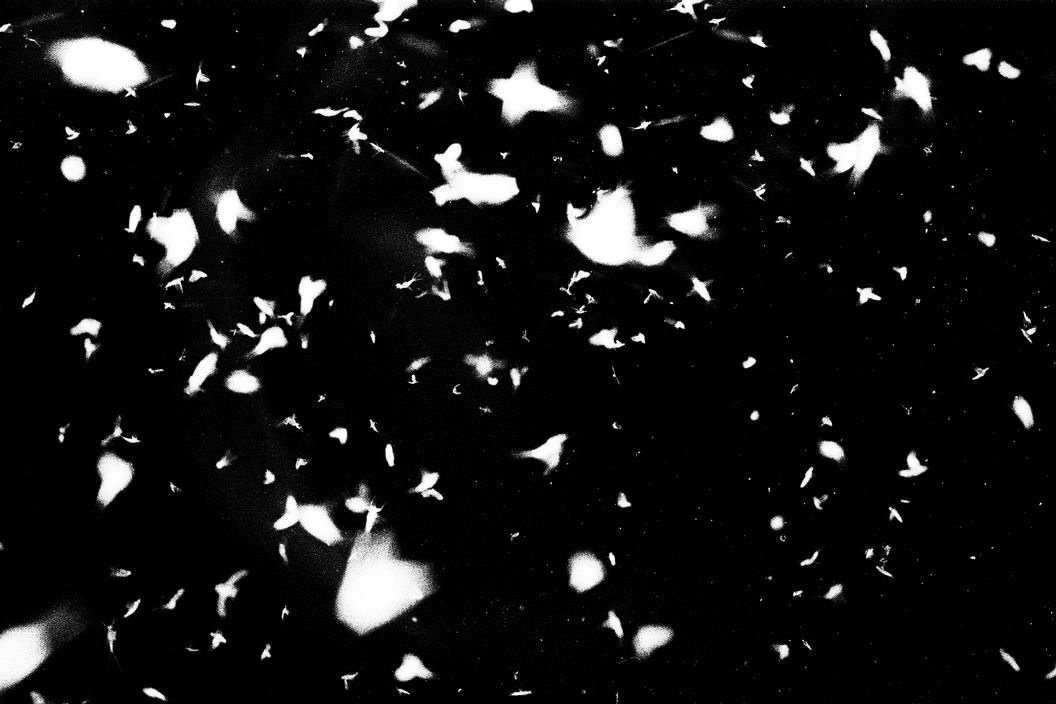
© Sohrab Hura · Magnum Photos
Summer 1999
In the summer of 1999, Sohrab Hura's mother was diagnosed with acute paranoid schizophrenia. He was seventeen. The illness is cyclical: there are periods when she is close to her old self, and periods when she withdraws into fear and suspicion.
A few years later Hura took up the camera. His first and longest subject was at home: his mother, the dog Elsa, and the rooms they shared.
The pictures in Life is Elsewhere were made between about 2005 and 2011. They are black and white, many taken inside the house, many on journeys away from it. The project later became part of a larger body of work Hura calls Sweet Life.
The house and its locks
In the pictures the walls are peeling. The doors carry several locks. Light slips in through gaps in the curtains. None of this is explained, yet the viewer understands: the house follows the mother's rhythm. When she closes up, the house closes up.
Elsa is everywhere. She is the darling of the house. When the mother's condition worsens, the dog is affected too: she lives in the same air, behind the same closed doors. She is the third creature in the house, and its quietest witness.
Hura does not photograph to illustrate an illness. He photographs his mother as a person: standing by a window, sleeping, sitting with the dog. The illness is present, but it does not fill the frame.
Photographing family is hard. The photographer cannot stand outside. Every time the camera comes up there is a choice: to look or to help, to record or to put the camera down. The pictures in Life is Elsewhere carry the weight of that choice. They are not cold. Nor do they complain. They simply stay close, very close.
Life somewhere else
The title speaks of a wish to be far away. And Hura did travel. The book includes pictures from Varkala in south India, from Cambodia, Laos, Port Hedland in Australia's Pilbara, France and the Netherlands. These are the journeys of a young man trying to get out of a heavy house.
Yet the pictures from far away are not kept apart from those at home. They are interleaved. A beach, then a dark room. A road, then the mother's face. Life elsewhere turns out to carry life here with it.
Hura has said he wanted to connect his own life with the world he sees, to gather the broken fragments of his life into a kind of jigsaw, and through it reach some reconciliation. Life is Elsewhere is the first set of pieces.
A self published book
In 2015 Hura self published Life is Elsewhere under his own imprint, Ugly Dog. A hardback of 144 pages with 84 black and white photographs, in an edition of 600. Handwritten notes by Hura run between the pictures. The book is dedicated to his mother.
The final picture shows the mother and Elsa asleep together in bed, under a blanket. After all the locked doors and far journeys, the book ends on a quiet image.
Beside Ishiuchi Miyako's Mother's, two ways of photographing a mother appear. Ishiuchi photographed what her mother left behind after her death: lipstick, underwear, shoes. Hura photographed his mother alive, in her hardest days. One is the trace of absence. The other is presence, kept before it changes.
Life is Elsewhere promises nothing. It only shows that a son was there, long enough to see.
Photography