
Essays · Photography
Sally Mann. Immediate Family.
The summer is gone; the picture stays.
© Sally Mann · Aperture
Three children and a river
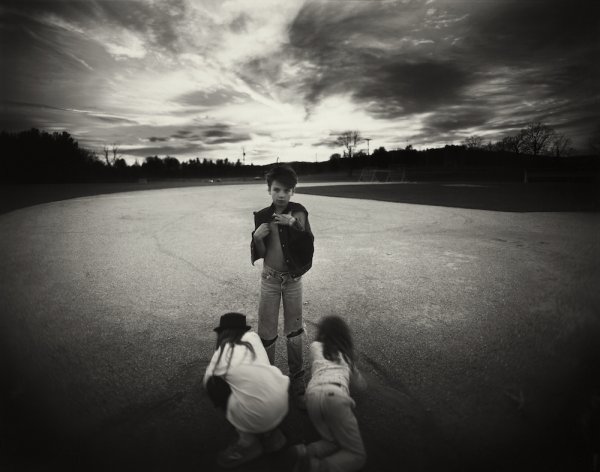
From 1984 to 1992, Sally Mann photographed her three children: Emmett, Jessie and Virginia. They grew up in Lexington, Virginia, and spent their summers at the family's farm in the Shenandoah Valley, where there was a cabin near the river.
Summer there was nothing remarkable to an outsider. Swimming in the river. Lying on hot rocks. Afternoon naps. Waiting for dark. But Mann watched those days with unusual patience. She was there, with a camera, year after year.
In 1992 Aperture published sixty of these pictures as a book called Immediate Family. The title is an everyday English phrase for one's closest relatives. It also carries the other sense of immediate: direct, without mediation. There is no polite distance in these pictures between the one photographing and the ones photographed.
A slow camera
Mann worked mostly with a large format camera using 8 x 10 inch film. It is a heavy camera that sits on a tripod, focused from under a dark cloth. Each sheet of film means a long preparation. No snapshots. No quick sequences.
This meant the children had to hold still. Many moments that look caught by chance were in fact staged, repeated, waited for. The children were not only subjects but collaborators, aware of the camera, sometimes proposing a pose themselves.
Large format film gives extraordinary detail. Every strand of hair, every grain of sand on skin, every crease in a bedsheet is visible. That clarity is what makes the pictures both beautiful and uncomfortable. Nothing is softened to reassure the viewer.
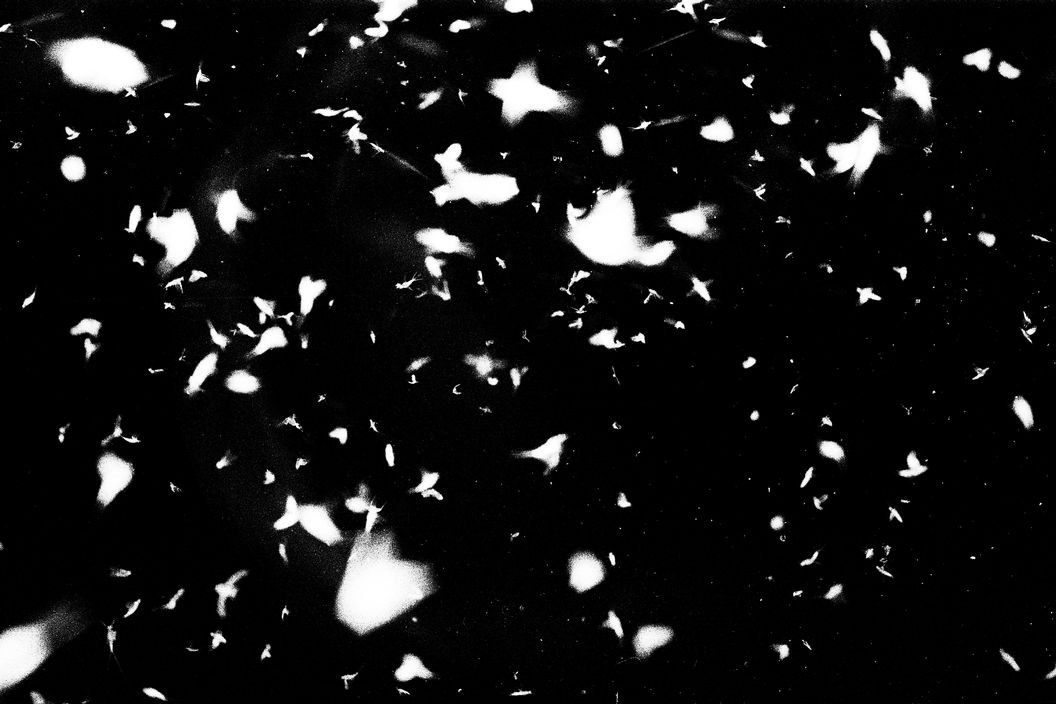
In letters written while working in the Caribbean, published in Aperture magazine in 1995, Mann described humidity ruining about half of her fresh film, and strange starry marks caused by static when she separated negatives stuck together. She did not treat these as unfortunate accidents. She was interested in what the material itself left on the picture.
Light at dusk
In those letters Mann explains that she gradually stopped imagining a picture first and then hunting for it. She looked for a background, a patch of ground, a stretch of river, and let the picture appear there. The children receded into the landscape.
She also wrote about the marginal hours of the day, the mysterious time just before night. Many images in Immediate Family carry that light: warm but about to fade, clear but already softening.
Mann returned more than once to one idea: nothing reaches its fullest beauty until it has been touched by decay. So her pictures do not avoid scratches on the film, dark corners, blown highlights. The childhood in them is not innocent in any simple way. It already carries the knowledge that it will pass.
A book that would not settle
When Immediate Family appeared, it caused immediate controversy. Some pictures show Mann's children naked, as children often are during a summer in a remote place. Some argued such images should never have been published. Others saw in them the most honest account of childhood ever photographed.
The debate went on for years, and Mann herself wrote about it later in her memoir Hold Still. Beneath the argument lies something few would deny: this is a mother looking at her children with both love and worry, and hiding neither.
Three decades later the book is still in print, and Mann's photographs hang in major museums. Other artists have gone on photographing their own families as a way of asking about power, memory and place, such as LaToya Ruby Frazier in The Notion of Family.
Immediate Family does not tell a story with an ending. It records eight summers that are gone. The people in the pictures have grown up, but in the silver they are still by the river.
Photography