
Essays · Photography
Newsha Tavakolian. Blank Pages of an Iranian Photo Album.
An album does not only keep the past. It leaves room for what has not come.
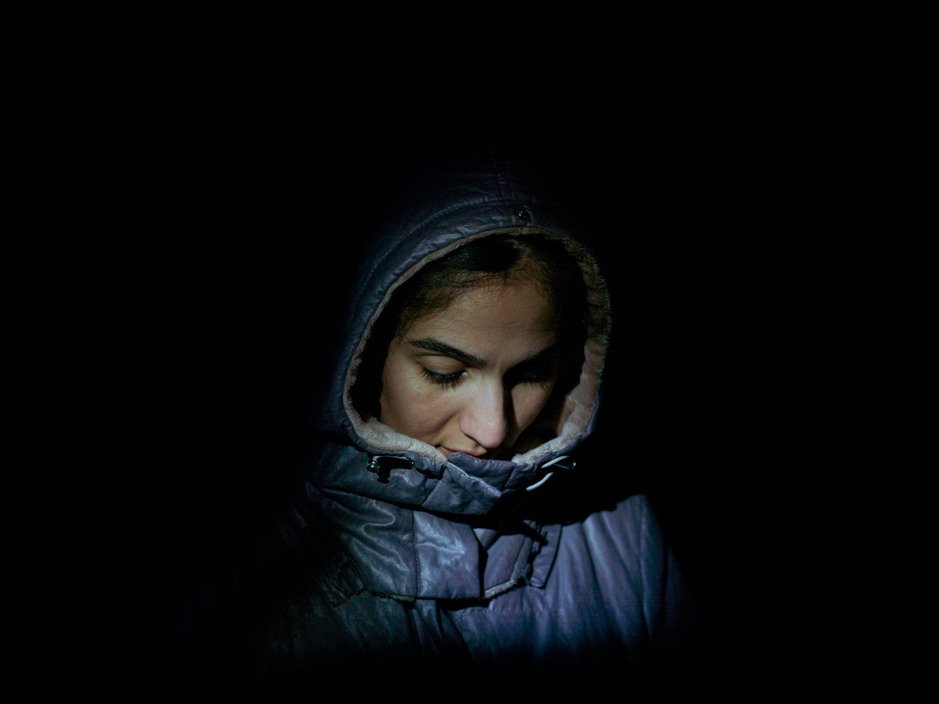
© Newsha Tavakolian · Magnum Photos
An album for a generation
Newsha Tavakolian is an Iranian photographer, born in 1981, living and working in Tehran. She began in photojournalism and moved gradually toward projects that sit between reporting and art. She is a member of Magnum Photos.
In 2014 she received the Carmignac Gestion Photojournalism Award. The grant allowed her to make Blank Pages of an Iranian Photo Album, a project about middle class Iranians in a country shaped by the 1979 revolution.
Her idea started from a familiar object: the family photo album. In many Iranian homes, as elsewhere, the album keeps the important occasions: birthdays, weddings, holidays. Tavakolian wanted to continue those albums with her own view of life now.
She chose a small group of people, followed them for a time, and photographed them in private moments. Each is named in the captions: Somayyeh, Nazanin, Mahud, Sanaz, Bita, Shabnam, Shahin, and Ali with his daughter Hadis.
Life between two layers
The pictures show very ordinary things. A birthday party. A break at university. Someone sitting at a computer screen. Someone just after a cosmetic procedure. A trip up Tochal, north of Tehran. A day on the Caspian coast. An apartment in the vast Ekbatan housing complex.
Beneath that ordinariness is another layer. Life in Iran divides into what is permitted in public and what happens behind the door. Young people live between the two, with private desires, things left unsaid, daily contradictions.
Tavakolian does not explain them. She lets them surface in faces, in rooms, in the distance between people. Many of her subjects seem to be waiting. For what, the picture does not say.
The title captures that feeling. The blank pages are the part of life not yet lived, or not yet allowed. They are the unclear future of a generation raised in a turbulent country.
A title that would not change
The story around the work matters too. After Tavakolian delivered the series, the founder of the Carmignac foundation wanted to edit the pictures himself, rewrite the texts, and rename the project The Lost Generation.
Tavakolian refused. To her that title was worn out and loaded, pinning on her subjects a label they had not chosen. In 2015 she returned the prize money, gave up the award and cut ties with the foundation.
The episode shapes how the work is read. The two titles say different things. The Lost Generation is a verdict: these people are lost. Blank pages are an open question: their lives are still being written.
Tavakolian kept the question. The work was published as a book under the title she chose, and has been exhibited widely.
Why it stays
Blank Pages of an Iranian Photo Album shows a way to portray a country without the familiar pictures of the news. No protests, no slogans. Only young people, rooms, afternoons.
Beside Santu Mofokeng's The Black Photo Album, we see how the family album can become material for art. Mofokeng recovered old, forgotten portraits. Tavakolian does the reverse: she makes new pages for an album that is not yet closed.
A real album is never full. There is always one more page, waiting for someone to add another day.
Photography