
Essays · Olfactory Art
Goldie Poblador. Fertility Flowers.
A flower was once a woman.
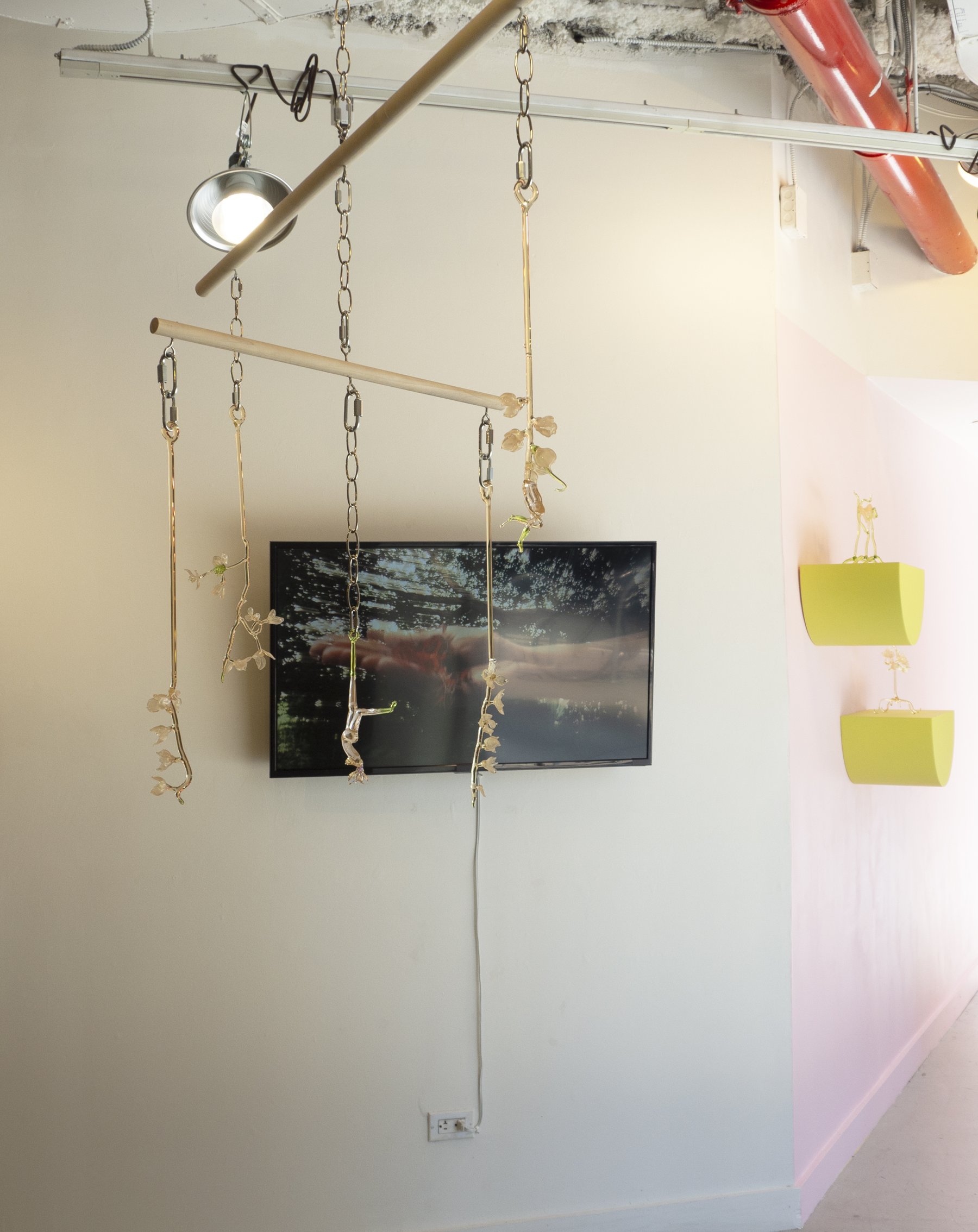
Courtesy the artist · Goldie Poblador (official site)
Glass, flower scent and a film
Fertility Flowers is an interactive installation by the Filipino artist Goldie Poblador, first shown at UrbanGlass in New York in 2022, curated by Apa Agbayani. In 2023 it was shown again at Finale Art File in Manila.
The work has three parts. First, glass sculptures: female figures emerging from strange, many petaled forms that resemble no single flower. Second, scent: floral smells drift through the room around the sculptures. Third, a film in which Poblador herself steps into the legends and meets the women at their centre.
Glass has long been Poblador's material. It is clear, fragile, and needs fire to take shape. In Fertility Flowers the glass holds the form of flower and body, while the scent holds what has no form: an atmosphere, a memory, a telling.
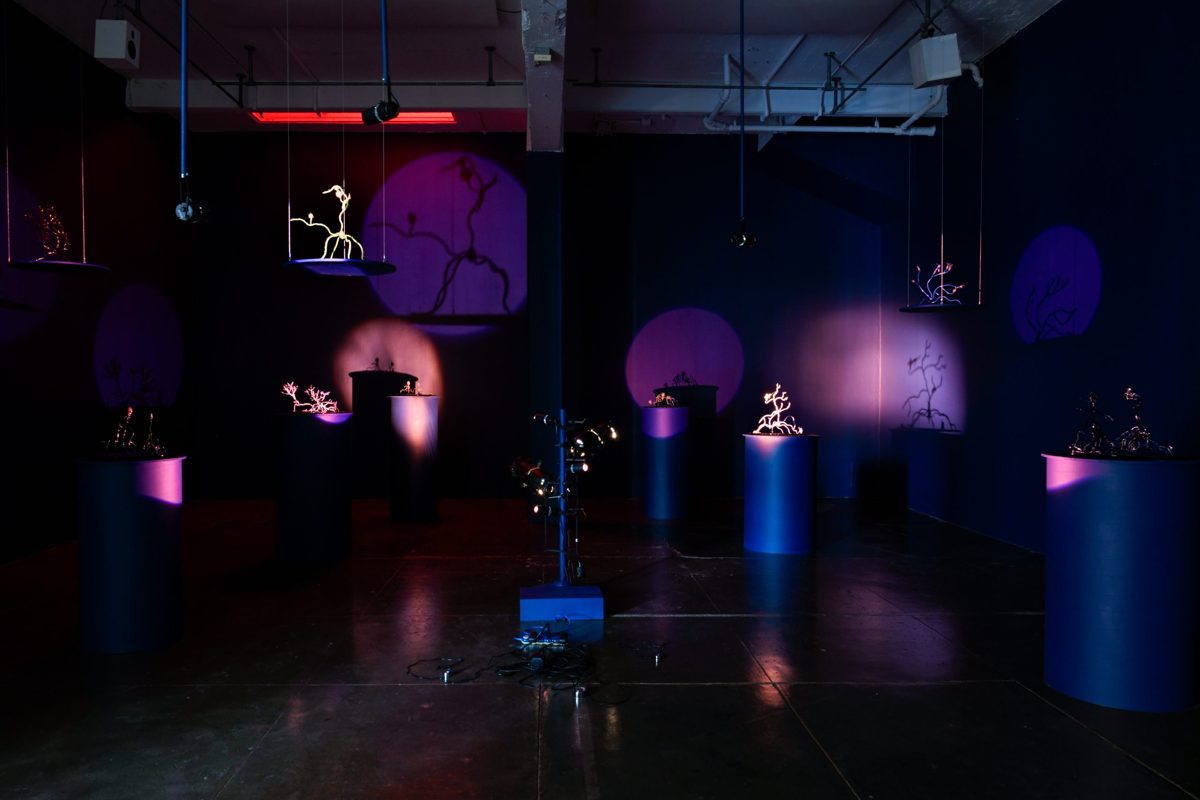
Visitors walk among the sculptures, breathe the flowers, then stand before the screen. Three ways into the same story, all at once.
Legends of flowers
The work begins with the myths and origins of several flowers that grow in the Philippines. Poblador noticed that in many of these stories a woman's body is turned into a plant, and the reason is often tied to childbearing.
The first is dama de noche, Cestrum nocturnum. A queen cannot produce an heir. In her despair she becomes a flower that blooms only at night.
The second is the peacock flower, Caesalpinia pulcherrima. According to the work, enslaved women in the West Indies used it so as not to bear children into slavery. It is a story of refusal, of keeping some hold over one's own body where no other power was left.
The third is cadena de amor, Antigonon leptopus. In the work, this climbing vine stands for the moral restrictions Spanish colonial rule placed on Filipino women. Its name means chain of love.
Rewriting a myth
Poblador does not only retell. As the artist describes it, she sees reproduction as the crux of centuries of subjugation women have suffered under colonial and patriarchal power. Then she reimagines the myths: the Filipina is no longer turned into a plant but prises her agency back from her oppressors and blossoms in her own way.
That is why the figures in the sculptures are not swallowed by the plants. They rise out of the petals, as if breaking free. The flower scent is still there, but its meaning has shifted. No longer the smell of someone trapped in another form, but of someone stepping out.
Scent is a key choice here. Legends are told in words, passed from one person to the next. A flower's smell is real, and can be breathed today in a room in New York or Manila. It ties an old story to the body of a present viewer.
Poblador has worked with glass and scent across many pieces, including The Rise of Medusa, where she also returns to a myth about a woman. Fertility Flowers turns to the flowers of her own country, and to stories Filipinos grow up with.
Her stated aim is plain: to draw attention to the issues surrounding women's reproductive lives, and to the history of oppression behind flower legends that seem harmless.
Olfactory Art