
Essays · Contemporary Art
Jeff Koons. Puppy.
A monument that is still growing.
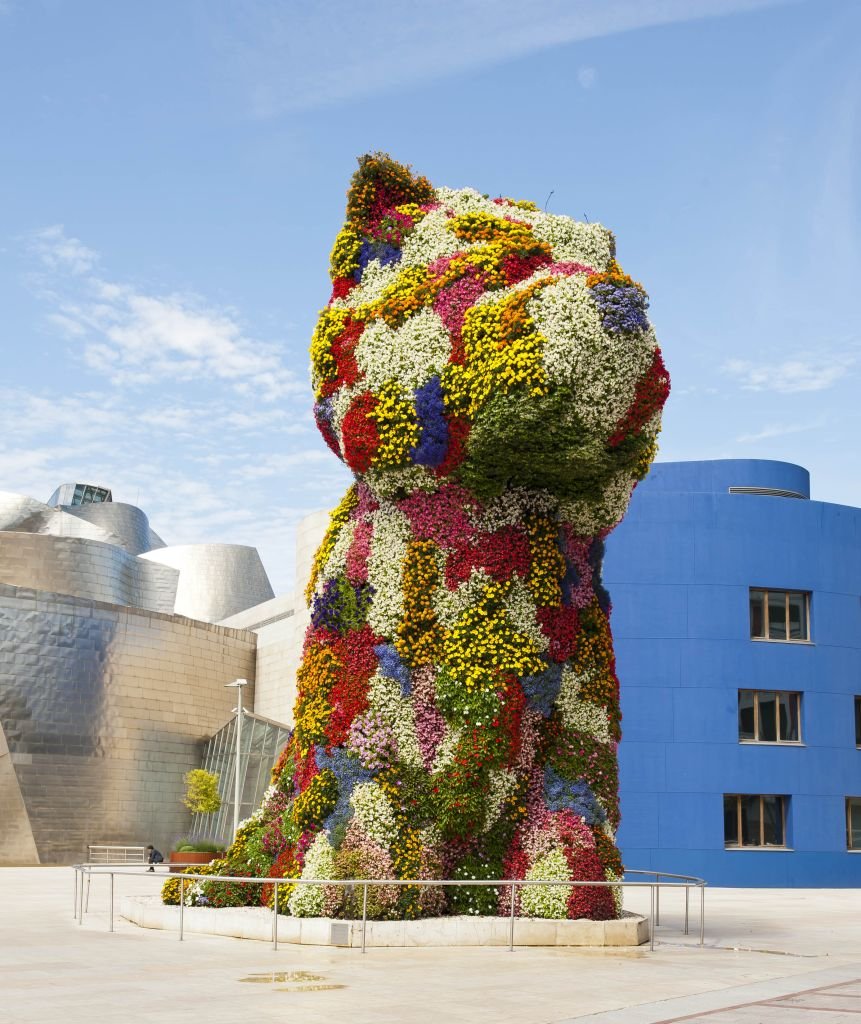
Guggenheim Museum Bilbao · Guggenheim Museum Bilbao
The dog at the door
Puppy stands in the square in front of the Guggenheim Museum Bilbao, in Spain. It is a West Highland terrier, sitting upright, 12.4 metres tall. The museum calls it its guard dog, and presents it as the largest flower sculpture in the world.
Jeff Koons, born in York, Pennsylvania, in 1955, made Puppy in 1992. The collection record lists only three materials: stainless steel, soil and flowering plants. The steel gives the shape. The soil holds the roots. The plants cover the surface like fur.
Standing at its feet, you cannot see the whole dog. You see only flowers. You have to walk back across the square to recognise a puppy sitting and waiting.
From an eighteenth century garden to a computer
Koons rose to prominence in the mid 1980s, among artists questioning what art meant in a media saturated age. He borrowed the language of advertising, marketing and entertainment, and treated the artwork as a commodity outside the usual ladder of taste.
With Puppy he looked both ways at once. He used sophisticated computer modelling to build the form. And he referred to the formal gardens of eighteenth century Europe, where plants were clipped into geometry and nature was arranged by human will.
The Bilbao museum lists what Puppy brings together: topiary and dog breeding, grass sprouting clay pets and printed greeting cards. High and popular culture sit side by side. Neither is mocked.
How sweet is too sweet
The museum writes that Puppy uses the most saccharine imagery there is, flowers and puppies, to build a monument to sentiment. Koons wanted this public work to keep drawing people in, to produce optimism and, in his words, to give viewers confidence and security.
It is easy to smile at that. A giant flowered puppy sits closer to a postcard than to art. And yet people stand there, take photographs, feel glad. The work does not need agreement. It needs a response.
The museum reads Puppy as an allegory of contemporary culture: a culture that wants everything cute, easy, lovable, and produces feeling to a template. Koons does not criticise it from outside. He makes it bigger, until we have to look.
Still growing
What sets Puppy apart from an ordinary statue is that it is alive. The museum describes its size as tightly contained yet seemingly out of control. Literally and figuratively, it is still growing.
Plants do not follow drawings. They grow at different speeds. Thick here, sparse there. Some flowers open, some fade. The dog's shape is held by steel; its coat shifts with sun, rain and the hands that tend it.
So no two visits to Puppy are the same. Someone who comes to Bilbao one year and the next will find the same dog, not the same coat. The work was finished once on a computer and is remade every day outdoors.
It is another way to think about flowers in art. preserve 'beauty' by Anya Gallaccio lets flowers wither behind glass. Koons keeps them blooming, season after season. One watches flowers go all the way. The other keeps them present by never stopping the care.
Contemporary Art