
Essays · Olfactory Art
Joe Merrell. The Fragility of Complex Things.
The most complex things are the easiest to break.
The Institute for Art and Olfaction · The Institute for Art and Olfaction
Two years turned inward
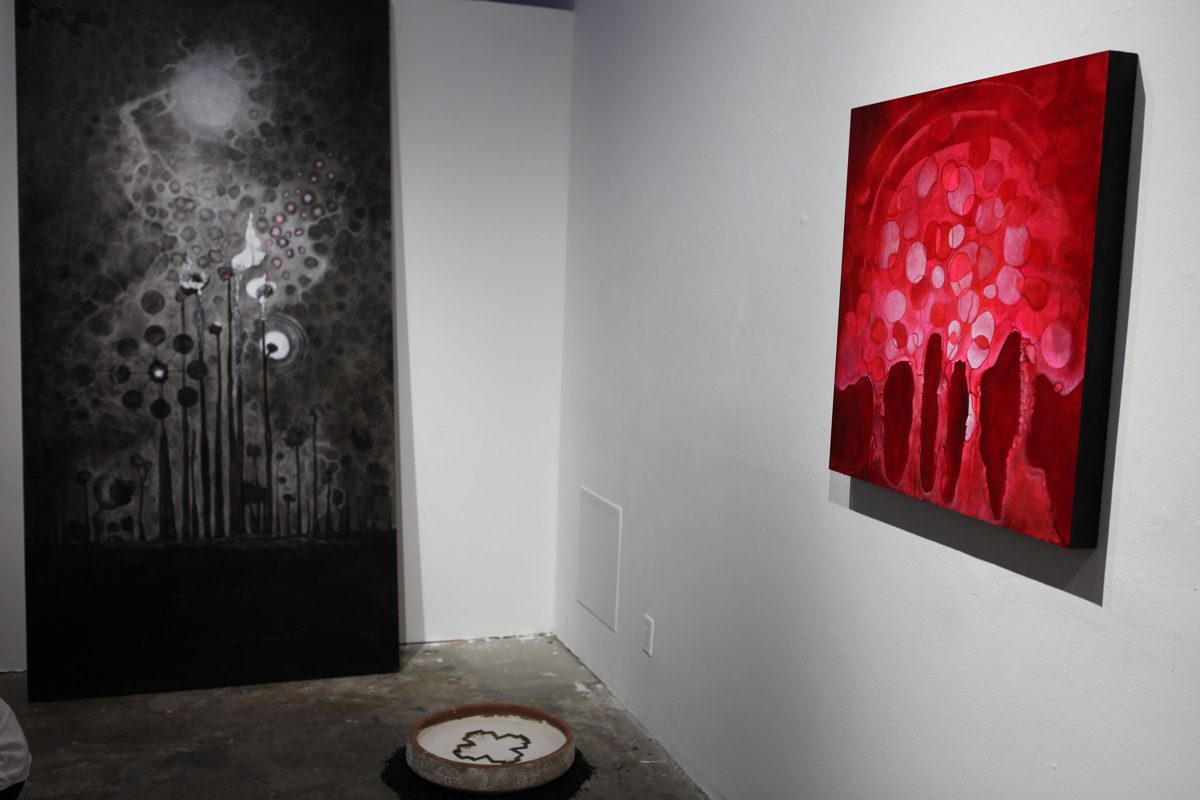
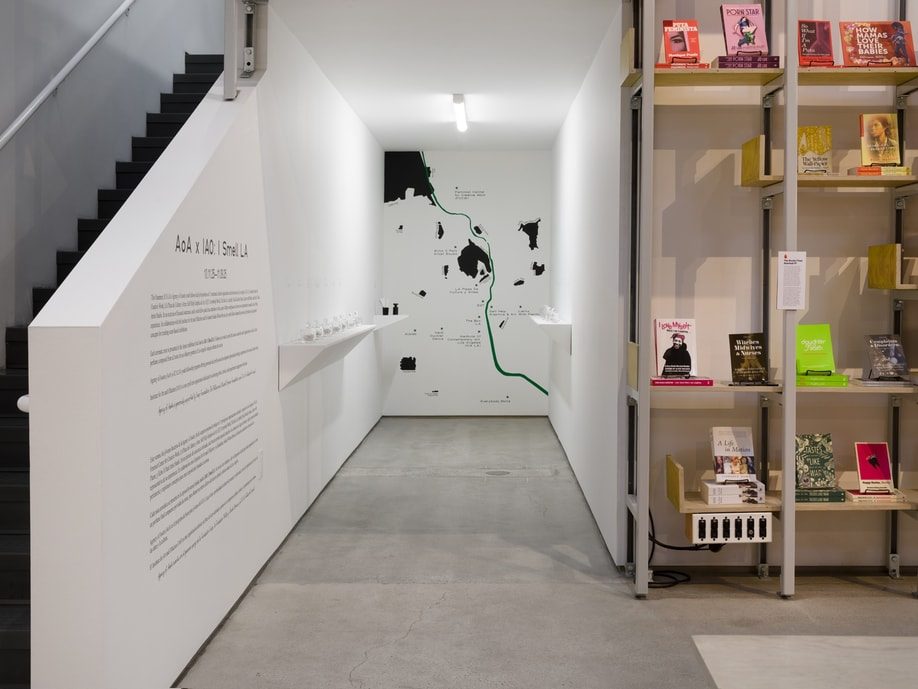
The Fragility of Complex Things opened at the gallery of the Institute for Art and Olfaction, 932 Chung King Road, Los Angeles, and ran from May 6 to June 1, 2022. The opening was on the evening of May 6. The last day of the show was also the evening of the artist talk.
The works were made between 2020 and 2022: two years of pandemic, layered with political upheaval. Many people were confined indoors. Merrell was too, and he chose to look inward rather than out. In IAO's words, the exhibition reflects on disease, isolation, life and death in a time of crisis.
The title says most of it. Complex things are fragile. A body. A society. A relationship. The more parts connected, the more places something can break.
An artist of many materials
Joe Merrell was born in the Pacific Northwest. He studied philosophy and history at Evergreen State College in Olympia, Washington, and earned an MFA at the California Institute of the Arts in Valencia.
His practice covers video, animation, print, sculpture and scent, and has been shown in North and South America, Europe and New Zealand. For Merrell, smell is not an accessory to the image. It is one material among others, named, editioned and shown as a work in its own right.
The philosophy shows in his titles. One print is called Antisyzygy, a word for two opposites held within one thing. Life and death. Near and far. Being at home and feeling lost.
Showing perfume as artwork is something IAO has long done, in its own gallery and in the institute's group exhibitions. Merrell arrives there as a visual artist who brings smell along, not as a perfumer who brings pictures.
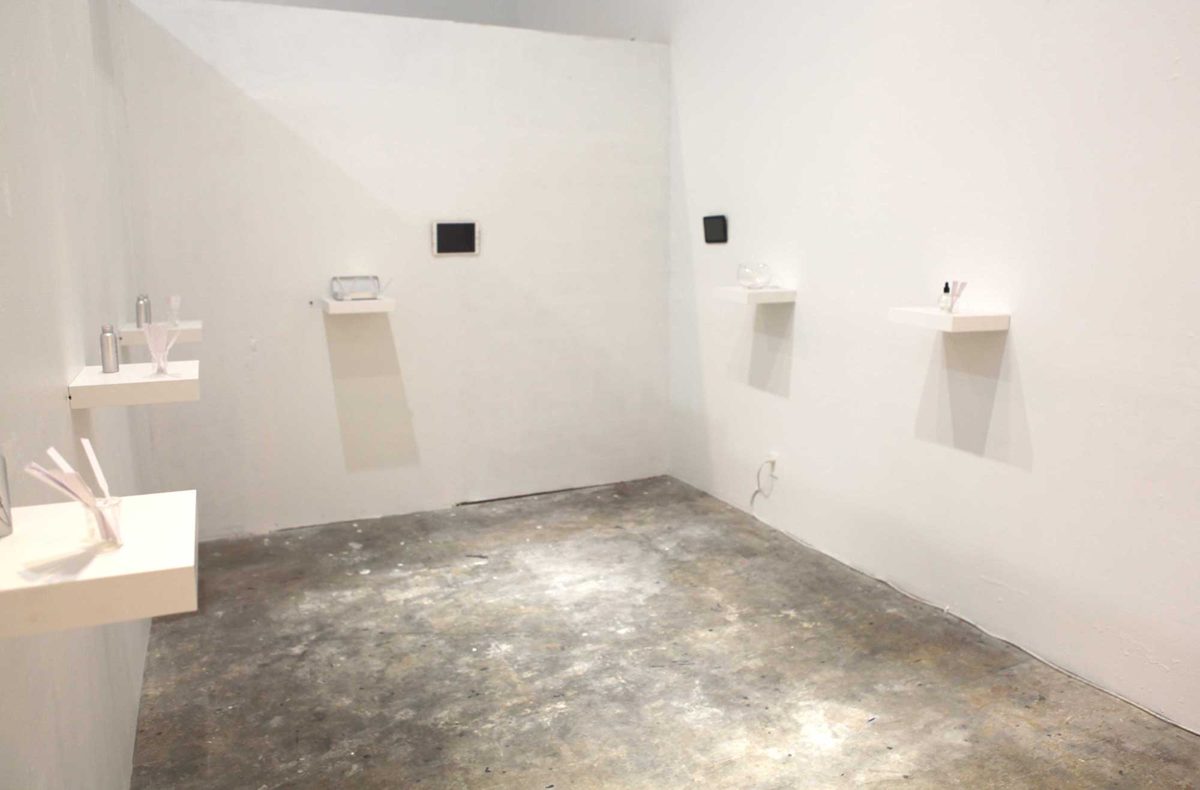
Six objects in a room
The list of works is short. Two eaux de parfum, 30ml each, both from 2022: Campo de la Estrella Azul and Balsam Fir. The first is Spanish for field of the blue star. The second is a species of fir. One is a field under the sky, the other a conifer forest. Both are outdoor places, made at a time when people had to stay in.
Blood from a Spoon is a two channel synchronised video, with an optional third channel running out of sync. There are two pigment prints: an untitled one at 12 x 19 inches in an edition of 10, and Antisyzygy at 12 x 12 inches in an edition of 5.
The strangest object is a gumball machine. Inside are gumballs, preserved gardenia blossoms and a linen cloth. Its title is two dates in American notation: 11/24/63 and 1/26/20. The exhibition page does not explain them, and Penta will not guess. What remains is a children's machine, a coin for a sweet, now holding flowers that have stopped blooming and a span of nearly sixty years.
Why smell stands beside image
In a show of video and prints, visitors are used to moving with their eyes. The perfumes make them stop and do something else: lean in, smell, wait. A scent shows nothing at once. It takes seconds to arrive and minutes to change.
That slowness suits the subject. The pandemic years were years of stretched time. One day like the next. Sometimes the only sign of a changing season was the smell of the air through a window. A bottle named after a fir forest, in that setting, is not decoration. It is a way to bring a place into a room when the body cannot go out.
Merrell did not make a topical show about the pandemic. No figures, no slogans. Only small, breakable things: a glass bottle, a dried flower, a printed sheet. They speak of fragility by being fragile.
Olfactory Art