
Essays · Olfactory Art
Máret Ánne Sara. Hyundai Commission: Goavve-Geabbil.
Walking inside a nose.
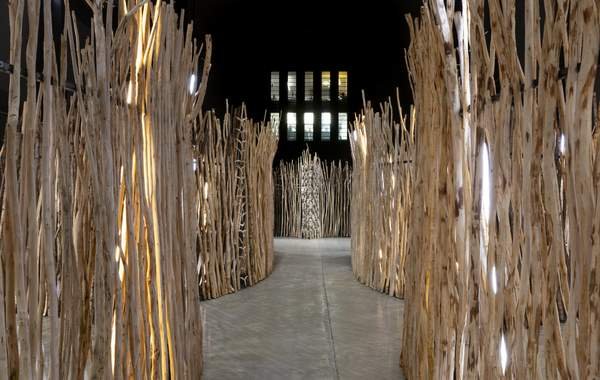
Photo © Tate (Sonal Bakrania) · Tate
Twenty eight metres of hide and cable
From 14 October 2025 to 6 April 2026, the Turbine Hall at Tate Modern in London was given to a work by Máret Ánne Sara, as part of the annual Hyundai Commission. The curators were Helen O'Malley and Hannah Gorlizki.
Sara was born in 1983 and lives in Guovdageaidnu, in the Norwegian part of Sápmi, in a reindeer herding family. She took part in Documenta 14 in 2017 and the 59th Venice Biennale in 2022.
The main part of the work is a sculptural mass filling the full 28 metre height of the Turbine Hall. Reindeer hides are bound with electrical power cables. Beside them stand wooden poles carved with earmarks, the signs herders cut into reindeer ears to know their own animals. Bones and industrial materials are set into the walls.
The image says one thing directly. The hide of the animal that has sustained the Sámi for generations is tied up with power lines, which arrive together with the mines and energy projects pushing into reindeer pastures.
When ice seals the ground
The title joins two North Sámi words. Goavve names a winter condition: rain and melted snow freeze into layers of ice on the ground, and reindeer can no longer dig down to the food beneath.
For herders this is not a concept. It is a hungry season. The work places it in the context of a warming climate, and each layer of ice is a lid locked over the lichen.
Sara's method comes from duodji, the Sámi tradition of making useful things from what remains of the animal. Nothing is thrown away. In the work, that tradition meets materials from the industrial world, and the two do not sit easily together.
The labyrinth of the nose
The second part stands at the eastern end of the Turbine Hall and is called Geabbil. It is a maze like passage built on the anatomy of a reindeer's nasal cavity.
According to Tate, this nose can warm air by 80 degrees Celsius in under a second. That is how the animal breathes in the extreme cold of the north. The dense folds inside the nose are a heating system shaped over a very long time.
Visitors pass through those folds the way air does. Along the passage, materials carry scent. One is the fear signal that reindeer release to warn the herd. Another, named hope, comes from native plants such as lichen and shoegrass.
Sound accompanies it: recordings from the landscapes of Sápmi, joik, the traditional Sámi way of singing, and oral knowledge from elders of the community.
Indigenous science
Tate presents the work as an invitation to listen to Indigenous science. Herders know about ice, wind and the smell of a frightened herd in ways satellite data cannot record. That knowledge lives in the body, in joik, in the marks cut into an animal's ear.
Three years earlier in Venice, Sara used reindeer stomachs and a smell to speak of knowing with the gut, in Gutted. In London she moved from the gut to the nose, from a pavilion to a hall 28 metres high. The question is the same: who may speak for this land, and through which sense?
Standing inside Geabbil, the answer does not come in words. It comes as air: cold, then warm, then carrying the smell of a land far away.

Olfactory Art