
Essays · Contemporary Art
Mark Leckey. Fiorucci Made Me Hardcore.
A night of dancing lives on only in those who were there.
Tate · Tate
A tape of nights spent dancing
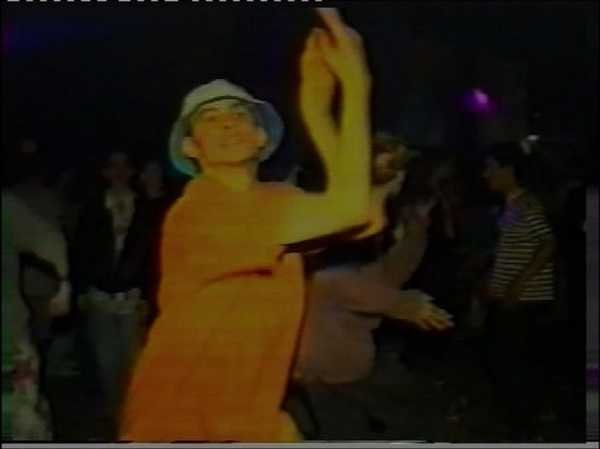
Fiorucci Made Me Hardcore is a video Mark Leckey made in 1999. It is built entirely from existing footage: old film recording dance and street culture in Britain from the late 1960s to the late 1980s.
Viewers see young people dancing in the big halls of northern soul, spinning, sliding, springing up to American soul records. They see groups of lads gathered on street corners, clothes chosen down to the last detail. They see packed crowds under the lights of late 1980s dance nights. Fashion changes, music changes, but the bodies on the floor share the same trance.
There is no narration. No captions with dates. The images drift with the sound, sometimes slowing almost to a standstill, sometimes rushing like a track reaching its peak.
Collage before YouTube
Today, finding old footage of a British nightclub takes seconds. In 1999 it did not. Those images were scattered across television documentaries, home videos, tapes copied again and again. Finding, gathering and editing them was slow work, close to collecting.
So the image quality is rough. Some passages are blurred, noisy, drained of colour. Leckey did not clean them up. The marks of copying give the video the feel of a memory: not sharp, but very near.
The title borrows the name of Fiorucci, the Italian fashion label that was once a byword for style. Hardcore points toward the relentless dance music that came later. Together the name reads like a half joking confession about how clothes and music shaped a generation.
Years later, people watch the video and see in it what the internet would do to memory: gather scattered pieces of other people's lives into a shared stream anyone can step into.
Homage and scrutiny
As Tate presents it, the work moves between homage and social critique, between personal and collective memory, between ecstasy and constraint. It touches a knotted question in twentieth century British life: class and youth.
Most of the people on those dance floors were young and working class. By day they worked in factories, shops, building sites. At the weekend they dressed their sharpest, travelled furthest, danced longest. The dance floor was where they were free for a few hours, before Monday came back.
Leckey grew up on the edge of Liverpool, in a town near large industrial plants. He has said he left art school feeling alienated by the theory taught there, and found his way back only when he decided to make work about what belonged to him: his past and the place he came from. Fiorucci Made Me Hardcore was one of the first steps in that direction.
A work watched again and again
The video quickly became a cult work, screened many times and now in the Tate collection. In 2019 Afterall published a book on it by Mitch Speed, in a series where each volume addresses a single work, and Tate Britain held a screening and conversation with Leckey to mark it.
Leckey went on to win the Turner Prize in 2008 and kept making works assembled from found memories, such as Dream English Kid in 2015. Yet Fiorucci remains the one people name first. It sits close to Arthur Jafa's video: both build a collective life out of images that were never their own.
Why it stays is perhaps simple. Anyone who has danced until morning knows the feeling cannot be retold. The video does not retell it. It only shows that other people, in other years, felt it too.
Contemporary Art